

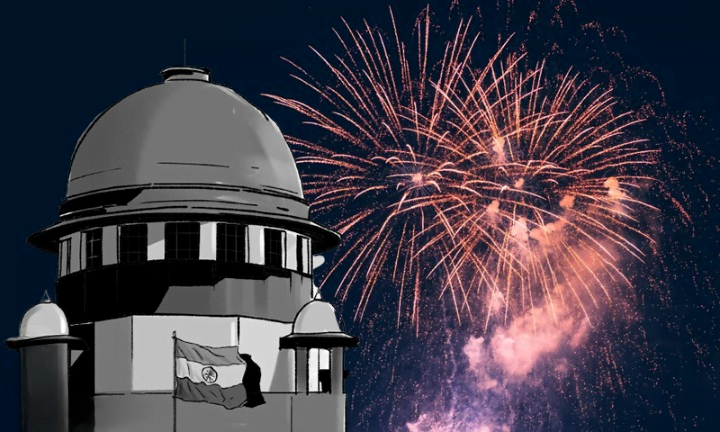
In a significant move to combat air pollution and safeguard public health, the Delhi government has announced an extensive ban on the sale and use of firecrackers throughout the National Capital Territory (NCT) of Delhi. The ban, effective immediately, will remain in place until January 1, 2025. This decision comes as part of a broader strategy to address the severe air quality issues that have plagued the region, particularly during the winter months.

Details of the Ban
The Delhi government’s directive prohibits the manufacturing, sale, storage, and use of all types of firecrackers within the city limits. This comprehensive ban is aimed at reducing the pollution levels that spike significantly during festive seasons, especially Diwali, when the use of firecrackers is at its peak.
The new regulation is part of Delhi’s ongoing efforts to combat the alarming rise in air pollution, which has seen hazardous levels in recent years. Firecrackers have been identified as a major contributor to the spike in particulate matter (PM2.5) and other harmful pollutants in the air, exacerbating health problems such as respiratory issues and heart diseases among residents.
Government’s Rationale
Delhi Chief Minister Arvind Kejriwal announced the ban, emphasizing the need to prioritize public health and environmental sustainability. “We are taking this step to protect the health of our citizens, especially the vulnerable populations including children and the elderly,” Kejriwal said. “Our city has been grappling with poor air quality, and the use of firecrackers during festivals only worsens the situation. This ban is a necessary measure to ensure a cleaner and safer environment for all.”
The government has also highlighted that the ban aligns with Delhi’s broader pollution control strategy, which includes measures to reduce emissions from vehicles, industry, and construction activities. The ban is expected to contribute significantly to improving air quality levels, especially during the critical winter months when pollution levels tend to peak.
Implementation and Enforcement
The Delhi Pollution Control Committee (DPCC) and local police forces will be responsible for enforcing the ban. Authorities will conduct regular inspections to ensure compliance and take action against violators. Penalties for breaking the ban include hefty fines and possible imprisonment, depending on the severity of the offense.
In addition to regulatory measures, the government plans to run awareness campaigns to educate the public about the environmental and health impacts of firecrackers. Schools, community groups, and local organizations will be involved in these campaigns to promote alternative ways of celebrating festivals that do not harm the environment.
Public and Environmentalist Reactions
The ban has received mixed reactions from the public. Environmentalists and health advocates have welcomed the move, praising the government for taking a proactive stance on pollution control. They argue that such measures are crucial for improving air quality and protecting public health.
Environmental activist Sunita Narain commented, “This ban is a much-needed step towards reducing the pollution levels in Delhi. It is crucial that such measures are implemented effectively to make a real difference.”
However, some residents and business owners have expressed concerns about the impact of the ban on traditional celebrations and local economies. Firecracker vendors, in particular, have voiced their apprehension about the economic implications, given the significant revenue generated from firecracker sales during festivals.
Looking Ahead
As the ban comes into effect, the Delhi government will closely monitor its impact on air quality and public health. Data collected during the ban period will be used to assess the effectiveness of the measure and inform future policies.
The Delhi government has reiterated its commitment to tackling air pollution and creating a healthier environment for its residents. In conjunction with the firecracker ban, efforts will continue to address other sources of pollution and promote sustainable practices across the city.
In conclusion, the firecracker ban is a bold initiative aimed at mitigating the severe air quality issues faced by Delhi. By taking this step, the government hopes to set a precedent for other cities grappling with similar challenges and foster a culture of environmental responsibility and public health awareness.