

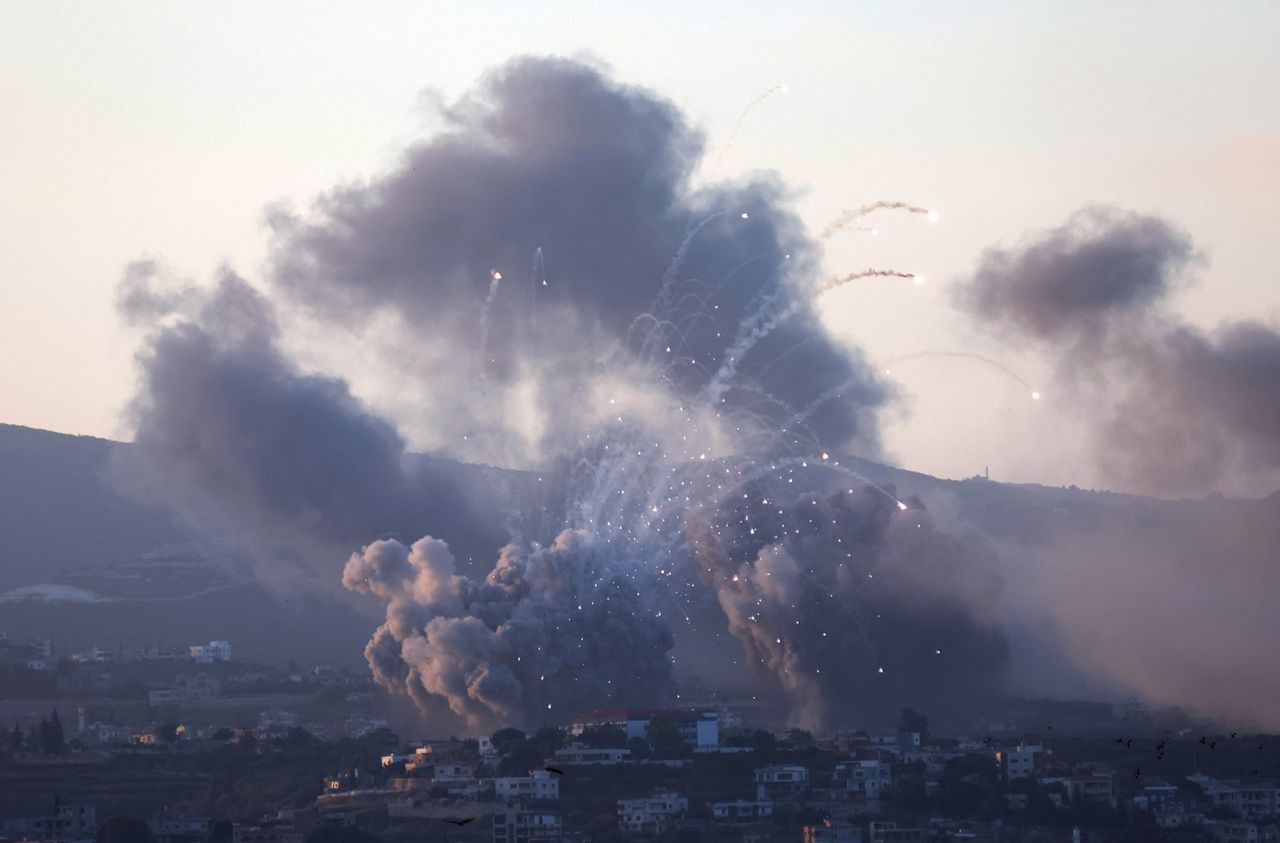
A devastating series of Israeli airstrikes on southern and eastern Lebanon has resulted in the deaths of at least 182 people and left over 727 others injured, according to Lebanese authorities. This escalation of violence follows a tense exchange of rocket fire between Hezbollah and Israel, intensifying the conflict that has gripped the region since October 2023.

The strikes occurred across several locations in Lebanon, including the northeastern town of Hermel and areas stretching to the valleys of Bouday, Shamstar, and Wadi Umm Ali. In addition, a missile reportedly fell in the Byblos district of Mount Lebanon, far from the usual conflict zones, marking an alarming spread of hostilities. Fortunately, this missile landed in an uninhabited area, avoiding further casualties. The Lebanese National News Agency reported widespread destruction and chaos in affected areas as local residents scrambled to seek shelter.
In response to Hezbollah’s earlier barrage of rockets targeting northern Israel, the Israeli military intensified its strikes, reportedly hitting over 300 Hezbollah targets. The Israeli Defense Forces (IDF) stated that the strikes aimed at dismantling Hezbollah’s military capabilities, which are widely embedded in civilian areas. Israeli military officials have also warned civilians living near Hezbollah’s military installations to evacuate immediately. They allege that Hezbollah is using civilians as human shields by storing weapons in residential areas.
Hezbollah, a militant group with significant backing from Iran, declared that their attacks were in solidarity with Hamas, which has been engaged in its own conflict with Israel in Gaza. Hezbollah launched dozens of rockets aimed at various military targets in northern Israel, including logistical warehouses and reserve bases. Despite this show of force, the Israeli government, led by Prime Minister Benjamin Netanyahu, vowed to continue its military operations until the residents in the north could safely return home.
The humanitarian toll of this conflict has been immense. More than 112,000 people in Lebanon have been displaced, while in Israel, about 60,000 civilians have fled their homes in northern regions due to the escalating cross-border violence. Lebanese officials reported that, along with the casualties from Israeli airstrikes, large swaths of infrastructure have been destroyed, further complicating relief efforts. The United Nations and other humanitarian agencies are struggling to address the growing crisis, as displaced families face shortages of basic supplies.
Hezbollah’s leader, Hassan Nasrallah, has vowed to escalate the conflict further if Israel continues its airstrikes. Nasrallah blamed Israel for previous attacks, including the destruction of wireless communication systems used by Hezbollah, which left dozens dead and injured across Lebanon. In a fiery speech, he declared that Hezbollah would not back down and was prepared for all-out confrontation with Israel.
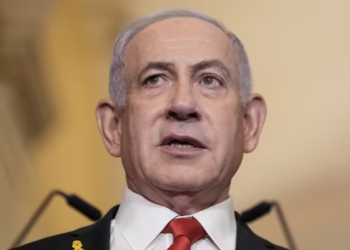
On the Israeli side, Prime Minister Netanyahu has issued repeated warnings to Hezbollah, stating that the IDF’s retaliatory measures would be relentless and far-reaching. Netanyahu has emphasized that Israel is fully prepared to escalate the military operations further if Hezbollah does not cease its attacks.
This latest escalation is seen as part of the broader regional conflict involving Israel, Hezbollah, and Palestinian groups. Since the beginning of October, hundreds have died, with casualties mounting on both sides of the Israeli-Lebanese border. Hezbollah’s involvement in the conflict marks a dangerous turn in the regional power struggle, raising concerns among international observers that the violence could spread to neighboring countries if not contained.
The international community has called for an immediate ceasefire to prevent further loss of life. However, with neither side showing signs of backing down, the prospect of a peaceful resolution seems increasingly remote. Analysts fear that the violence could spiral into a wider conflict, destabilizing an already fragile Middle Eastern region.
For now, as the death toll rises and the humanitarian situation deteriorates, both Lebanese and Israeli civilians continue to bear the brunt of the violence, trapped in a conflict that shows no sign of abating(Al-Monitor)