


Swachh Bharat Mission: Celebrating 10 Years of India’s Cleanliness Revolution

On October 2, 2024, Prime Minister Narendra Modi marked the 10th anniversary of the Swachh Bharat Mission (Clean India Mission), which has transformed India’s sanitation landscape over the past decade. The event coincided with Gandhi Jayanti, a fitting tribute to Mahatma Gandhi’s vision of a clean and self-reliant India. PM Modi addressed the nation during the Swachhata Hi Seva 2024 program at Vigyan Bhawan, where he reflected on the journey, celebrated milestones, and set forth future goals.
A People-Driven Movement
In his speech, PM Modi emphasized the mission’s success as a people-led revolution. “In the last 10 years, crores of Indians have made this mission their personal goal,” he said, highlighting the participation of various sectors, including cleanliness workers, celebrities, NGOs, religious leaders, and the media. He praised the collective effort of the entire nation, stating that the mission united millions under the banner of Swachh Bharat.
From its inception on October 2, 2014, the mission aimed to eliminate open defecation and improve sanitation through the construction of toilets, public awareness campaigns, and a cultural shift towards cleanliness. PM Modi stressed that this was not just a government initiative, but a people’s movement. “This is the world’s biggest and most successful resolution led by people and joined in by people,” he said.
Key Milestones
Over the past decade, the Swachh Bharat Mission has achieved remarkable results:
- Toilet Construction: Over 110 million toilets have been built, drastically reducing open defecation across the country.
- Improved Sanitation: Cities and rural areas alike have witnessed an improvement in sanitation infrastructure, with many cities being declared open defecation free.
- Behavioral Change: The mission also focused on changing mindsets, with massive public awareness campaigns that encouraged citizens to adopt cleaner habits(Public Tv English).
PM Modi credited the mission with restoring the dignity of cleanliness workers, who, according to him, now feel a sense of pride in their contribution. He acknowledged the initial skepticism of some individuals who underestimated the potential of such a large-scale cleanliness initiative. However, through persistent efforts, the mission has transformed the mindset of millions.
Inaugurating New Cleanliness Projects
During the anniversary event, PM Modi inaugurated cleanliness projects worth ₹10,000 crore. These included initiatives for water and sewage treatment plants under Mission Amrut and new Namami Gange projects aimed at cleaning the Ganga River. He also mentioned the Govardhan project, which focuses on biogas production from waste, highlighting the mission’s alignment with environmental sustainability(News24).
These initiatives aim to take Swachh Bharat to the next level, with an increased focus on advanced waste management and the utilization of innovative technologies to ensure a cleaner and greener India.
The Road Ahead
PM Modi’s speech also looked to the future. He outlined the ongoing work and future plans to keep India clean and resilient. According to the Prime Minister, this cleanliness drive will be remembered for centuries as one of the most significant efforts towards a cleaner, healthier India. He called on every citizen to participate in cleanliness activities as part of the ongoing Seva Pakhwada (Fortnight of Service), which saw more than 28 crore people participate in over 27 lakh events.
The Swachh Bharat Mission has not only improved public health and sanitation but has also contributed to broader developmental goals. Health experts have observed a significant reduction in diseases like diarrhea and cholera, which are linked to poor sanitation.
A Legacy of Mahatma Gandhi
The choice of Gandhi Jayanti as the launch date for the Swachh Bharat Mission was no coincidence. Mahatma Gandhi, often referred to as the “Father of the Nation,” had always emphasized the importance of cleanliness and sanitation. PM Modi paid tribute to Gandhi’s legacy, stating that the mission was a fulfillment of Gandhi’s vision for a clean and self-reliant India.
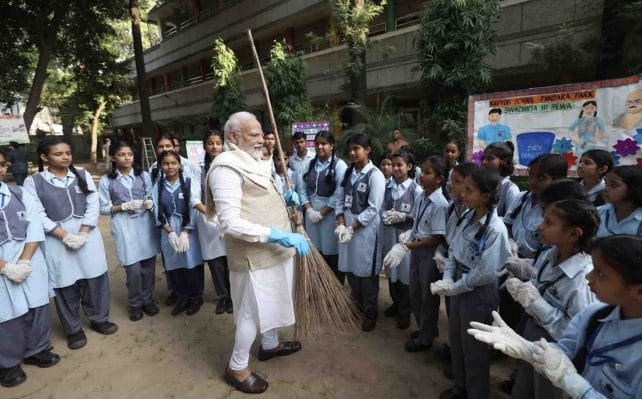
Modi’s address ended with a rallying cry to the nation: “Together, we can achieve a Swachh Bharat for generations to come,” urging citizens to not let the momentum falter. The Prime Minister also participated in a cleanliness drive with schoolchildren, symbolizing the need to inculcate these values in the younger generation.
Conclusion
As India celebrates 10 years of the Swachh Bharat Mission, the journey has proven that even the largest challenges can be tackled when people come together with a common purpose. From transforming sanitation in rural areas to empowering cleanliness workers and making cleanliness a part of daily life, the mission has left a lasting impact on the country. Moving forward, the vision for a cleaner, greener India remains a priority, with the lessons learned over the past decade shaping the path ahead.
This celebration not only honors the success of the mission but also reiterates the continuous need for community participation in achieving lasting change. With its focus on sustainability and environmental well-being, Swachh Bharat continues to evolve as a cornerstone of India’s developmental agenda

















Comments 1