

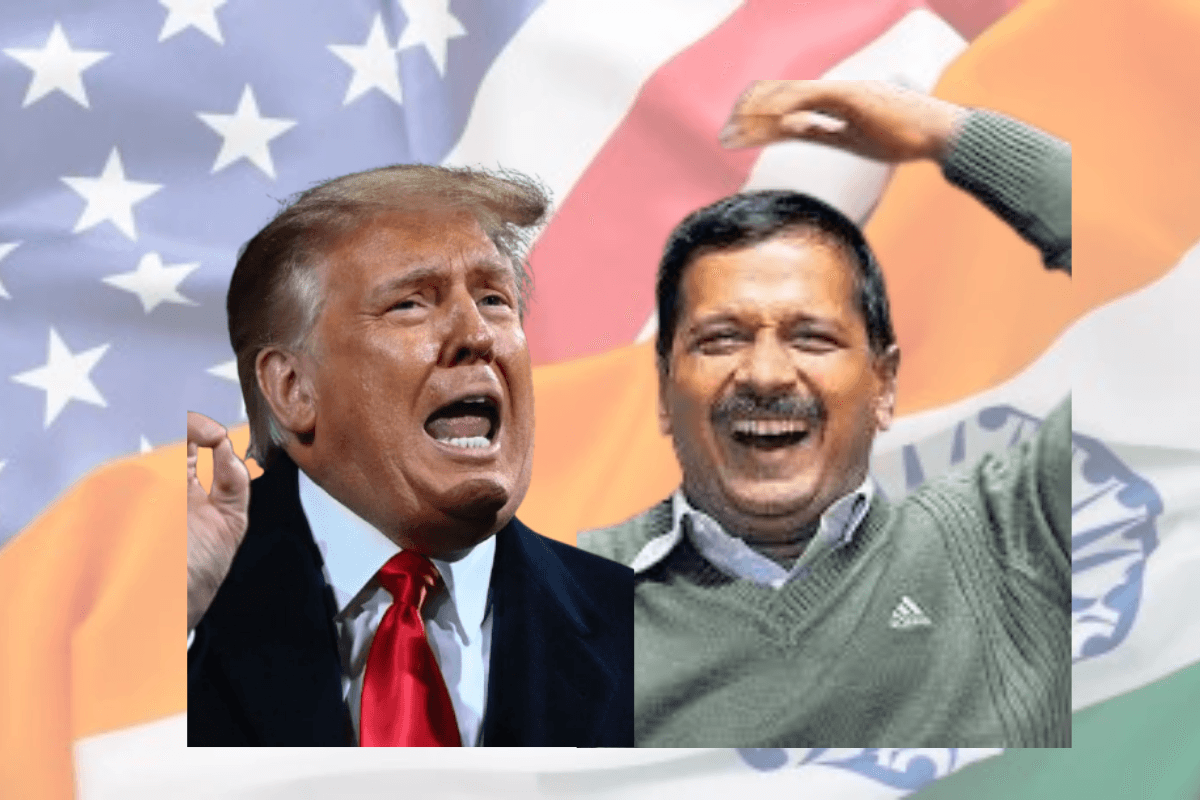
Donald Trump’s recent election rally in Michigan garnered attention not only in the U.S. but also in India, particularly due to a key promise he made regarding energy costs. Trump vowed to cut electricity rates by half within 12 months if he wins the U.S. presidential election. His statement quickly drew comparisons to policies in India, specifically to the “Bijli Half, Paani Maaf” slogan of the Aam Aadmi Party (AAP) during the 2020 Delhi elections, which also focused on reducing electricity and water costs.

Reacting to his pledge, Arvind Kejriwal, leader of AAP and former Delhi Chief Minister, took to X (formerly Twitter), humorously stating, “Free ki revri has reached the U.S.” This comment refers to the derogatory term often used by critics of Kejriwal’s policies, who label his subsidized services like free electricity and water as “freebies.” Kejriwal’s remark subtly pointed out the global acceptance of policies that reduce the cost of living, something he has been promoting in India for years.
Kejriwal’s AAP government in Delhi has been a vocal advocate for providing affordable electricity to citizens, and this has often led to political debate in India. Critics, especially from the Bharatiya Janata Party (BJP), have accused AAP of populism, referring to their free services as “muft ki revri” or “freebies,” implying unsustainable financial measures. In this context, Kejriwal’s response to Trump appears as a dig at BJP leaders, especially since Prime Minister Narendra Modi had criticized such freebie-driven politics on various occasions.
Raghav Chadha, another AAP leader, also weighed in, asserting that Kejriwal’s governance model is now setting global standards, as Trump’s promise mirrors AAP’s approach to governance. Chadha emphasized that AAP’s policy of subsidized electricity has been a groundbreaking move, and Trump’s similar promise signifies that such welfare-driven policies have found resonance beyond India.
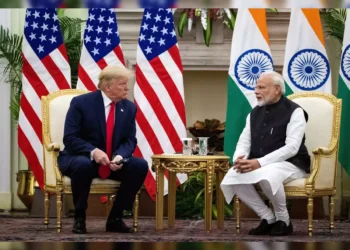
Adding to the international flavor of the conversation, Trump also brought India into his speech by criticizing the country’s high tariffs on foreign products, particularly American goods. While praising Prime Minister Modi, Trump hinted at introducing a reciprocal tax to balance out these tariffs, which could potentially lead to economic tensions between the two nations.
As Trump and Kejriwal’s exchanges circulate in media, they highlight the intersection of local Indian politics with global electoral strategies, showcasing how political promises regarding basic utilities are becoming an essential tool to win voter support.
This development has sparked further debate within India, where some argue that Trump’s remarks endorse AAP’s policies. However, others maintain skepticism, viewing such promises as election gimmicks. In any case, the global spotlight on the “freebie” culture and its evolving role in governance shows how political narratives are increasingly transcending national borders.
Examples of Freebie Politics in India
India has a rich history of political parties using freebies to win elections. Here are a few notable examples:
- Tamil Nadu’s Freebie Culture: Tamil Nadu is perhaps the most famous example of a state where freebie politics is deeply entrenched. Successive governments have offered voters everything from free rice and televisions to laptops and kitchen appliances. The AIADMK and DMK parties, in particular, have competed fiercely in offering populist schemes to attract voters. While these policies have undoubtedly helped improve the standard of living for many, they have also raised concerns about the state’s mounting debt.
- Andhra Pradesh’s Amma Vodi Scheme: The YSR Congress Party in Andhra Pradesh introduced the Amma Vodi scheme, which provides financial assistance to mothers to send their children to school. While the scheme has been praised for encouraging education, critics argue that it places a significant burden on the state’s finances and does not address the root causes of educational inequality.
- Punjab’s Free Power to Farmers: In Punjab, political parties have long offered free electricity to farmers as part of their election promises. While this policy has helped farmers in the short term, it has also led to severe financial stress for the state’s power sector and contributed to environmental problems like groundwater depletion.