


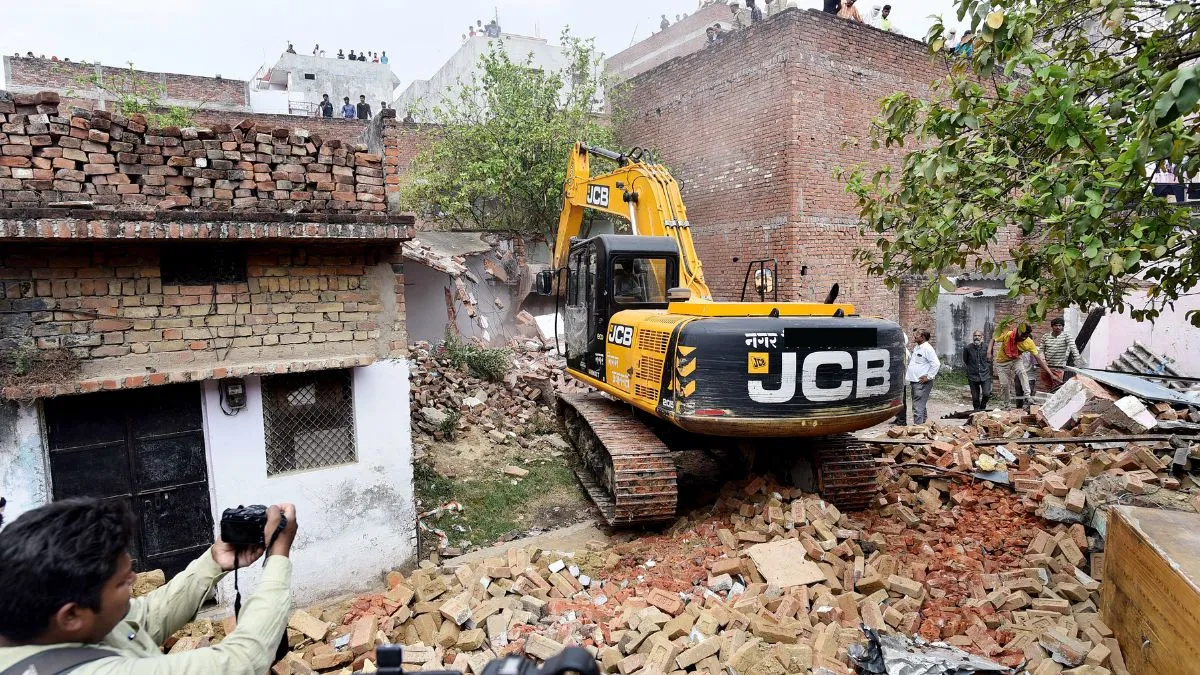
In a significant development expected to impact the practice of demolishing the properties of alleged and convicted criminals across India, the Supreme Court is poised to issue comprehensive pan-India guidelines on November 13. This follows a string of petitions questioning the legality and ethicality of what has been dubbed ‘bulldozer justice.’ The practice, prominent in states like Uttar Pradesh, Madhya Pradesh, Delhi, and Gujarat, has sparked debates over due process and the constitutional rights of individuals.

Background on ‘Bulldozer Justice’
The term ‘bulldozer justice’ has become synonymous with the governmental practice of using heavy machinery to demolish properties of individuals accused or convicted of crimes as a measure to send a strong, public deterrent against criminal activities. Supporters argue that it is a swift means to uphold law and order and sends a strong message against organized crime. However, critics, including human rights organizations, have raised concerns that such measures bypass due process and infringe on constitutional rights.
This approach came under scrutiny when reports surfaced of properties being razed without appropriate legal procedures, allegedly as a form of extrajudicial punishment. The Jamiat Ulama-i-Hind, a prominent Islamic organization, filed a petition against this practice, stating that it disproportionately affected certain communities and individuals, including those who had not yet been proven guilty by a court of law.
The Supreme Court’s Observations
In a hearing on September 2, a bench comprising Justices BR Gavai and KV Vishwanathan raised critical questions regarding the justification for such demolitions. Justice Gavai questioned, “How can a house be demolished just because it belongs to an accused or even a convict in a criminal case?” This question underscores the court’s concern about the potential misuse of power and the absence of a clear legal framework guiding such actions.
During the proceedings, the bench emphasized the importance of adhering to established legal protocols, reminding all involved that any action that impacts an individual’s property and livelihood must be legally justified and fall within constitutional parameters. The Supreme Court’s intervention highlights a pivotal moment in balancing state authority and the protection of individual rights.
The Argument Against Arbitrary Demolitions
Petitioners, including the Jamiat Ulama-i-Hind, pointed out that the practice of bulldozing properties has been carried out in various states without following due process. The organization argued that these demolitions often target specific communities and appear to be politically motivated rather than solely criminal justice measures. The petition emphasized that property demolitions violate fundamental rights, including the right to property as enshrined under Article 300A of the Indian Constitution.
Various human rights organizations and legal experts have supported this view, stating that punishing families and demolishing homes without a proper trial contravenes the principles of natural justice. “Demolishing a house is an irreversible act,” noted a human rights lawyer. “Even if the accused is later found innocent, the damage cannot be undone.”
Current Legal Framework
While there are existing laws regarding the confiscation and demolition of properties involved in criminal activities, they generally require a court order or due legal process. The Public Premises (Eviction of Unauthorised Occupants) Act, for instance, permits the eviction of unauthorized occupants but mandates procedural safeguards. State governments, however, have sometimes utilized municipal laws to justify demolitions, sidestepping the necessity for a thorough legal review.
The absence of uniform guidelines has led to a patchwork of practices across different states. In states like Uttar Pradesh and Madhya Pradesh, local authorities have been known to use bulldozer demolitions as a quick-fix solution for dealing with criminal elements. These actions are often publicized as triumphs of law enforcement, bolstered by televised media coverage. However, the legal basis for such acts frequently remains ambiguous, raising questions about whether these measures serve justice or violate it.
The Upcoming Pan-India Guidelines
The Supreme Court’s impending guidelines are expected to address these discrepancies and provide a unified framework for how and when such demolitions can be carried out. Legal experts believe that the guidelines will emphasize adherence to due process, requiring authorities to secure court orders and ensure that the rights of property owners are safeguarded.
Justice Vishwanathan commented during the hearings that such guidelines are crucial for preventing potential misuse of power and ensuring that state actions do not result in human rights violations. It is anticipated that the guidelines will incorporate provisions that clearly delineate the conditions under which demolitions can take place, mandate a transparent process, and outline consequences for non-compliance.
Broader Implications
The Supreme Court’s decision to issue these guidelines could have wide-reaching effects. For states that have adopted aggressive stances on property demolitions, this could mean a significant shift in how law enforcement agencies operate. Policymakers and officials may need to reassess their strategies and prioritize legally sound alternatives for addressing crime.
This Supreme Court move is expected to resonate with human rights groups and legal experts who have long advocated for the protection of constitutional rights. “We welcome any measure that ensures rule of law and protects individuals from arbitrary state actions,” said a representative from a civil liberties organization.
The Way Forward
As the country awaits the Supreme Court’s detailed guidelines, the discourse on ‘bulldozer justice’ is set to intensify. The Supreme Court forthcoming directive could redefine the balance between state power and individual rights, setting a precedent for how criminal justice should be pursued without compromising constitutional principles.
In conclusion, the Supreme Court’s intervention in addressing the legality and ethics of demolishing properties as a punitive measure signals a pivotal step towards ensuring due process and upholding the rule of law. The Supreme Court decesion outcome will likely serve as a crucial benchmark for how justice is administered in India, aligning state actions with the constitutional rights of individuals.


















WinPH777LoginPhilippines is perfect for local players! Easy deposit options and a wide range of games. Try your luck kabayan! winph777loginphilippines
Hey there! Spent a bit of time on vn88io lately. Gotta admit, I was a bit skeptical at first, but overall I found it to be a solid platform. The game selection’s pretty good, especially if you’re into slots. Withdrawal times could be a little faster, but not terrible. Check them out here vn88io.
Heard a few whispers about 55ww. Looks kinda interesting. Not gonna lie, the website design is a little…basic, but the games might be good. I’m on the fence, but maybe worth checking out. See for yourself! 55ww
5hbetwin felt like a pretty solid platform. Easy to navigate, and the games were decent. I’d recommend giving it a shot. Check it out at 5hbetwin.
Hey, heard about Okay Bet! Anyone tried placing bets there? Share your experience. Thinking of giving it a shot. Check it out here: okay bet