

“Netanyahu offers a swift end to the Gaza conflict if Hamas lays down its arms and releases hostages, amid escalating violence and global calls for a ceasefire.”
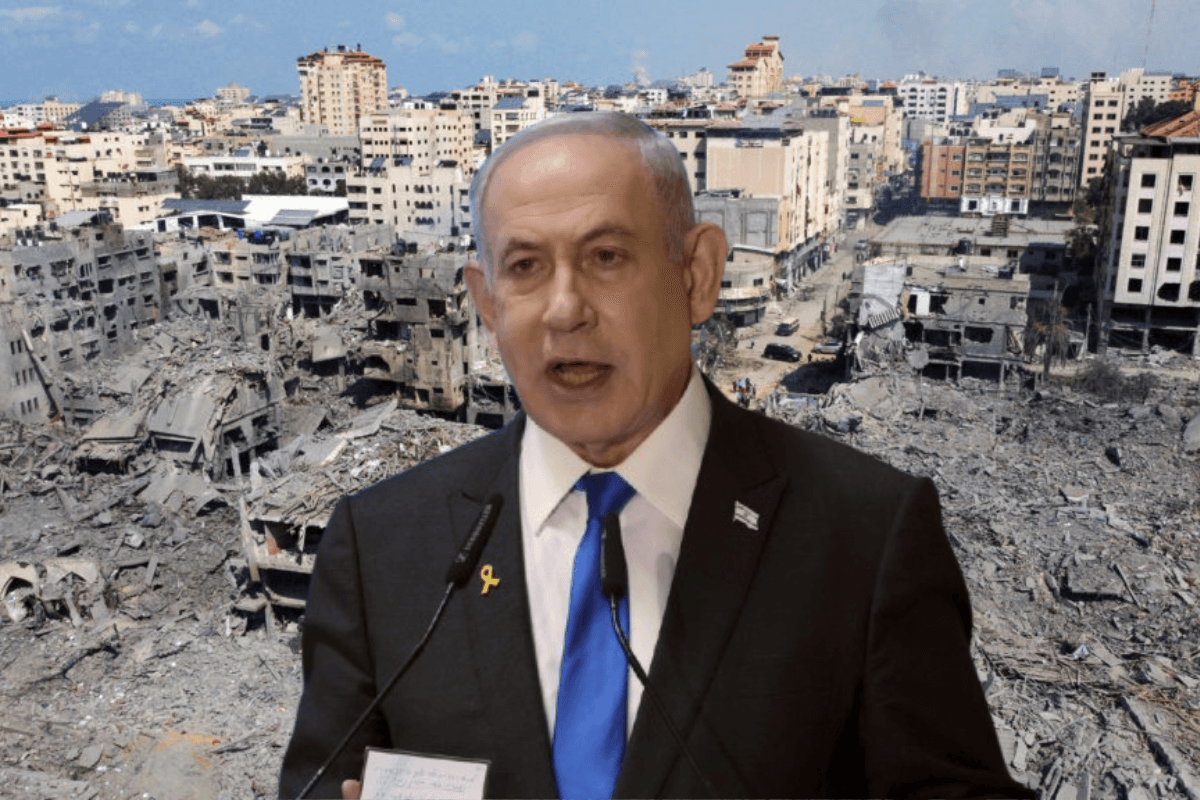
The Israeli-Hamas conflict, ignited on October 7, 2023, continues to claim lives and devastate Gaza and Israel. Israel recently confirmed the killing of Yahya Sinwar, the Hamas chief responsible for orchestrating the October 7 attacks that killed over 1,200 Israelis. Israeli Prime Minister Benjamin Netanyahu, addressing the people of Gaza, offered a potential resolution: if Hamas lays down its arms and releases the hostages, the war could end “as soon as tomorrow.” Netanyahu stressed that the release of around 100 hostages held by Hamas is key to de-escalating the violence. However, Hamas has resisted calls for surrender or ceasefire, leaving the conflict’s end uncertain.

Responsibility for Innocent Lives Lost
The war has inflicted immense suffering on both sides, with more than 40,000 Palestinians reported dead in Gaza, many of them civilians. Hamas’ strategy of using civilian areas as bases for operations and hostages as shields has drawn widespread condemnation. Simultaneously, Israel’s military response, which includes airstrikes and ground operations, has been criticized for disproportionately harming civilians. As the international community grapples with the question of responsibility, both Hamas and Israel are held accountable by different factions. Hamas is condemned for inciting the violence and targeting civilians, while Israel faces scrutiny for the scale of its military response, which has caused widespread destruction in Gaza . Jewish Telegraphic Agency.
Global Reactions
The world remains divided in its response to the conflict. Western nations like the United States have largely supported Israel’s right to defend itself, emphasizing the need to eliminate Hamas as a terror organization. At the same time, the U.S. has urged Israel to ensure humanitarian aid reaches Gaza and minimize civilian casualties. The European Union and many other countries have echoed this stance, condemning Hamas’ actions while calling for a ceasefire and the protection of civilian lives.
On the other hand, some countries in the Middle East and others, such as Turkey and Qatar, have expressed strong opposition to Israel’s actions, accusing it of disproportionate force and war crimes. Protests in support of Palestine have erupted globally, highlighting the deep divisions in public opinion on the conflict. The international community has also expressed concerns over potential escalations, especially if Iran, Hezbollah, or other regional players become more involved.
International bodies like the United Nations have urged restraint from both sides, calling for an immediate ceasefire and humanitarian intervention. The ongoing violence has drawn sharp criticism from human rights organizations, who argue that the scale of destruction and civilian displacement violates international humanitarian law. Yet, attempts at diplomatic solutions, such as ceasefire negotiations, have repeatedly failed due to Hamas’ refusal to lay down arms and Israel’s commitment to eliminating the group entirely .
Moving Forward
For the war to end, a combination of diplomatic pressure and strategic decisions from both Hamas and Israel is crucial. Netanyahu’s recent remarks suggest that Israel is willing to halt military actions if Hamas agrees to its terms, but this remains a long shot without Hamas’ cooperation. Additionally, international mediation, possibly led by the U.S., Egypt, and Qatar, could play a pivotal role in brokering peace by leveraging Sinwar’s death and focusing on a hostage deal. However, the deep-seated hostilities, territorial disputes, and competing ideologies make any long-term peace challenging.
The fate of Gaza and Israel will depend on how both parties and the global community respond in the coming weeks. The possibility of further escalation looms large, especially with tensions rising in neighboring regions like Lebanon, where Hezbollah has engaged Israel, and Iran’s indirect involvement through funding and supplying arms to Hamas.
In conclusion, while Netanyahu’s statement offers a glimmer of hope for a resolution, the reality of the conflict points to a protracted and difficult path ahead. Both sides have suffered immensely, and global leaders must now navigate a delicate balance between military strategy and humanitarian aid, all while striving for a peace that seems increasingly elusive. The responsibility for ending the violence lies not only with Hamas and Israel but with a world that must work together to prevent further loss of innocent lives.