

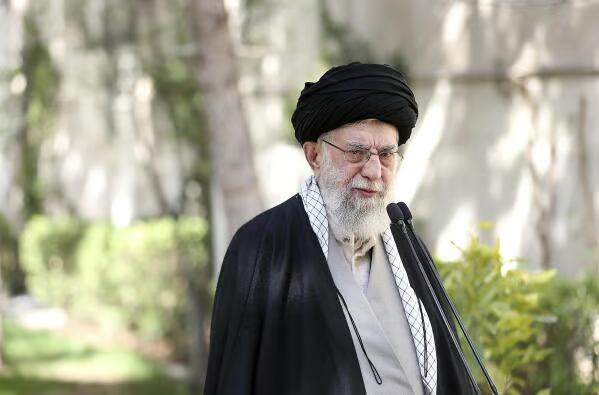
In recent developments, Iran’s Supreme Leader Ayatollah Ali Khamenei has sparked diplomatic tensions with his comments about the treatment of Muslims in various parts of the world, including India. On September 16, 2024, Khamenei took to social media to express concern over the plight of Muslims, specifically mentioning India, Myanmar, and Gaza, stating that no true Muslim can remain indifferent to their suffering. His remarks were part of a broader call for Islamic unity against perceived oppression globally.

Khamenei’s Remarks
Khamenei’s comments were particularly critical of the treatment of Muslims in India, although he did not specify particular incidents or policies. He emphasized that the Islamic community must remain united in addressing the injustices faced by Muslims in different regions, including Gaza, where he has long supported Palestinian resistance against Israel. His comments reflect his stance that Islamic solidarity is essential in combating what he sees as attempts by external powers to divide the Islamic world.
In his post on X (formerly Twitter), Khamenei stated, “We cannot consider ourselves Muslims if we are oblivious to the suffering that a Muslim is enduring in #Myanmar, #Gaza, #India, or any other place.” He also stressed the importance of standing with the oppressed, saying, “Anyone who neglects this duty will surely be questioned by God.”
India’s Response
The Indian government, through its Ministry of External Affairs (MEA), quickly condemned Khamenei’s statements, calling them “misinformed” and pointing out that they were based on a flawed understanding of India’s treatment of its minorities. The MEA urged countries commenting on minority treatment to look inward at their own records before making observations about others.
India and Iran share significant diplomatic and economic ties, including the strategic Chabahar Port project, which provides India with a crucial trading route to Afghanistan and Central Asia. Despite this, Khamenei’s comments have the potential to strain relations between the two nations, especially given India’s sensitivity to external criticism about its domestic policies concerning religious minorities.
Context and Broader Implications
Khamenei’s statements come amid broader concerns about the rising tensions between different religious and ethnic groups globally. In India, the treatment of Muslim minorities has been a point of international discussion, especially after the Citizenship Amendment Act (CAA) protests and incidents of communal violence. However, the Indian government has consistently rejected international criticism, maintaining that it treats all its citizens equally, irrespective of religion.
Khamenei’s comments also reflect Iran’s long-standing role as a vocal supporter of Muslim causes, especially in the context of the Israeli-Palestinian conflict. His mention of Gaza underscores Iran’s continued backing of Palestinian groups like Hamas, which Iran supports against Israeli occupation. Iran’s leadership often frames its foreign policy as a defense of oppressed Muslims worldwide, positioning itself as a leader of the Islamic Ummah.
Conclusion
Khamenei’s remarks have once again highlighted the complexities of balancing religious solidarity with diplomatic relations in the region. While Iran has the right to comment on global Muslim issues, its statements can have consequences for bilateral relations, particularly with nations like India that have significant Muslim populations but also sensitive domestic policies. How both countries navigate these tensions in the coming weeks will be crucial in maintaining their strategic partnership while addressing broader geopolitical concerns.