

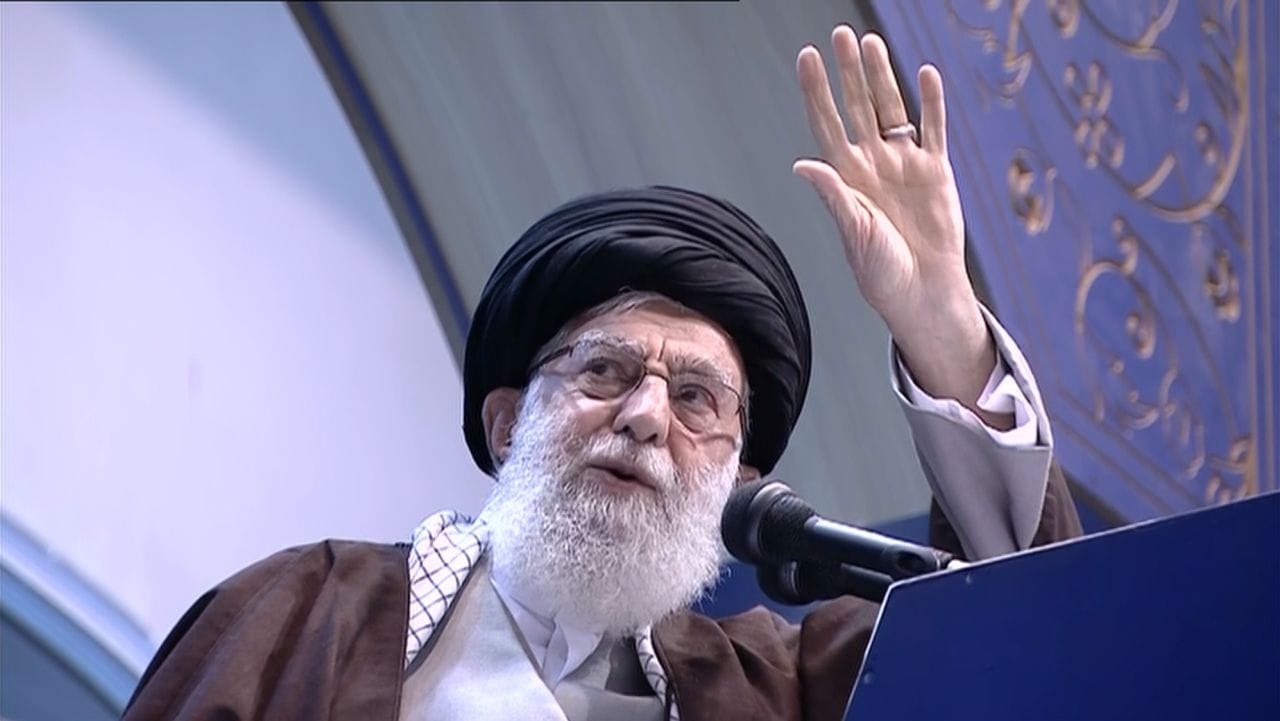
Iran’s Supreme Leader Ayatollah Ali Khamenei delivered a rare and powerful Friday sermon on October 4, 2024, in Tehran, marking his first public address in five years. This speech comes amid escalating tensions between Iran and Israel, following a wave of missile attacks launched by Iran in retaliation for Israeli airstrikes that killed key Iranian and Hezbollah figures, including Hezbollah leader Hassan Nasrallah.

Khamenei’s sermon resonated with a massive crowd at the Imam Khomeini Grand Mosalla mosque. He fiercely criticized Israel and the United States, vowing to “defeat our enemies” and calling for Islamic unity in the face of Western powers. His speech focused on solidarity with Palestinian and Lebanese movements, notably Hezbollah, positioning them as critical to resisting Israeli and U.S. influence in the region.
Khamenei addressed the ongoing Israel-Gaza conflict, emphasizing that Iran’s military actions, including the recent missile strikes on Israel, were acts of self-defense and retaliation for Israeli aggression. He also warned Israel and its allies of “crushing attacks” if provoked further. Public mourning was declared in Iran for Nasrallah, with protesters rallying across Tehran, waving Hezbollah flags, and denouncing Israeli actions.
This sermon signals Iran’s readiness to continue its military engagements with Israel, fueled by its alignment with groups like Hamas and Hezbollah. Khamenei’s rhetoric underscores the broader geopolitical tension, as the U.S. and Israel consider possible retaliatory strikes on Iranian assets, especially targeting the country’s oil infrastructure. U.S. President Joe Biden has reportedly discussed potential military responses, while Iran has issued warnings about further retaliation if attacked.
The timing of this sermon is critical, just days before the anniversary of the Israel-Hamas war, marking a grim chapter in the region’s volatile history. Khamenei’s public address seeks to galvanize domestic and regional support against Israeli and American policies, while showcasing Iran’s resolve in the ongoing conflict. Tehran’s missile attacks, public demonstrations, and Khamenei’s defiant stance are shaping a new phase of confrontation, with the potential for further escalation in an already unstable Middle East.
This rare sermon reflects the deep-rooted enmity between Iran and Israel and serves as a reminder of Iran’s influential role in the regional power dynamics, particularly its backing of armed groups opposing Israeli and Western forces. As tensions continue to rise, the international community watches closely, wary of the potential for this conflict to ignite broader hostilities.