



India signed a landmark defense deal with the United States to acquire 31 MQ-9B Predator drones, significantly boosting its military capabilities. Valued at around $3.5 billion, this agreement is part of the US Foreign Military Sales program. The drones will be allocated to the Indian Navy (15 SeaGuardian variants), and the Indian Army and Air Force will each receive eight SkyGuardian drones. The Predator drones, known for their advanced surveillance, intelligence, and reconnaissance capabilities, are expected to strengthen India’s defense posture across multiple terrains, particularly in maritime and border security.

Breakdown of Drone Allocation
- Indian Navy: The Navy is set to receive 15 SeaGuardian drones, a variant designed for maritime operations. These drones will enhance surveillance over the vast Indian Ocean, a key strategic area for India, where monitoring sea lanes and securing territorial waters is crucial. The Navy currently operates leased Predator drones, and this purchase will expand its fleet to ensure constant vigilance over maritime threats.
- Army and Air Force: Both the Army and Air Force will each receive eight SkyGuardian drones, a variant designed for multi-role capabilities. These Predator drones will provide real-time intelligence, enabling precision strikes and surveillance in remote and border regions, particularly along India’s contentious borders with Pakistan and China.
Strategic Importance and Technological Edge
India’s acquisition of these drones aligns with its broader defense modernization and capability enhancement. The Predator drones will significantly improve intelligence gathering, surveillance, and target acquisition (ISTAR) capabilities, offering round-the-clock operational flexibility. With an extended flight time of up to 40 hours, these drones can monitor large areas, identify threats, and deliver precision strikes in hostile environments, reducing the need for human intervention in dangerous missions.
For the Indian Navy, the SeaGuardian drones will enhance anti-submarine warfare, search and rescue missions, and intelligence gathering over vast maritime zones. With increasing challenges from China’s growing influence in the Indian Ocean, these drones will serve as a force multiplier.
For the Army and Air Force, the SkyGuardian drones will provide superior intelligence and target acquisition capabilities, especially important for monitoring India’s northern borders where high-altitude operations are critical. These drones can be instrumental in managing military operations in contested regions like Ladakh.
The Significance of the US-India Defense Relationship
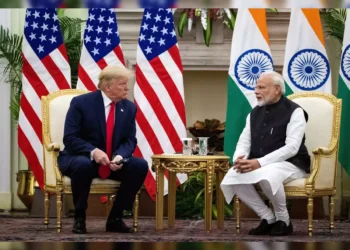
This deal is another milestone in the growing strategic partnership between the U.S. and India. The MQ-9B acquisition follows several other significant defense agreements, symbolizing deepening military cooperation between the two countries. Under the U.S. Foreign Military Sales (FMS) program, this transaction also emphasizes India’s position as a key defense partner in the Indo-Pacific region.
The U.S. has emerged as one of India’s most important defense suppliers, particularly for cutting-edge technology and equipment. Predator drones are known for their high-precision capabilities, used extensively by the U.S. military in counterterrorism operations. India’s acquisition of these drones signals its intent to further align with the U.S. in security matters, especially as both countries aim to counter rising threats from China and other regional adversaries.
Indigenous Defense Push and Self-Reliance
India’s push for indigenous defense manufacturing has been a top priority for the Modi government. While the Predator drones are sourced from U.S.-based General Atomics, this deal does not negate India’s efforts to build a self-reliant defense sector. Alongside this agreement, India’s Cabinet Committee on Security (CCS) also approved the construction of two indigenous nuclear-powered submarines, marking a key step in boosting domestic defense production. The submarines, with an estimated budget of ₹40,000 crore, are expected to be built with significant private sector involvement.
This focus on indigenization is crucial as India looks to reduce its dependence on foreign arms while simultaneously advancing its defense capabilities. By developing its nuclear submarine program and acquiring advanced technology like the MQ-9B drones, India is moving towards a more balanced defense strategy.
Implications for Regional Security
The introduction of Predator drones into India’s military arsenal comes at a time of heightened regional tensions. India has long faced security challenges along its borders with China and Pakistan, and the drones will provide enhanced situational awareness and deterrence.
In the maritime domain, where China’s influence is expanding through the Belt and Road Initiative and its aggressive posture in the South China Sea, India’s SeaGuardian drones will play a crucial role in safeguarding national interests. With maritime security becoming increasingly vital for India’s geopolitical strategy, the acquisition of these drones will enhance India’s ability to monitor shipping lanes and secure its waters against potential threats.
Conclusion
India’s deal for 31 MQ-9B Predator drones marks a significant step in modernizing its military forces, providing the country with advanced ISTAR capabilities. This acquisition, along with the development of nuclear submarines, strengthens India’s position as a regional power capable of countering emerging threats. The deal highlights the growing U.S.-India defense partnership and reflects India’s strategic priorities in enhancing its defense capabilities while promoting self-reliance in defense production.
As delivery of these drones is set to begin in the coming years, India is poised to reinforce its military strength across multiple domains, ensuring a robust defense posture against evolving regional security challenges. READ MORE

















Comments 3