


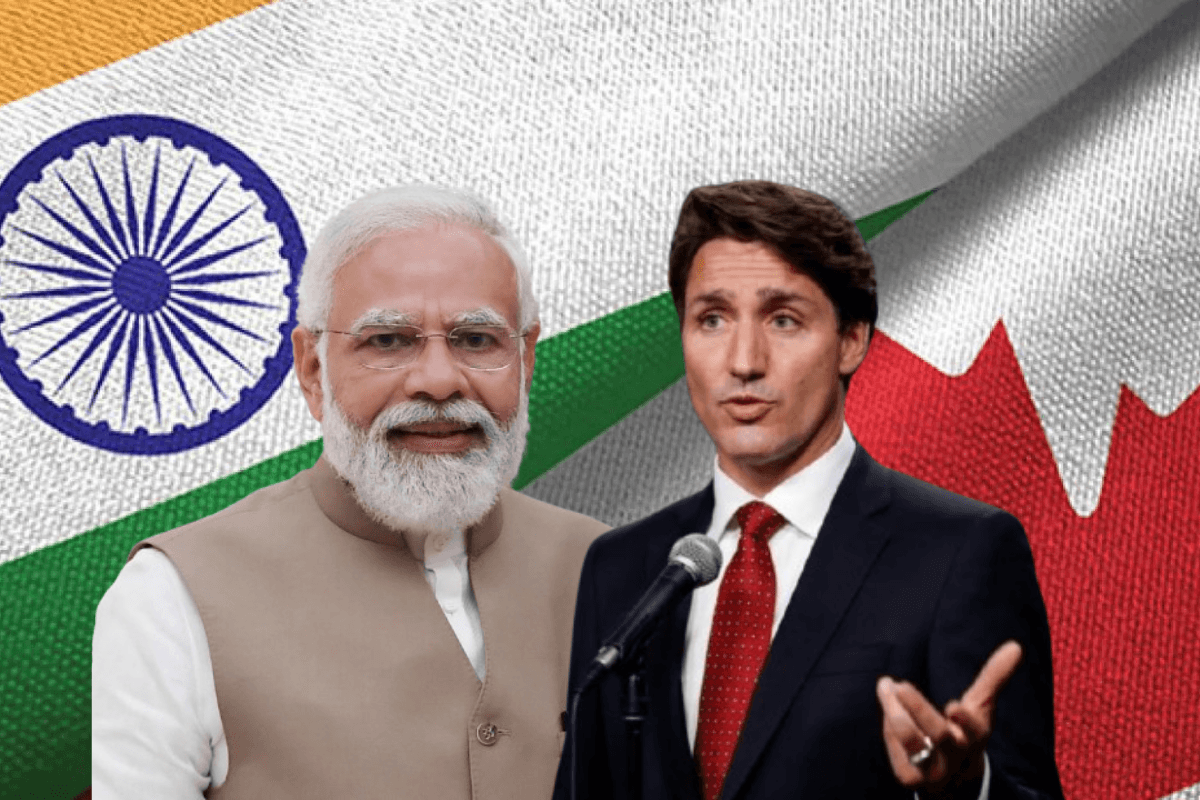
The diplomatic row between India and Canada has escalated dramatically, with India announcing the withdrawal of its High Commissioner from Canada. This step comes after Canada accused India of being involved in the assassination of Sikh separatist Hardeep Singh Nijjar in British Columbia in June 2023. Canadian Prime Minister Justin Trudeau made the allegations, citing intelligence reports linking Indian agents to the killing, a claim India strongly denies, calling it “absurd” and “politically motivated.”

Background on the Dispute
The rift between the two nations started after the assassination of Nijjar, a vocal supporter of the Khalistan movement, which seeks to establish a separate Sikh state in Punjab, India. Canada, home to a large Sikh diaspora, particularly in British Columbia, has often been at the center of tensions with India due to its stance on Sikh separatism. While Nijjar was wanted by India for terrorist activities, he was also a prominent figure in Canada, where he had been advocating for Khalistan.
Following his killing outside a Sikh temple in Surrey, Canada, accusations began to surface about Indian involvement. Trudeau addressed the Canadian Parliament in September 2023, alleging that there were “credible allegations” linking Indian agents to Nijjar’s murder, based on Canadian intelligence reports. He urged India to cooperate with the investigation and uphold international law.
India’s Response and Diplomatic Actions
India’s response to Trudeau’s statements was immediate and categorical. The Indian Ministry of External Affairs (MEA) dismissed the allegations, calling them “absurd” and driven by political motives within Canada. They pointed out that Canada had not provided any substantial evidence to back its claims and that these allegations were designed to distract from Canada’s own issues with separatist activities.
In the weeks following Trudeau’s claims, diplomatic relations between the two nations soured further. India expelled a senior Canadian diplomat in a reciprocal move after Canada expelled an Indian diplomat, believed to be the head of Indian intelligence in Canada. These moves have severely impacted both nations’ diplomatic efforts, with India taking a hard stance on its sovereignty and foreign policy.
Escalation and High Commissioner Withdrawal
The decision to withdraw the High Commissioner is a significant escalation in the ongoing tensions. India had already issued advisories to its citizens in Canada, urging them to exercise caution due to the growing anti-India sentiments in the country. Additionally, visa services for Canadian citizens were temporarily suspended by India, further illustrating the deepening diplomatic crisis.
Canada, in turn, has also restricted its diplomatic presence in India, with its High Commissioner emphasizing the need for both nations to engage in dialogue. However, despite repeated calls for diplomatic engagement from Canada, India has remained firm in its stance, calling for Canada to take strong actions against anti-India elements operating on its soil, particularly those involved in the Khalistan movement.
Trade and Bilateral Relations Impact
The escalating diplomatic tensions are not only a political concern but also have economic ramifications. Canada and India have shared strong trade relations, with significant investment flows between the two nations. Bilateral trade stood at around $8 billion in 2022, and both countries have been working toward a Comprehensive Economic Partnership Agreement (CEPA). However, with the ongoing diplomatic dispute, negotiations on the CEPA have been paused indefinitely, raising concerns about the future of trade and investment between the two nations.
Canada is also home to a sizable Indian diaspora, numbering over 1.4 million people. The Indian community in Canada plays a pivotal role in the country’s social and economic fabric, and the ongoing tensions have created an environment of uncertainty for many Indian-Canadians. There have been reports of increased incidents of racial and anti-India sentiments, adding to concerns within the diaspora.
Future Prospects and Global Reactions
As the situation continues to escalate, global reactions have been mixed. While some countries have expressed concerns over the rising tensions, there has been little direct involvement from major international powers. The United States and the United Kingdom, both of which have strong diplomatic ties with both India and Canada, have urged for a peaceful resolution through dialogue, emphasizing the importance of diplomatic channels in addressing these serious allegations.
For India, the focus remains on ensuring its sovereignty and addressing concerns related to external interference in its internal matters. Canada, on the other hand, is under pressure to provide concrete evidence to back its claims and pursue justice for Nijjar’s assassination, without escalating the conflict further.
Conclusion
The withdrawal of India’s High Commissioner from Canada marks a significant turning point in Indo-Canadian relations, reflecting the gravity of the situation. As both nations navigate this diplomatic crisis, the international community will be closely watching how the situation unfolds. Whether through dialogue or further diplomatic actions, the future of India-Canada relations hangs in a delicate balance, with far-reaching implications for trade, diplomacy, and international law.













Comments 1