

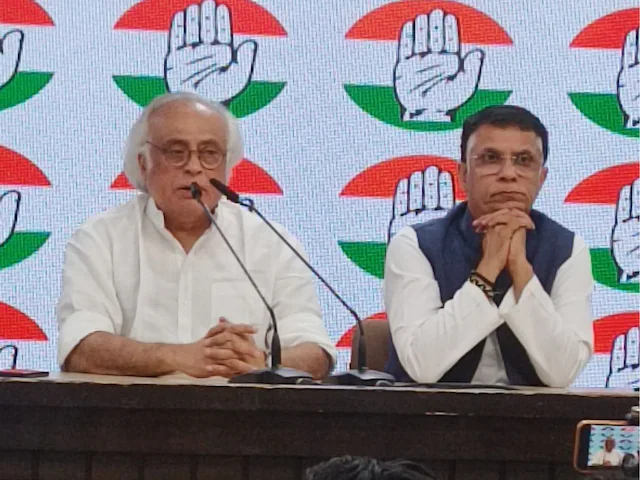
The Congress party has raised serious allegations of Electronic Voting Machine (EVM) hacking following the recent Haryana Assembly elections, especially after a surprising shift in results. The initial vote count indicated that Congress was leading in several key constituencies, but after counting EVM votes, the Bharatiya Janata Party (BJP) secured a significant victory. Congress leaders, including Pawan Khera and Bhupinder Hooda, have accused the Election Commission (EC) of allowing tampering with EVMs, especially in 20 constituencies. Hooda emphasized that Congress typically leads in postal ballots but experiences a drop once EVM votes are tallied, which has raised suspicions.

According to the Congress, the discrepancies occurred in districts like Karnal, Dabwali, Rewari, Panipat City, Hodal, Kalka, and Narnaul. They claim to have submitted evidence for seven constituencies and plan to provide further documentation within 48 hours. The Congress party believes that these results do not reflect the ground reality and has formally challenged the outcome by submitting complaints to the Election Commission.
The Election Commission, however, has strongly denied the allegations. It asserted that EVMs are secure and backed by legal and technical safeguards that have been upheld by the Supreme Court. The EC emphasized that all political parties, including Congress, are involved in every stage of the election process, from commissioning to counting, which makes tampering unlikely. Moreover, the EC reiterated that previous challenges to EVMs in courts were dismissed, further bolstering their credibility.
Despite the EC’s assurances, the Congress continues to push for an investigation into the alleged irregularities and hacking, while the BJP has called these claims baseless, accusing Congress of trying to discredit the election process to justify their loss.
This latest dispute highlights the ongoing debate over EVMs in Indian elections, with many opposition parties, not just Congress, frequently raising concerns about their transparency and reliability. The controversy adds to the already polarized political atmosphere in Haryana and could have broader implications for upcoming elections across the country.