

In a significant boost to India’s defense capabilities, the government has approved the procurement of Future Ready Combat Vehicles (FRCVs), air defense fire control radars, and Dornier-228 aircraft. This decision, announced by the Defence Acquisition Council (DAC), aims to enhance the operational readiness of the Indian Armed Forces across various domains.

The procurement of FRCVs is a major step towards modernizing the Indian Army’s armored corps. These vehicles, designed to meet the future battlefield requirements, will replace the aging fleet of tanks and other armored vehicles. The new FRCVs are expected to offer superior mobility, firepower, and protection, ensuring that the Indian Army remains equipped to handle evolving threats.
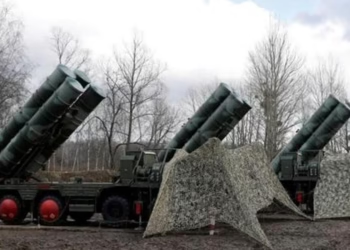
The acquisition of air defense fire control radars is another crucial component of the government’s defense modernization plan. These radars will bolster the Indian Air Force’s capability to detect and track aerial threats, providing real-time data for effective air defense operations. The enhanced radar systems are expected to significantly improve the accuracy and responsiveness of India’s air defense network.
In addition, the approval for the procurement of Dornier-228 aircraft is aimed at strengthening the Indian Navy’s maritime surveillance capabilities. The Dornier-228, a versatile aircraft, will be utilized for coastal patrol, search and rescue operations, and other maritime duties. This addition to the Navy’s fleet is expected to enhance India’s ability to monitor and secure its vast maritime boundaries.
The approval of these procurements reflects the government’s commitment to bolstering national security and ensuring that the armed forces are equipped with the latest technology and equipment. These acquisitions are also likely to have a positive impact on the domestic defense manufacturing sector, aligning with the ‘Make in India’ initiative.
As these procurements progress, they are expected to significantly enhance India’s defense posture, ensuring the country’s preparedness in the face of emerging security challenges.