

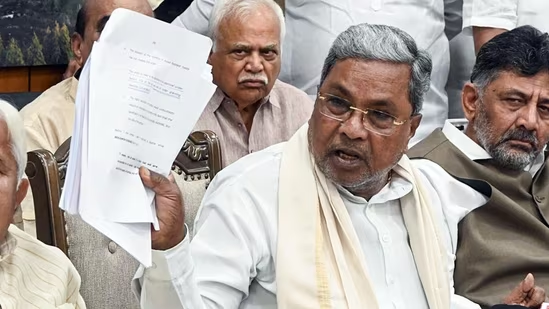
A major political storm has erupted in Karnataka as Chief Minister Siddaramaiah finds himself embroiled in a money-laundering case linked to the Mysuru Urban Development Authority (MUDA). The Enforcement Directorate (ED) has taken cognizance of a recent FIR filed by the Karnataka Lokayukta, which alleges illegalities in the allotment of high-value land by MUDA to Siddaramaiah’s family.

Background of the Case
The controversy revolves around the allocation of 14 compensatory plots of land to Siddaramaiah’s wife, B M Parvathi, in Mysuru’s upmarket areas. These sites were allegedly allocated in exchange for land acquired by MUDA from Parvathi. However, the issue stems from accusations that the sites provided were in prime areas, far more valuable than the land surrendered, raising suspicions of favoritism and illegal land acquisition.
Involvement of Key Individuals
Apart from Siddaramaiah and his wife, other key figures involved in the FIR include his brother-in-law Mallikarjuna Swamy and a man named Devaraju, from whom Swamy allegedly purchased the land later gifted to Parvathi. The ED has pressed sections of the Prevention of Money Laundering Act (PMLA) to formally investigate the financial irregularities tied to this case.
Legal Developments
This case has gained traction following a special court in Bengaluru’s decision to order a Lokayukta probe into the alleged illegalities. The order came after Karnataka Governor Thaawarchand Gehlot granted sanction to investigate Siddaramaiah. Despite the mounting legal pressure, Siddaramaiah has maintained his innocence, accusing his political opponents of targeting him out of fear. He labeled the case a “political vendetta” and vowed to fight the charges in court.
Allegations and Charges
The Lokayukta FIR includes multiple charges under the Indian Penal Code (IPC), such as criminal conspiracy (Section 120B), cheating (Section 420), forgery (Sections 465 and 468), criminal breach of trust (Section 406), and misappropriation of property (Section 403). These charges collectively accuse Siddaramaiah and his family of manipulating the system to acquire high-value land, which, if proven, could have serious legal and political ramifications.
Political Implications
Siddaramaiah’s opposition, particularly the Bharatiya Janata Party (BJP), has been quick to capitalize on the scandal, demanding his resignation and questioning his moral authority to continue in office. However, the Karnataka CM remains defiant, asserting that he has done no wrong and that the land transactions were transparent. He has dismissed the calls for his resignation, insisting that the law will vindicate him.
The ED’s involvement raises the stakes, as the agency is empowered to summon the accused for questioning and even seize assets during the investigation. This intensifies the legal challenges faced by Siddaramaiah, making it a crucial test of his leadership in Karnataka, particularly as the state is witnessing heightened political activity following the recent assembly elections.
Public Perception and Reaction
Public opinion remains divided. While Siddaramaiah enjoys substantial support from his loyal voter base, allegations of corruption and land-grabbing may weaken his political standing, especially if the case gains more traction. Corruption cases against high-profile politicians often become focal points in public discourse, and this case could shape Karnataka’s political landscape in the months to come.
Conclusion
As the investigation deepens, it remains to be seen how Siddaramaiah and his family will navigate the legal and political hurdles. The involvement of the ED has added a new dimension to the case, potentially leading to serious consequences for the Karnataka CM. The state awaits the next moves from the courts and investigative agencies, as the legal battle is expected to be both long and impactful(The New Indian Express)(DNA India).