



Gurmeet Ram Rahim Singh, the controversial leader of the Dera Sacha Sauda sect, has been granted parole for the 15th time in four years, raising significant concerns as Haryana approaches assembly elections. The parole was approved by Chief Minister Nayab Singh Saini and is set to last for 20 days(ABP Live).

Background
Ram Rahim is currently serving a 20-year sentence for raping two female disciples at his ashram in Sirsa, Haryana. His past paroles have often coincided with election cycles, leading critics to accuse the ruling BJP government in Haryana of using his influence to sway voters. With hundreds of thousands of followers, particularly in regions like Sirsa, his release could potentially impact electoral outcomes.
The Political Context
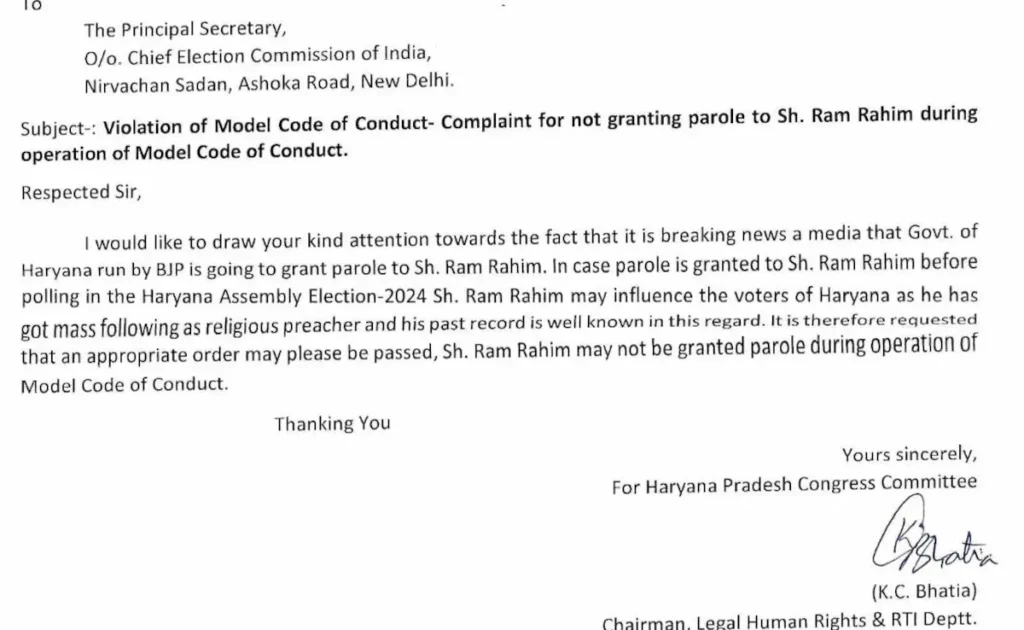
The timing of this parole has raised eyebrows, especially as the Model Code of Conduct is currently in effect due to the upcoming elections. The Congress party has formally objected to Ram Rahim’s release, urging the Election Commission to intervene. They argue that his influence could lead to the manipulation of voter sentiments in favor of the ruling party.
The Congress’s letter emphasizes that allowing Ram Rahim out of prison during an election season poses a threat to the fairness of the electoral process.
Ram Rahim’s Influence
Gurmeet Ram Rahim commands a significant following, with the Dera Sacha Sauda sect having considerable clout in Haryana politics. His presence during election periods has historically been seen as a double-edged sword. While he has the power to mobilize his followers to vote, his controversial background continues to spark debate over the ethics of his political involvement(ABP Live).
Concerns About Parole Practices
The frequency of Ram Rahim’s paroles has raised questions about the parole system in Haryana. Critics argue that it appears to be manipulated for political gain, undermining public trust in the judicial process. His latest release, following multiple previous paroles, highlights a concerning pattern that could lead to allegations of favoritism within the state’s political landscape.
Conclusion
As Ram Rahim prepares for yet another period outside prison walls, the implications for the upcoming elections are profound. The ongoing political discourse surrounding his parole emphasizes the complex interplay between religion, politics, and justice in India. With the Congress party actively seeking to challenge the legality and ethics of his release, the situation remains dynamic, and the outcome could set a precedent for future cases involving politically influential prisoners.



















Comments 1