


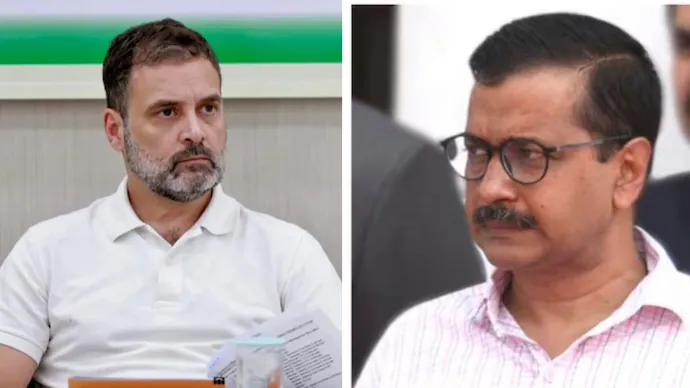
As the 2024 Haryana Assembly elections draw near, the Congress party finds itself in a critical position, grappling with an alliance dilemma that could influence the outcome of the polls. The emerging tension centers around the demand from the Aam Aadmi Party (AAP) for 20 seats, a request that has stirred significant debate within Congress circles and beyond.

Alliance Dynamics and AAP’s Demands
The AAP, led by Delhi Chief Minister Arvind Kejriwal, has been pushing hard for a substantial share of the seats in Haryana. With the state elections approaching, the party has publicly stated its demand for 20 out of the 90 assembly seats. This request has put Congress in a difficult position, as it weighs the potential benefits of an alliance against the logistical and strategic challenges of accommodating AAP’s demands.
Congress, which has traditionally been a dominant force in Haryana, faces a complex equation. On one hand, an alliance with AAP could potentially consolidate anti-BJP votes and increase the chances of a successful electoral outcome. On the other hand, negotiating such a large share of seats to AAP might alienate Congress’s own base and undermine its position in the state.
Rahul Gandhi’s Intervention
Amidst these developments, Congress leader Rahul Gandhi has stepped into the fray, attempting to address the situation with a conciliatory approach. In a recent statement, Gandhi emphasized that the primary goal of any alliance should be to defeat the Bharatiya Janata Party (BJP). His comments have been seen as a strategic move to foster unity and appeal to voters who are disillusioned with the BJP’s governance.
Gandhi’s assertion has garnered praise from various quarters, including AAP supporters who view it as a positive step towards a cooperative strategy. By focusing on the broader objective of ousting the BJP, Gandhi aims to align the party’s strategy with the sentiment of many voters who are dissatisfied with the current administration.
Political Reactions and Implications
The demand from AAP and Gandhi’s supportive stance have sparked a flurry of reactions from political analysts and party insiders. Some view Gandhi’s comments as a pragmatic approach to ensuring a united front against the BJP, while others caution that such a concession might compromise Congress’s influence in Haryana.
Political analysts argue that an alliance could indeed be beneficial in countering the BJP’s stronghold, especially in a state where the ruling party has made significant inroads in recent years. However, they also point out that the success of such an alliance will depend heavily on the final seat-sharing arrangement and the ability of both parties to present a cohesive electoral strategy.
Next Steps and Strategic Considerations
As Congress and AAP continue their negotiations, the coming weeks will be crucial in determining the final shape of the alliance. Both parties will need to balance their respective demands with the broader objective of presenting a united opposition to the BJP.
For Congress, the challenge will be to navigate the complex dynamics of coalition politics while maintaining its own electoral strength. For AAP, the task will be to leverage its growing influence to secure a favorable deal without overreaching its demands.
In summary, the Congress-AAP alliance dilemma in Haryana underscores the intricate nature of coalition politics in India. With the elections on the horizon, the strategies adopted by both parties will play a significant role in shaping the political landscape of the state.

















Comments 2