


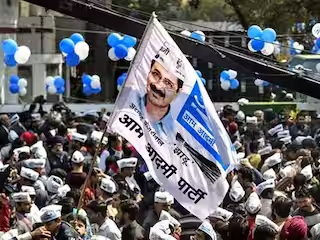
In a strategic move ahead of the upcoming Haryana Assembly elections, the Aam Aadmi Party (AAP) has released its first list of 20 candidates, signaling its intention to contest the polls independently without forming an alliance with the Indian National Congress. The announcement comes as a significant development in the political landscape of Haryana, where the AAP is aiming to consolidate its position and challenge the established political parties.

AAP’s Candidate List and Key Nominations
The AAP’s candidate list for Haryana includes a mix of experienced politicians, grassroots activists, and newcomers. Among the notable names is Anurag Dhandha, who has been fielded from the Kalayat constituency. Dhandha’s candidacy is seen as a strategic choice, given Kalayat’s importance in the electoral dynamics of the region.
The party’s decision to release an initial list of 20 candidates underscores its commitment to mobilizing its base and presenting a clear alternative to voters. The selection of candidates reflects AAP’s strategy to build on its previous successes and address local issues with a fresh perspective.
No Alliance with Congress
The AAP’s decision to go solo in Haryana comes amid speculation about a potential alliance with the Congress party. In recent months, there have been discussions about the possibility of a coalition between the two parties to counter the dominance of the Bharatiya Janata Party (BJP) and other regional parties in the state.
However, AAP’s latest move indicates a departure from those talks, signaling that the party intends to chart its own course in the Haryana elections. This decision could be driven by several factors, including AAP’s desire to maintain its distinct political identity and leverage its recent successes in Delhi and Punjab.
Political Implications
AAP’s decision to field candidates independently has significant implications for the Haryana electoral landscape. By not aligning with Congress, AAP is positioning itself as a distinct political force in the state, aiming to capitalize on its record in Delhi and its growing influence in Punjab.
The party’s approach reflects a broader strategy to establish itself as a credible alternative to the traditional parties, including Congress, BJP, and regional players. This strategy may appeal to voters disillusioned with the conventional political establishment and seeking new options for governance.
1. Electoral Dynamics: AAP’s independent run could reshape the electoral dynamics in Haryana. The party’s ability to mobilize support and address key issues will be crucial in determining its success. The presence of prominent candidates like Anurag Dhandha could influence voter sentiment and impact the overall electoral outcome.
2. Impact on Congress: The absence of an alliance with Congress could affect the party’s prospects in Haryana. The potential fragmentation of the anti-BJP vote may benefit the ruling party or other regional contenders. Congress will need to strategize effectively to counter AAP’s presence and consolidate its voter base.
3. Voter Reactions: The electorate’s response to AAP’s candidate list and its decision to go solo will be closely watched. Voter reactions and sentiment will provide insights into the effectiveness of AAP’s strategy and its potential impact on the election results.
Reactions from Key Figures
1. AAP Leadership: The AAP leadership has expressed confidence in the selected candidates and their ability to represent the party’s values and vision. They have emphasized the importance of addressing local issues and providing effective governance solutions.
2. Congress: Congress leaders have yet to officially respond to AAP’s decision, but the move is likely to prompt discussions within the party about its strategy and prospects in Haryana.
3. BJP and Regional Parties: The BJP and other regional parties will closely monitor AAP’s campaign and candidate selection. Their strategies and responses will be influenced by the evolving political landscape and the impact of AAP’s independent run.
Conclusion
AAP’s release of its first list of 20 candidates for the Haryana Assembly elections marks a significant step in its electoral strategy. The decision to contest independently, coupled with the candidacy of notable figures like Anurag Dhandha, highlights the party’s ambition to make a strong impact in the state. As the election campaign unfolds, the political dynamics in Haryana will be shaped by AAP’s strategy, voter reactions, and the responses from other political parties.















Comments 5