


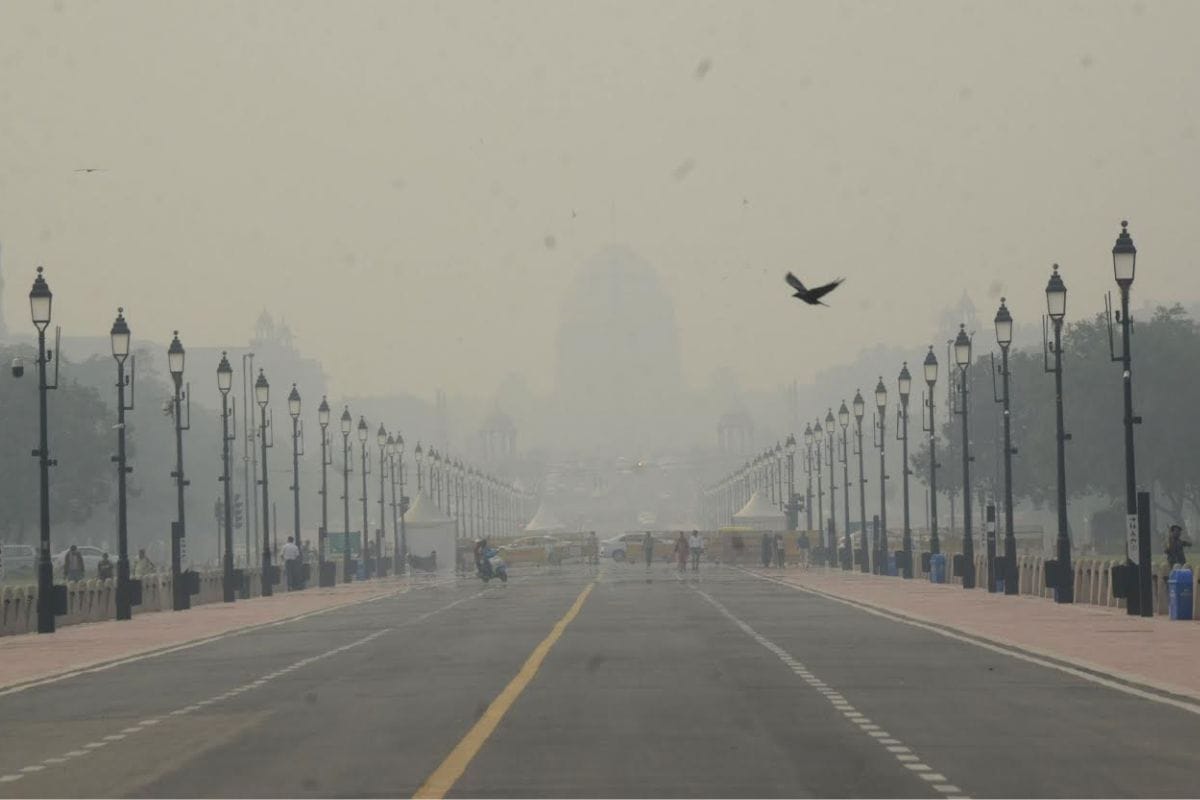
“Delhi wakes to heavy smog; Diwali AQI reaches ‘very poor’ at 328”
Delhi’s air quality plunged into the “very poor” category on Diwali morning, with an AQI reading of 328, as recorded by the System of Air Quality and Weather Forecasting and Research (SAFAR). Delhi residents woke up to a dense layer of smog as multiple factors—including fireworks, stubble burning, and stagnant meteorological conditions—compounded pollution levels. The situation is expected to worsen, with predictions that the AQI might enter the “severe” range in the days following Diwali.

The “very poor” air quality poses significant health risks, particularly for vulnerable groups such as children, the elderly, and those with respiratory conditions. SAFAR cautions that prolonged exposure to such high pollution levels can lead to respiratory illnesses and aggravate conditions like asthma. To reduce health risks, experts have advised residents to limit outdoor activities, use air purifiers indoors, and wear masks outdoors.
Government initiatives to mitigate pollution included restrictions on firecracker sales and campaigns promoting eco-friendly celebrations, but local reports suggest that these measures saw mixed compliance. Firecracker emissions contributed to elevated PM2.5 and PM10 levels, particularly in densely populated areas like Anand Vihar, which recorded an AQI of 390—the highest in the capital. Additionally, stubble burning in neighboring states continues to add to Delhi’s pollution load, with satellite data showing a high number of farm fires in Punjab and Haryana.
Weather forecasts predict minimal improvement in air quality as weak winds and temperature inversions trap pollutants near the ground. Authorities continue to urge citizens to take precautionary measures, as Delhi grapples with its annual post-Diwali pollution crisis . India Today
No products found.