


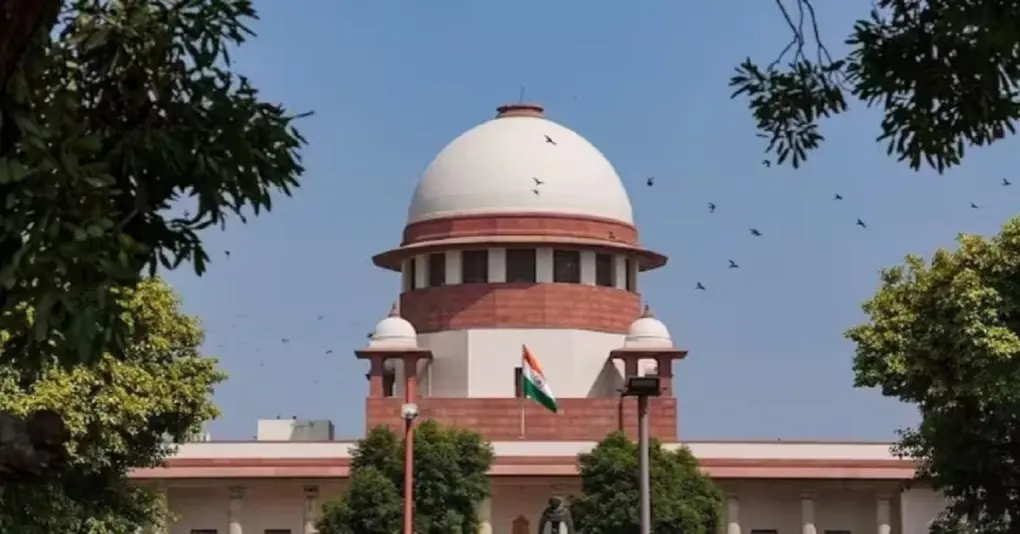
In a significant ruling, the Supreme Court of India upheld the constitutional validity of Section 6A of the Citizenship Act, 1955, which was enacted as part of the Assam Accord. The court’s decision ensures that Bangladeshi refugees who entered India before March 25, 1971, during the aftermath of the Bangladesh Liberation War, will be granted citizenship, affirming their rights under the Assam Accord.

The ruling, delivered by a five-judge constitutional bench of Supreme Court , was passed with a 4:1 majority. The bench, led by Chief Justice of India DY Chandrachud, included Justices Surya Kant, MM Sundresh, Manoj Misra, and Justice JB Pardiwala, who gave the lone dissenting opinion. This landmark judgment is seen as a major step in addressing the complex issues of citizenship and refugee status in the northeastern state of Assam, which has witnessed a long history of migration-related disputes.
Understanding the Assam Accord and Section 6A
The Assam Accord, signed in 1985 between the Government of India and the All Assam Students’ Union (AASU), was a historic agreement aimed at resolving the long-standing issue of illegal migration from Bangladesh into Assam. The agreement sought to balance the demands of the native population, who feared being outnumbered by immigrants, and the humanitarian considerations of providing refuge to those fleeing conflict.
Section 6A of the Citizenship Act was introduced as a result of the Assam Accord. It allowed Bangladeshi refugees who entered India between January 1, 1966, and March 25, 1971, to apply for citizenship through a process of registration. Those who arrived before 1966 were automatically granted citizenship. The key cutoff date for citizenship eligibility was set as March 25, 1971, the date when the Bangladesh Liberation War broke out.
Bangladeshi nationals who entered India after this date were deemed illegal migrants and were not eligible for citizenship under the accord. Section 6A has remained a point of contention over the years, with critics arguing that it unfairly grants citizenship to large numbers of migrants, diluting the demographic balance of Assam.
Supreme Court’s Verdict: A Turning Point in Citizenship Debate
The Supreme Court’s verdict on Section 6A is a defining moment in the complex debate surrounding citizenship and immigration in Assam. The bench ruled by a 4:1 majority that the section is constitutionally valid, thus preserving the rights of refugees who had fled the chaos and violence in East Pakistan (now Bangladesh) before the 1971 cutoff date.
Chief Justice Chandrachud, writing for the majority, explained that the court’s decision means that “non-resident Indians who came from Bangladesh between January 1, 1966, and March 25, 1971, are eligible for citizenship. Those who have got citizenship under this will retain their citizenship.” This ensures that those who have already gone through the legal process to acquire Indian citizenship will not be affected by challenges to the constitutional validity of Section 6A.
The bench’s judgment is widely seen as a victory for refugee rights and upholds the humanitarian spirit of the Assam Accord. However, the ruling also stoked further debate on the impact of large-scale migration on the demographic and political landscape of Assam, a concern that has long been central to the discourse on the Assam Accord.
Justice JB Pardiwala, in his dissenting opinion, raised concerns about the long-term implications of granting citizenship to large numbers of refugees and the strain this might place on the region’s resources and identity. His dissent reflects the deeply entrenched anxieties of the indigenous Assamese population, who have often feared becoming minorities in their own land due to the influx of migrants from across the border.
Demographic Impact and Political Ramifications
Assam, located in the northeastern part of India, shares a long and porous border with Bangladesh. Over the years, the state has witnessed significant migration, both legal and illegal, from Bangladesh. This influx has transformed the demographic composition of the state, leading to tensions between the indigenous Assamese population and the immigrant communities.
The Assam Accord sought to address these concerns by setting a clear cutoff date for the recognition of Bangladeshi refugees. However, the implementation of the accord has been fraught with challenges, particularly regarding the identification of illegal immigrants. The creation of the National Register of Citizens (NRC), aimed at identifying illegal migrants, further complicated matters. The process, which required residents of Assam to prove their citizenship through documentary evidence, was criticized for being error-prone and for excluding a large number of people, many of whom were legitimate citizens.
The Supreme Court’s ruling on Section 6A is expected to have far-reaching political consequences. Citizenship and migration have long been polarizing issues in Assam, influencing election outcomes and shaping the state’s political landscape. The decision to uphold Section 6A may embolden political forces that advocate for a more inclusive approach to citizenship, while also stoking fears among those who believe the demographic balance of the state is at risk.
Political parties in Assam have historically capitalized on the issue of illegal migration to gain support. The ruling Bharatiya Janata Party (BJP) has often emphasized the need for stricter immigration controls and the protection of indigenous Assamese culture. In contrast, opposition parties have generally taken a more moderate stance, arguing for the protection of human rights and the recognition of refugees’ contributions to the state.
Humanitarian and Legal Dimensions
The Supreme Court’s judgment highlights the tension between legal and humanitarian considerations in the citizenship debate. On one hand, there is a need to uphold the rule of law and maintain a clear distinction between legal citizens and illegal immigrants. On the other hand, the court’s decision recognizes the plight of refugees who fled violence and persecution in Bangladesh and sought safety in India.
The Supreme Court judgment also underscores the importance of historical context in shaping citizenship policies. The migration that occurred during and after the Bangladesh Liberation War was a consequence of political and social upheaval, and the refugees who arrived in Assam during this period were often fleeing for their lives. Section 6A of the Citizenship Act reflects a recognition of this historical reality and the need to provide refuge to those affected by the conflict.
Conclusion
The Supreme Court’s ruling on Section 6A of the Citizenship Act is a watershed moment in India’s citizenship and immigration policy. By upholding the constitutional validity of the section, the court has reaffirmed the rights of Bangladeshi refugees who entered India before March 25, 1971, and sought protection under the Assam Accord.
The Supreme Court ruling has significant political and social ramifications, particularly in Assam, where migration has long been a contentious issue. It also raises important questions about the balance between legal frameworks, humanitarian considerations, and the preservation of regional identity.
As the country moves forward in implementing this judgment, it remains to be seen how it will impact the lives of those affected by the decision and how it will shape the future of citizenship debates in Assam and beyond.