

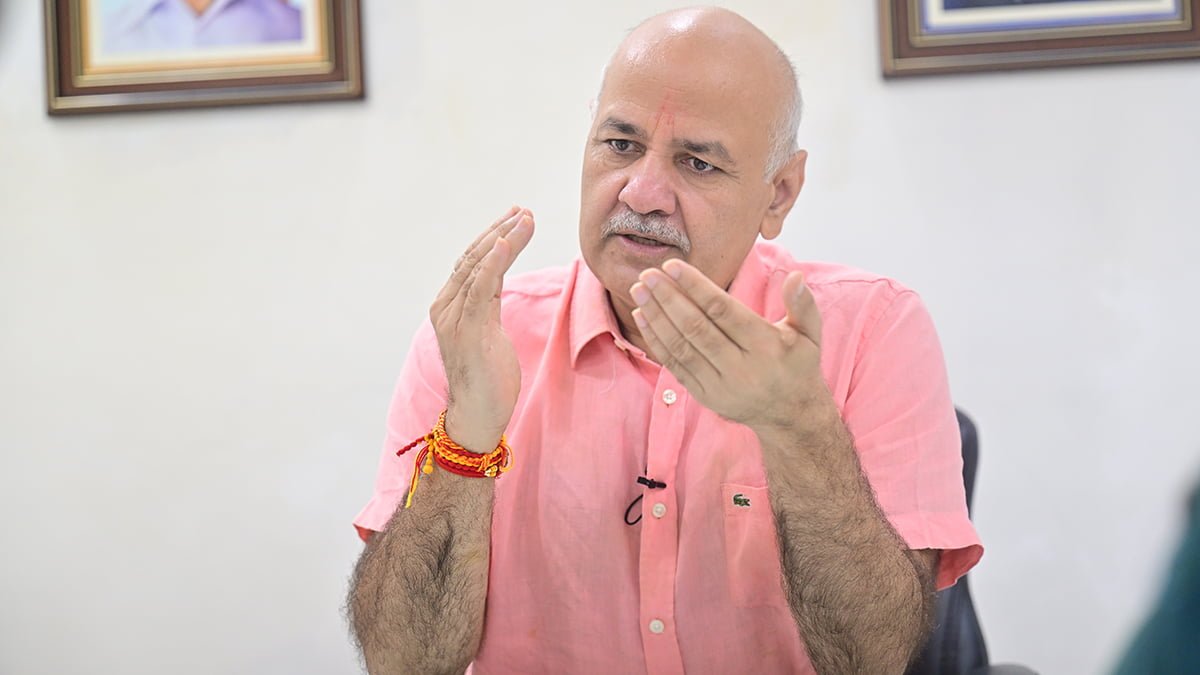
Manish Sisodia, former Delhi Deputy Chief Minister and a senior leader of the Aam Aadmi Party (AAP), recently opened up about the hardships he faced during his 17-month incarceration following his arrest in the alleged excise policy scam. During this period, Sisodia recounted the emotional turmoil and financial struggles his family experienced, revealing that they were pushed to a point where he had to beg to cover his son’s school fees.

In a candid interview, Sisodia highlighted that despite public allegations, his family’s belief in his innocence kept him strong. His son, in particular, never doubted him, and this family support provided him with the resilience needed to endure the challenging period. Sisodia was allowed brief five-minute calls with his family, which were monitored, adding another layer of strain. He shared that the emotional weight of these calls made him realize the true importance of family in such tough times.
Sisodia’s arrest, which has sparked widespread debate and protests, was related to alleged irregularities in the now-scrapped Delhi liquor excise policy. The Central Bureau of Investigation (CBI) accused him of favoring private entities in exchange for kickbacks, which were allegedly used in the Punjab Assembly elections. Sisodia was arrested after extensive questioning by the CBI, with authorities citing a lack of cooperation on his part.
The case has been a flashpoint in Indian politics, with AAP accusing the ruling Bharatiya Janata Party (BJP) of using central agencies for political vendettas. The BJP, on the other hand, maintains that the charges are rooted in genuine corruption concerns and have nothing to do with politics. Sisodia’s arrest followed that of another Delhi minister, Satyendar Jain, further intensifying the confrontation between AAP and BJP.
Despite his release on bail, Sisodia’s reflections on his time in jail highlight the human cost of political and legal battles, especially on the families of those involved. His struggle underscores the broader conversation on the intersection of politics, law, and public service in India today(