


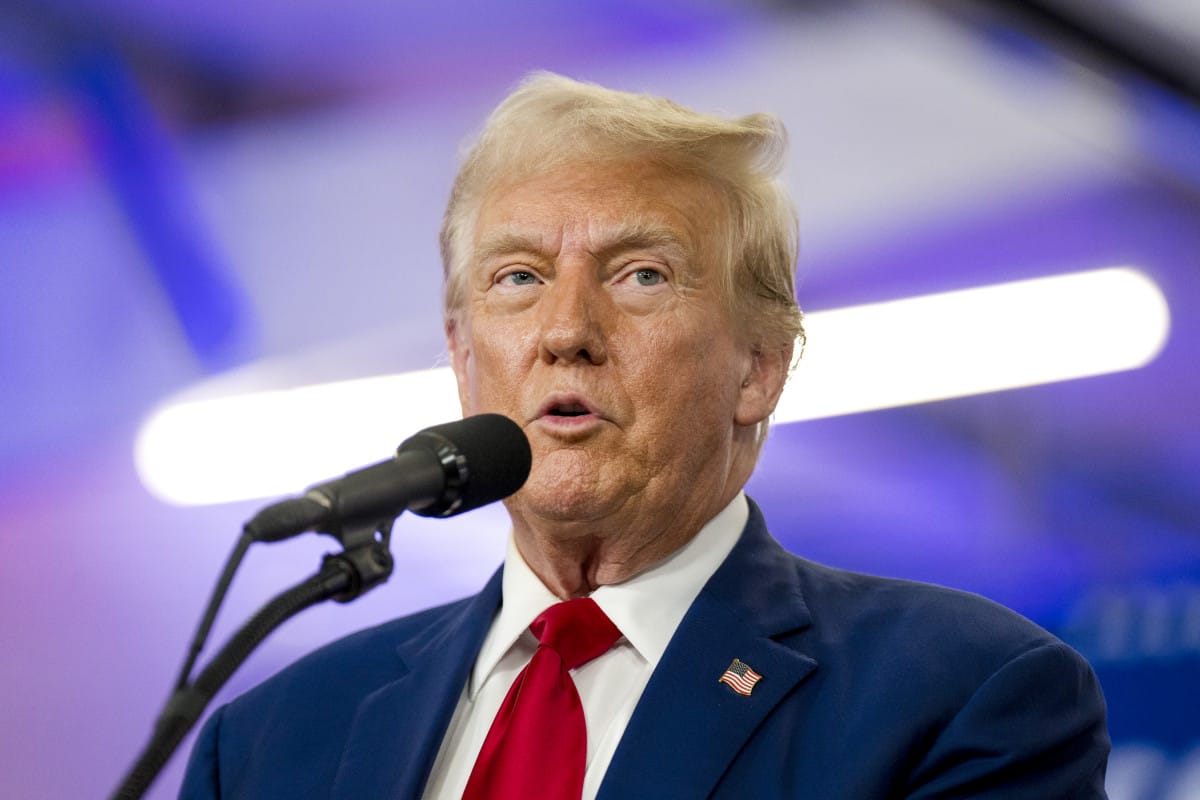
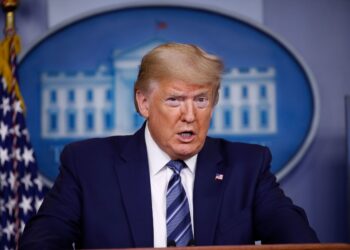
Donald Trump recently made bold claims during a campaign event marking the one-year anniversary of the October 7 Hamas attack on Israel, stating the attack “would never have happened” if he were president. The former president used the somber occasion to criticize the Biden administration’s handling of foreign policy, particularly in the Middle East. Trump’s remarks came as part of a tribute to the victims of the 2023 attack, which left over 1,200 dead and sparked a prolonged conflict between Israel and Hamas.

Trump’s Critique of Biden’s Foreign Policy
During his speech, Trump outlined his perspective on why the attack occurred, laying much of the blame on President Joe Biden’s approach to the region. He emphasized that his administration’s policies had kept adversaries like Hamas in check, referencing his support for Israel during his tenure. Trump also claimed that his decisive actions, including sanctioning Iran and Hamas, had strengthened America’s position in the Middle East and protected its allies.
His criticism focused on what he called Biden’s weak foreign policy, arguing that it has emboldened terrorist groups like Hamas and Hezbollah. Trump linked the current administration’s engagement with Iran as a key reason for the deteriorating security situation in the region. He suggested that under his leadership, such an attack would have been deterred through stronger American influence and more assertive diplomatic actions.
Remembering the October 7 Victims
While Trump’s speech included political rhetoric, he also paid tribute to the victims of the attack, recognizing the lives lost, including 46 U.S. citizens. His tribute was part of a broader effort to demonstrate his commitment to Israel and the Jewish community, which included a visit to the gravesite of Rabbi Menachem Mendel Schneerson, a respected figure in Orthodox Judaism. Trump’s visit and remarks were aimed at strengthening ties with Jewish voters, a demographic he has courted throughout his political career.
Vice President Kamala Harris and her husband, Doug Emhoff, also participated in commemorative events. Emhoff, who is Jewish, recited a peace prayer during a ceremony held by the American Jewish Committee, while Harris planted a pomegranate tree at the vice president’s residence in memory of the victims. In Washington, President Biden and First Lady Jill Biden hosted a memorial at the White House, where they lit a candle in remembrance.
The Geopolitical Implications
The October 7 attack and its aftermath have significantly shaped U.S. foreign policy debates, especially regarding Israel and Palestine. Over the past year, Israel’s military campaign in Gaza has led to more than 41,000 Palestinian deaths, according to Hamas’s health ministry. Trump used this context to argue that Biden’s policies have exacerbated tensions in the region rather than resolved them.
Trump’s rhetoric on foreign policy is likely designed to resonate with conservative voters who favor a strong, decisive stance on international conflicts. His hardline approach contrasts with Biden’s more diplomatic efforts to negotiate ceasefires and hostage releases. Trump’s statements on Israel, terrorism, and the broader Middle East will likely play a significant role in his 2024 presidential campaign, as he positions himself as the candidate who can restore security and order.
Ongoing Conflict and U.S. Strategy
The war between Israel and Hamas remains a focal point of U.S. foreign policy in the Middle East. Despite efforts to mediate peace and secure the release of hostages, the situation in Gaza remains dire, with ongoing violence between Israeli forces and Hezbollah, the Iran-backed group based in Lebanon. Trump, who has consistently criticized Biden’s handling of Iran, emphasized that his administration had taken a much firmer stance, particularly by withdrawing from the Iran nuclear deal and imposing sanctions on the country.
Trump’s 2024 Campaign Focus
As Trump prepares for the 2024 presidential election, his focus on foreign policy, particularly the U.S. relationship with Israel, will be a key element of his platform. By drawing attention to the October 7 attack and contrasting his policies with Biden’s, Trump aims to position himself as the stronger candidate on national security. His message centers on the idea that under his leadership, America was safer and its allies more secure, especially in volatile regions like the Middle East.
The political implications of this narrative are significant. Trump’s pro-Israel stance has been a defining aspect of his foreign policy record, and he continues to highlight his administration’s successes, such as the Abraham Accords, which normalized relations between Israel and several Arab nations. Trump’s claims that the attack “would never have happened” under his watch aim to resonate with voters who prioritize security and stability in U.S. foreign relations.
Biden’s Response and Political Context
Meanwhile, the Biden administration marked the anniversary with a somber, reflective tone. President Biden’s approach to the conflict has been more focused on diplomatic channels and negotiations, with an emphasis on balancing U.S. support for Israel while addressing humanitarian concerns in Gaza. The anniversary of the attack provides a sharp contrast between the two leaders’ approaches to the region, with Trump advocating for a more hardline stance and Biden focusing on diplomacy.
As the 2024 election nears, both candidates will likely continue to use the ongoing conflict as a focal point in their campaigns. For Trump, this is an opportunity to reinforce his image as a strong, decisive leader, while Biden will seek to highlight his diplomatic achievements and his administration’s efforts to broker peace in one of the most complex geopolitical conflicts in the world.
Conclusion: A Battle for Foreign Policy Dominance
As Trump revisits his foreign policy record and Biden defends his own, the October 7 anniversary highlights a critical issue in the upcoming presidential election. Trump’s claim that the attack would not have occurred during his presidency serves as a rallying cry for voters who favor a more aggressive U.S. stance in global affairs. With the Middle East still in turmoil and the conflict between Israel and Hamas far from resolved, foreign policy will remain a pivotal issue as both candidates vie for the presidency.













Comments 1