


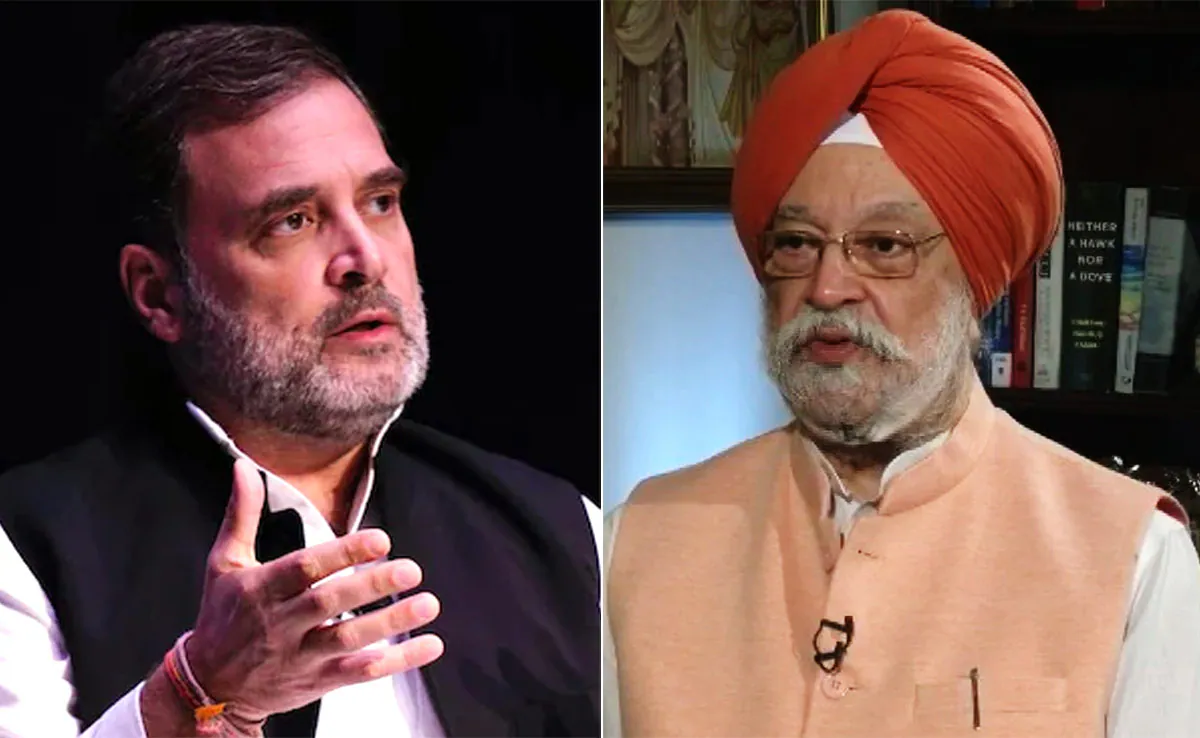
A political storm has erupted following Rahul Gandhi’s remarks during his interaction in the U.S. about the Sikh community and religious freedom in India. In his comments, Gandhi mentioned that Sikhs face challenges in expressing their religious identity, notably mentioning that they were allegedly not allowed to wear turbans freely in the country.

This statement quickly caught the attention of the Bharatiya Janata Party (BJP), which reacted strongly, accusing Gandhi of attempting to defame India on foreign soil. The BJP condemned Gandhi’s comments as not only inaccurate but also damaging to India’s global image.
Gandhi’s Statement on Sikh Issues
During his visit to San Francisco, Rahul Gandhi addressed various aspects of Indian society, touching on religious freedom, minority rights, and governance under the Narendra Modi-led BJP government. Specifically, he pointed out concerns regarding the Sikh community, saying they faced restrictions on wearing turbans in certain places and participating fully in religious practices. Gandhi painted a picture of growing intolerance and reduced space for minorities under the current administration, with a particular focus on the BJP’s policies.
Gandhi’s remarks were framed as part of a broader critique of the Modi government’s handling of minority rights. He suggested that India, under BJP rule, was not respecting the religious freedoms that had long been a hallmark of its democracy. His comments were part of his ongoing effort to present himself as a leader capable of restoring India’s secular values, which he claims have been eroded under the BJP’s watch.
BJP Hits Back
The BJP wasted no time in responding to Gandhi’s comments. Senior party leaders, including BJP spokesperson RP Singh, were quick to challenge Gandhi’s narrative, reminding him of the Congress party’s history, especially the 1984 anti-Sikh riots, one of the darkest chapters in India’s communal history. Singh, in his response, pointed out the irony of Gandhi speaking about Sikh rights when his own party has been linked to the massacre of Sikhs following the assassination of then-Prime Minister Indira Gandhi.
“Rahul Gandhi is conveniently forgetting the pain and suffering that his party inflicted upon Sikhs in 1984,” Singh remarked. He further added that India, under the leadership of Prime Minister Narendra Modi, has taken significant steps to ensure religious freedom and respect for all communities, including Sikhs.
RP Singh also criticized Gandhi for making these statements abroad, accusing him of trying to malign India’s reputation on the international stage. It’s become a pattern for Rahul Gandhi to criticize India when he’s overseas. He should remember that such statements hurt the nation’s image globally,” Singh said.
The 1984 Anti-Sikh Riots Reminder
The BJP’s response has prominently brought up the 1984 anti-Sikh riots, during which thousands of Sikhs were killed in retaliation for Indira Gandhi’s assassination by her Sikh bodyguards. The Congress, which was in power at the time, has often faced criticism for its handling of the riots. Many in the Sikh community still carry the scars of those events, and the Congress party’s legacy continues to be marred by its association with the violence.
By invoking 1984, the BJP seeks to underscore what it sees as the hypocrisy of Rahul Gandhi in discussing Sikh rights and religious freedom. This reminder of the past is aimed at blunting Gandhi’s criticism and reminding voters of Congress’s troubled history with minority communities, particularly Sikhs.
Congress Defends Gandhi
In response to the BJP’s attack, the Congress party has defended Rahul Gandhi’s comments, arguing that his critique was aimed at the policies of the BJP, not at the nation itself. Congress spokespersons clarified that Gandhi was speaking in the context of the growing intolerance under the BJP’s rule and the diminishing space for dissent and minority rights.
They further added that the BJP’s constant reference to 1984 is a deflection tactic meant to distract from the current issues facing the Sikh community and other minorities under the BJP regime. Congress leaders emphasized that under their leadership, India had upheld its secular values, and they accused the BJP of eroding those foundations in pursuit of a divisive agenda.
Political Fallout
The political ramifications of this exchange are likely to persist in the lead-up to the 2024 general elections. With both parties using the issue to score political points, the controversy has reignited discussions about India’s treatment of its minorities, religious freedom, and the legacy of the 1984 riots.
While the BJP continues to project itself as a protector of all communities, including Sikhs, Congress is positioning itself as the defender of India’s pluralistic and inclusive values. As the debate intensifies, the Sikh community remains central to the narrative, and how this issue plays out could influence their voting behavior in key constituencies across the country.
This latest row underscores the deeply polarized nature of Indian politics, where history and current events are often intertwined in the battle for public opinion. As Rahul Gandhi and the Congress party continue their outreach efforts, both domestically and internationally, the BJP remains vigilant, ready to counter any narrative that challenges its record on minority rights and religious freedom.
For further details, you can access the original article on India Today here.















Comments 1