

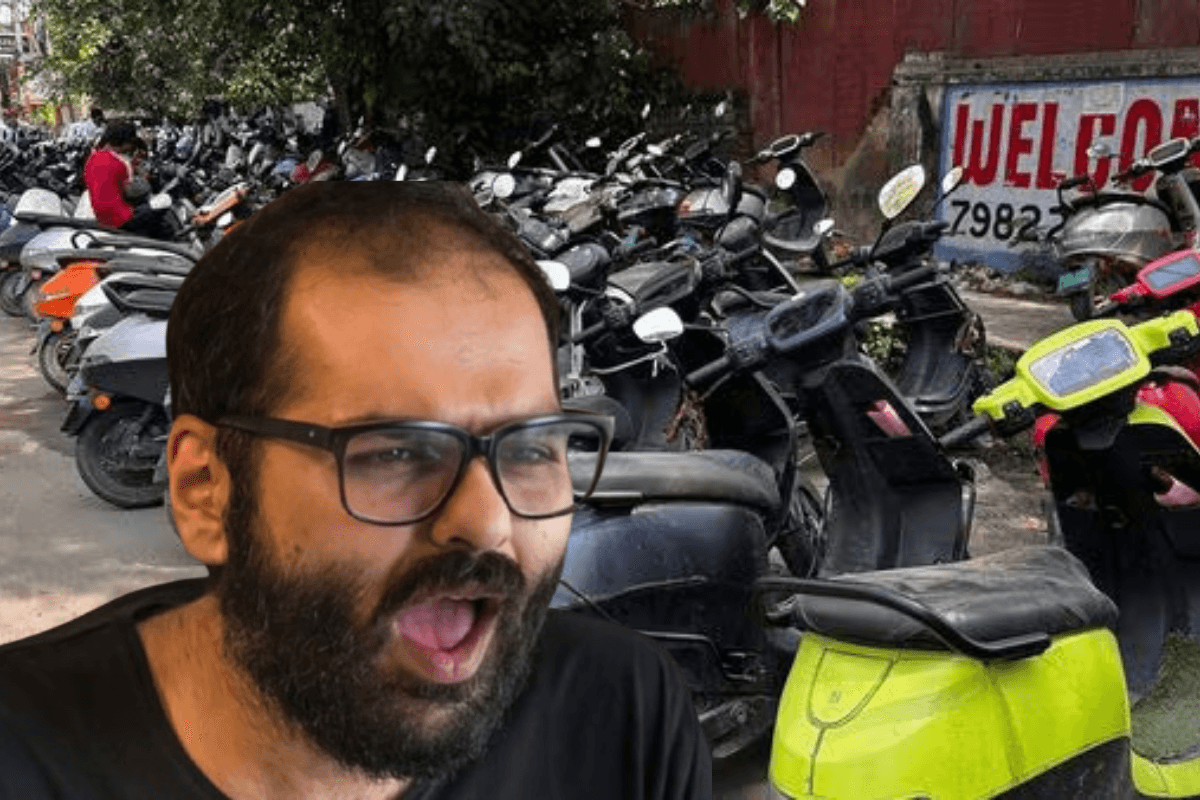
The recent clash between Ola Electric founder Bhavish Aggarwal and comedian Kunal Kamra has taken social media by storm, bringing attention to some serious concerns regarding Ola’s electric vehicle (EV) service. It all kicked off when Kamra shared a striking image showing a plethora of EV scooters parked at an Ola service center, prompting him to question whether this is how India is expected to embrace electric vehicles.

In his post, Kamra tagged Union Road Transport Minister Nitin Gadkari and pointedly asked, “Is this how Indians will get to using EVs?” His call for accountability resonated with many users who have faced issues with their Ola electric scooters. Kamra’s intent was clear: he wanted to raise awareness about the service shortcomings that users are experiencing.
Agarwal quickly jumped into the conversation, responding to Kamra’s critique with a rather sharp retort. He offered an invitation for Kamra to come and help resolve the issues, even going so far as to state that he would pay Kamra more than he makes from his comedy career. This jab about Kamra’s profession intensified the exchange, with Kamra retaliating by highlighting his successful comedy shows, branding Agarwal’s remarks as arrogant and beneath the standards of a business leader.
Things heated up when Kamra urged Agarwal to consider issuing a full refund to customers who had purchased Ola EVs in the last four months, emphasizing the need for accountability, especially for those unable to reach their workplaces due to service delays. In a counter-response, Agarwal claimed that Ola has established programs to assist customers facing delays, suggesting that Kamra could contribute positively instead of just offering “armchair criticism.”
The argument quickly gathered momentum, with many users sharing their own experiences with Ola Electric, echoing Kamra’s sentiments about the brand’s service issues. While Agarwal asserted that Ola is actively working to expand its service network and address backlogs, the incident has stirred a broader conversation about the responsibility of companies in the rapidly growing EV sector.
This back-and-forth has highlighted not just the specific challenges faced by Ola but also the larger issues of customer service in the booming electric vehicle industry in India. As the market grows, it’s crucial for companies like Ola to build and maintain trust with their customers through reliable service and accountability.
In essence, this public spat underscores a significant moment in the electric vehicle narrative in India, as consumers increasingly demand transparency and better service from companies vying for their business. The road ahead for Ola Electric may be challenging, but how they respond to this feedback could shape their reputation in the long run.