


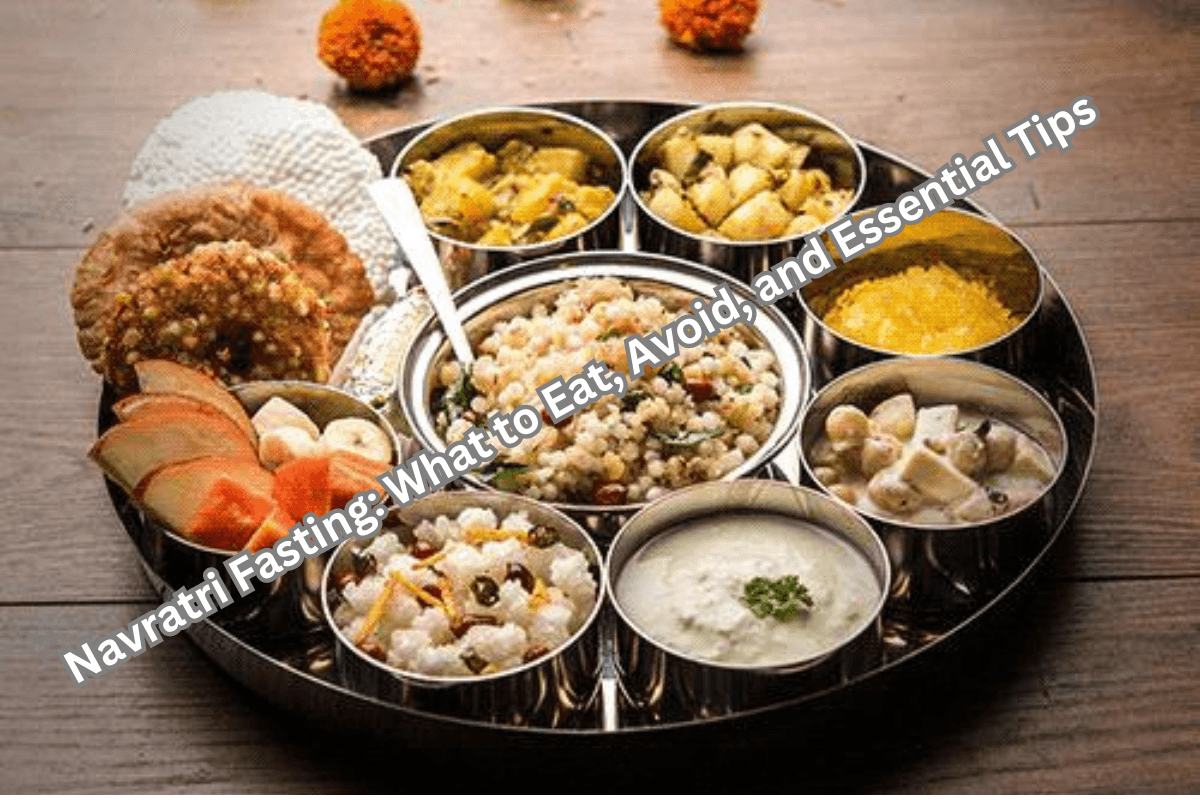
Navratri, a vibrant Hindu festival dedicated to the worship of Goddess Durga, is one of the most significant spiritual celebrations in India. This year, Shardiya Navratri begins on Thursday, October 3. Fasting is a central practice during these nine days, and many devotees observe it as a form of devotion and purification. This article will explore the types of fasting, what to eat and avoid, and essential tips for maintaining health during the fast.

Fasting in Navratri
Navratri fasting is not just about refraining from certain foods, but also about cleansing the body, mind, and soul. During this time, devotees avoid grains and certain other food items, focusing on pure and sattvic (simple and nutritious) foods.
There are different forms of fasting observed during Navratri:
- Partial Fasting: In this type of fast, people consume a single meal a day, usually after sunset.
- Complete Fasting: This is a stricter version where devotees abstain from food altogether, relying solely on water, fruits, or milk for the entire day.
- Phalahari Fasting: This type includes a diet limited to fruits, nuts, and dairy.
Foods to Eat During Navratri
Choosing the right foods during fasting is essential for maintaining energy levels while ensuring that the body receives adequate nutrition. Some of the best foods to include in your Navratri diet are:
- Fruits: Fresh fruits like bananas, apples, papayas, and pomegranates provide natural sugars and essential vitamins.
- Dairy Products: Milk, yogurt, paneer, and buttermilk are excellent sources of protein and calcium.
- Sabudana (Tapioca Pearls): Rich in carbohydrates, sabudana is a popular choice in dishes like sabudana khichdi and vada.
- Buckwheat (Kuttu) and Water Chestnut Flour (Singhara): These are often used to make chapatis, puris, or pakoras. They are gluten-free and provide the necessary energy.
- Samak Rice (Barnyard Millet): A gluten-free alternative to rice, samak rice can be prepared like regular rice or as a pulao.
- Vegetables: Non-starchy vegetables such as pumpkin, bottle gourd, and potatoes can be consumed.
- Nuts and Seeds: Almonds, walnuts, and pumpkin seeds are excellent snack options to maintain energy.
- Rock Salt (Sendha Namak): Regular salt is avoided during Navratri fasting. Instead, rock salt is used for seasoning.
Foods to Avoid During Navratri
In addition to what should be consumed, there are certain food groups and ingredients that devotees must avoid while fasting during Navratri:
- Grains: Wheat, rice, and all other grains are strictly prohibited during the fast.
- Lentils and Legumes: These are not considered sattvic and are, therefore, avoided.
- Regular Salt: Only rock salt (sendha namak) is allowed.
- Onions and Garlic: These are classified as tamasic (promoting lethargy) and are forbidden in sattvic diets.
- Meat, Eggs, and Fish: Non-vegetarian food is completely avoided to maintain the sanctity of the fast.
- Alcohol and Tobacco: Consumption of these substances is strictly prohibited during Navratri fasting as they are considered impure.
Tips for Fasting During Navratri
To ensure that your body remains nourished and energized while fasting, here are some essential tips to follow:
- Stay Hydrated: Fasting can dehydrate the body, so it’s crucial to drink plenty of water. You can also include coconut water, buttermilk, and herbal teas to stay hydrated.
- Eat Small, Frequent Meals: Instead of consuming large portions, opt for small, frequent meals to maintain energy levels throughout the day. This can also help prevent overeating when breaking the fast.
- Incorporate High-Fiber Foods: Include fiber-rich fruits, vegetables, and nuts in your meals to aid digestion and prevent constipation.
- Break the Fast Gradually: After fasting all day, start with fruits or light foods to prevent an upset stomach. Avoid heavy, oily meals that may cause indigestion.
- Get Adequate Rest: Fasting can sometimes lead to fatigue, so it’s important to get enough rest to allow the body to rejuvenate.
- Avoid Processed and Fried Foods: While fried foods like kuttu puris and pakoras may seem tempting, try to limit their intake to avoid bloating or lethargy.
Health Benefits of Fasting in Navratri
Fasting during Navratri is more than just a religious observance; it also provides several health benefits:
- Detoxification: Fasting helps the body detox by eliminating toxins accumulated from unhealthy eating habits.
- Improved Digestion: The sattvic diet followed during Navratri is rich in fiber, which promotes healthy digestion.
- Boosted Immunity: The intake of fruits, nuts, and dairy products provides essential nutrients that strengthen the immune system.
- Weight Management: Fasting can aid in weight loss when done in moderation, as it encourages the consumption of healthier foods and reduces calorie intake.
Spiritual Significance of Navratri Fasting
Apart from the physical benefits, fasting during Navratri is also believed to have deep spiritual importance. It is seen as a way to purify the mind and body, develop self-control, and connect with the divine. During these nine days, devotees focus on inner reflection, prayer, and seeking blessings from Goddess Durga for strength and protection.
In conclusion, Navratri fasting is not just about abstaining from certain foods but also about embracing a holistic approach to health and spirituality. By following the right diet and keeping the body nourished and hydrated, one can experience both physical and spiritual benefits during this sacred festival.


















Comments 1