


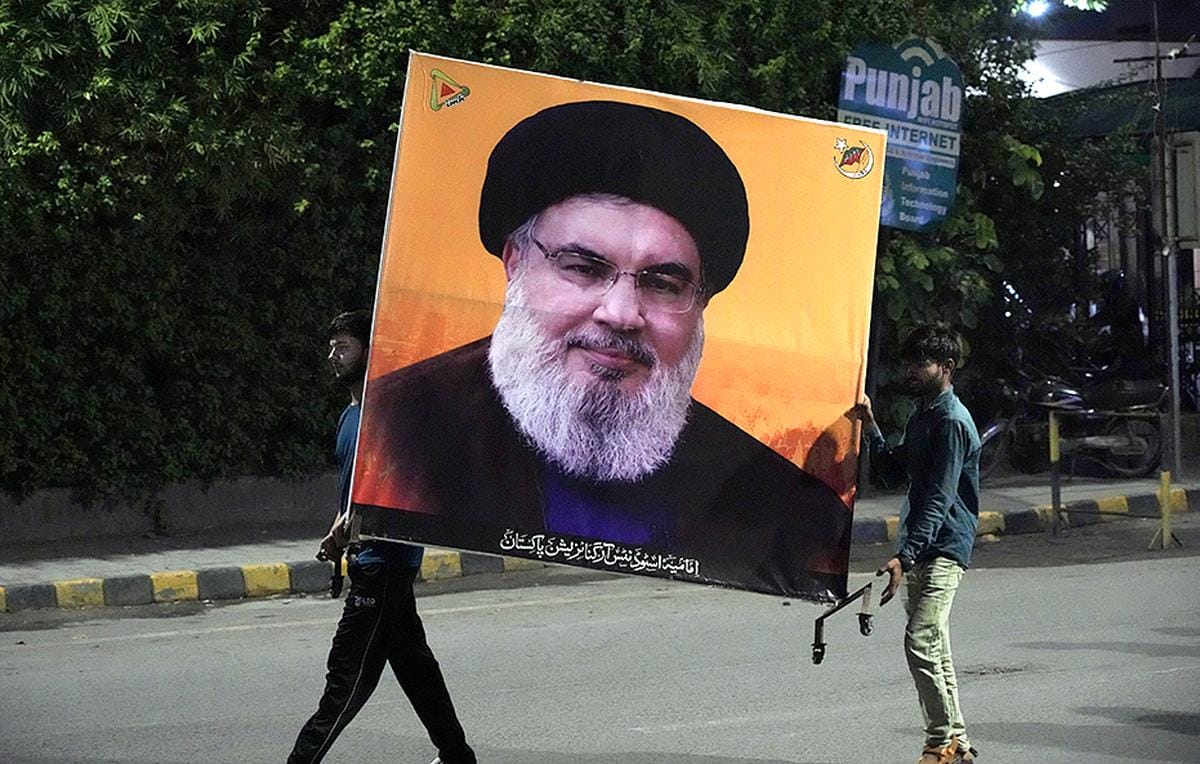
The recent Israeli airstrike that killed Hezbollah leader Hassan Nasrallah has reverberated through the Middle East, prompting Iran to take the issue to the United Nations. Nasrallah, a central figure in Hezbollah since its founding in 1982, was killed in Beirut as part of Israel’s larger conflict with Hezbollah and Hamas. The assassination is seen as a major blow to Iran, as Hezbollah has been a key ally for Tehran in the region.

President Joe Biden described Nasrallah’s killing as a “measure of justice” for his role in decades of terrorist activities. Hezbollah has been linked to numerous attacks, including the 1983 bombing of a U.S. Marine barracks in Beirut, which resulted in the deaths of 241 American service members. Nasrallah’s leadership also contributed to Hezbollah’s involvement in Syria’s civil war and its constant skirmishes with Israel. The group has been designated a terrorist organization by the U.S. and many of its allies.
The Israeli operation targeting Nasrallah was part of a broader military campaign that escalated after Hamas attacked Israel on October 7, 2023, killing hundreds of civilians. Nasrallah responded by opening a northern front against Israel, aligning Hezbollah’s forces with Hamas in the fight. Israeli Prime Minister Benjamin Netanyahu justified the operation, calling Nasrallah’s death an act of counter-terrorism, aimed at diminishing Hezbollah’s ability to operate in southern Lebanon.
Iran, Hezbollah’s primary sponsor, has reacted with anger and has moved to convene the UN Security Council. Tehran views the killing as an affront to its regional ambitions and a direct attack on its proxy network. Iranian officials have vowed retaliation and condemned Israel for what they see as a violation of international law. Iran’s UN Ambassador, Amir Saeid Iravani, emphasized the need for global action against what he described as Israel’s unlawful use of force. However, the U.S. has defended the strike, with senior officials reiterating their support for Israel’s right to self-defense.
The death of Nasrallah is expected to heighten tensions in the region, especially between Israel and Hezbollah, which has a significant military presence in southern Lebanon. Analysts suggest that Hezbollah, despite the loss of its leader, remains a formidable force and could launch retaliatory strikes. There is also concern that Iran might increase its involvement in the conflict through its various proxy groups across the region.
At the UN, Iran’s move to raise the issue could lead to further diplomatic confrontations, particularly with the U.S., which has blocked previous attempts by Tehran to bring Israel’s actions under scrutiny. The Security Council remains deeply divided on the Israeli-Palestinian conflict, with Western nations typically siding with Israel while others, particularly from the Muslim world, advocate for more condemnation of Israeli military actions.
As the situation develops, Lebanon faces mounting internal pressures. The country, already grappling with economic turmoil and political instability, now confronts the possibility of further conflict on its soil. Thousands of Lebanese civilians have been displaced by recent airstrikes, and Hezbollah’s response could determine whether Lebanon gets dragged deeper into the broader Israeli-Hamas conflict.
The U.S. and Israel continue to coordinate closely, with Washington reiterating its unwavering commitment to Israel’s security. At the same time, the U.S. is also trying to prevent the conflict from escalating into a full-scale war, which could involve not just Hezbollah and Israel, but also Iran and other regional powers.
The coming days will be crucial in determining how Hezbollah, Iran, and Israel navigate the aftermath of Nasrallah’s death. While Hezbollah remains a powerful organization, the loss of its long-time leader has created uncertainty about its future direction. Israel, meanwhile, is bracing for potential retaliation but has demonstrated its readiness to continue its military campaign if necessary.
The international community is watching closely as diplomatic efforts continue, but with tensions already high, the risk of further violence remains ever-present(Business Standard)














Comments 3