


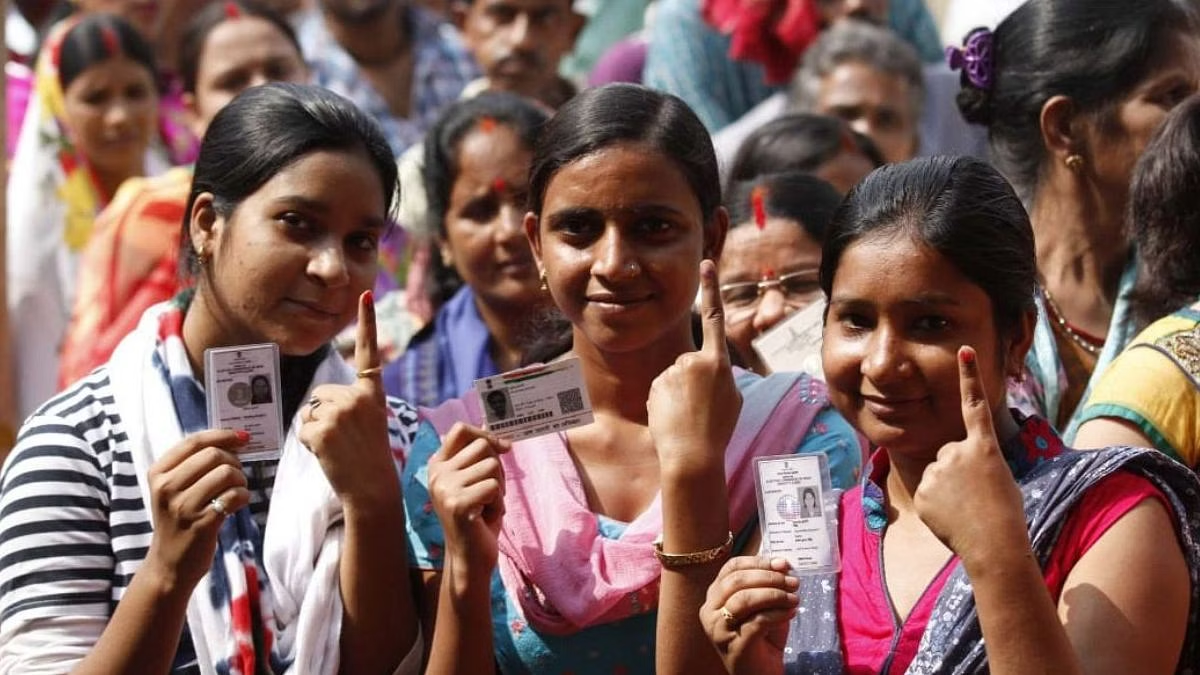
Haryana Votes Today: BJP Eyes Hat-Trick, Congress Hopes for a Comeback

As Haryana heads to the polls today, the political landscape is abuzz with high stakes, with the Bharatiya Janata Party (BJP) aiming for a hat-trick and the Congress hoping to make a strong comeback after a decade in opposition. The elections are set to be a crucial test for both parties as they vie for control of the 90-member assembly. With over 20 million eligible voters and 1,031 candidates contesting, including key figures like Haryana Chief Minister Nayab Singh Saini (BJP) and Congress leader Bhupinder Singh Hooda, the outcome could shape the state’s political future.
BJP’s Ambition for a Hat-Trick
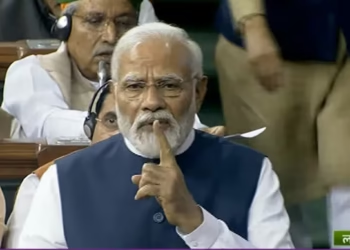
The ruling BJP, which won 40 seats in the 2019 assembly polls, is campaigning on the back of its development agenda and Modi’s appeal, while aiming to solidify its dominance in the state. The BJP has highlighted its achievements over the last two terms, emphasizing infrastructure improvements, women’s safety, and job creation. Prime Minister Narendra Modi has taken a personal interest in this election, addressing multiple rallies where he criticized the Congress for its past governance, accusing them of corruption and inefficiency. Modi’s speeches have focused on the BJP’s vision of a “developed Haryana,” positioning the party as the only one capable of continuing the state’s progress.
The party’s star campaigners, including Home Minister Amit Shah and BJP President J.P. Nadda, have also toured the state extensively. Their message has been clear: BJP wants to secure a decisive mandate to continue implementing its policies without coalition dependencies. In the 2019 election, the BJP was forced to form a post-poll alliance with Dushyant Chautala’s Jannayak Janta Party (JJP) to secure a majority.
Congress: Fighting for a Comeback
The Congress, on the other hand, is banking on public dissatisfaction with certain BJP policies, particularly in rural areas, where farm distress and unemployment are key concerns. Under the leadership of Bhupinder Singh Hooda, a two-time former chief minister, the party hopes to regain its lost ground. Hooda, a Jat leader with a significant support base in rural Haryana, has been emphasizing issues such as farmer welfare, caste-based reservation, and job creation.
Congress leader Rahul Gandhi has also campaigned vigorously in the state, framing the election as a contest between two visions for Haryana’s future. He has pitched the Congress as a party of inclusiveness and justice, particularly for farmers and the economically marginalized. Gandhi’s “Mohabbat ki Dukaan” (shops of love) campaign underscores the Congress’s broader message of harmony and social justice in contrast to what they describe as the BJP’s divisive politics.
In the last elections, Congress won 31 seats and believes it can capitalize on the BJP’s perceived failings, such as agrarian distress and unemployment. They are also focusing on regional autonomy and promising more inclusive development that reaches the grassroots.
The Role of Regional Parties and Independents
In addition to the BJP and Congress, regional players like the JJP, Indian National Lok Dal (INLD), and Aam Aadmi Party (AAP) are also in the fray. The JJP, led by Dushyant Chautala, played kingmaker in 2019 by forming an alliance with the BJP, but this time, it is looking to expand its influence independently. Chautala’s focus has been on the youth, promising job creation and greater investment in education. However, his alliance with the BJP in the last term may prove to be a double-edged sword, as some of his core supporters feel let down by the coalition government.
AAP, although not a major player in Haryana, is trying to make inroads by focusing on governance issues such as healthcare and education, much like its successful model in Delhi. However, it remains to be seen if AAP can significantly affect the overall outcome in a state where the political battles have traditionally been between the BJP and Congress.
The Indian National Lok Dal (INLD), led by Om Prakash Chautala, is a shadow of its former self but still holds sway in certain constituencies. INLD’s campaign has been focused on farmers’ issues and opposition to the BJP’s policies on agriculture.
Key Issues at Play
Several key issues are driving the election narrative. Farmer distress remains a top concern, particularly in light of the now-repealed farm laws that sparked widespread protests across Haryana. The Congress and other opposition parties have sought to exploit this sentiment, promising more farmer-friendly policies, including better crop prices and enhanced irrigation facilities.
Unemployment is another significant issue, particularly among the youth. Haryana, despite being an industrial hub, has witnessed rising joblessness, a fact that both the Congress and JJP are highlighting in their campaigns. The BJP, meanwhile, has countered these claims by pointing to its job creation programs and promises of attracting more industries to the state.
Caste dynamics also play a crucial role in Haryana elections, with the Jat community forming a significant voter base. Both the BJP and Congress are trying to court the Jats, while simultaneously balancing the demands of other communities like the Dalits and non-Jat OBCs.
Voter Turnout and Election Machinery
Haryana’s Chief Electoral Officer has confirmed that over 2 crore voters, including nearly 9,000 centenarians, are eligible to cast their vote at 20,632 polling booths across the state. The election will be monitored closely, with a large deployment of security personnel to ensure free and fair polling. The Election Commission has also ramped up its efforts to ensure voter participation, particularly among women and first-time voters.
The voting process, which began early in the morning, will continue until late evening, with results expected on October 8. Given the high stakes and the close nature of the contest, every vote will be critical.
Conclusion: A Close Contest
Haryana’s election is shaping up to be a fierce battle between the BJP’s push for continuity and the Congress’s plea for change. The BJP is counting on Modi’s popularity and its track record in governance to secure another term, while the Congress is hopeful of riding a wave of public dissatisfaction, especially in rural areas. The JJP, AAP, and INLD could also play crucial roles as either spoilers or kingmakers, depending on how the vote breaks down.
Ultimately, the election will hinge on voter turnout and how well each party mobilizes its base. With issues like unemployment, farm distress, and caste dynamics dominating the agenda, the outcome of this election will have far-reaching implications not just for Haryana but for the national political scene as well.













Comments 1