


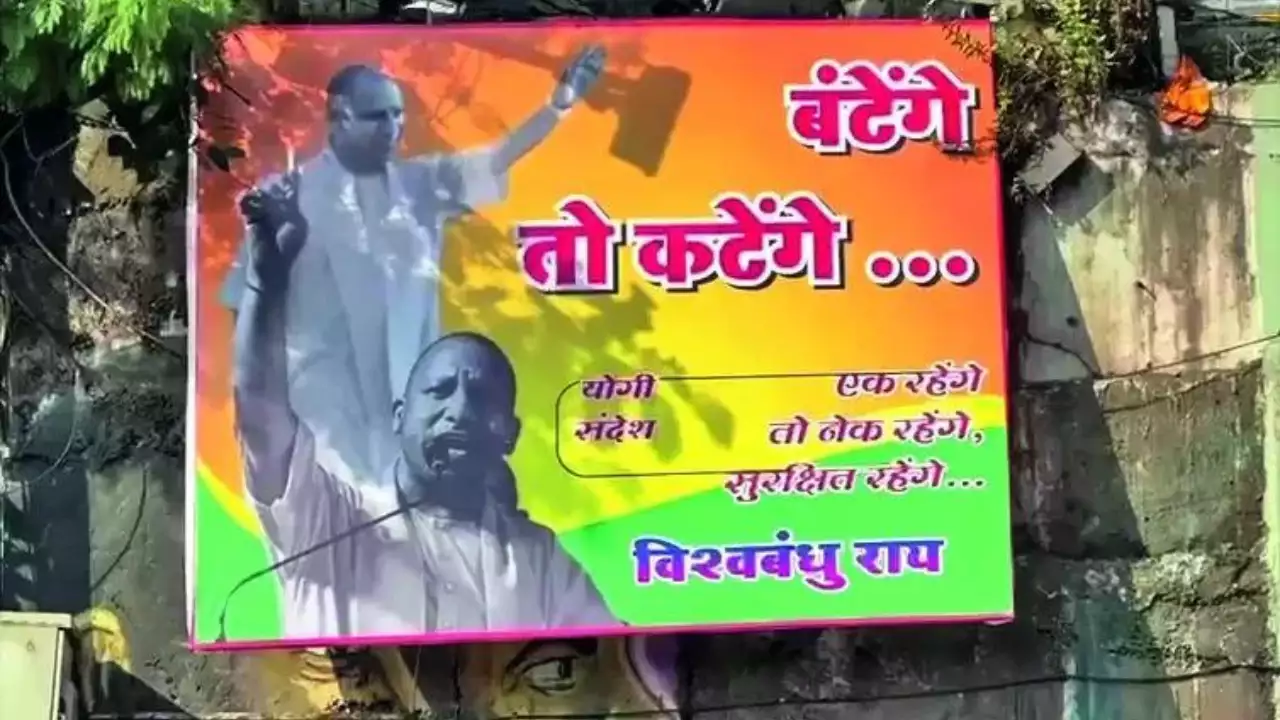
The slogan “Batenge toh Katenge,” roughly translated as “If you will divide, you will be cut,” has sparked significant debate in India, especially as the country gears up for its next round of elections. First popularized by Uttar Pradesh Chief Minister Yogi Adityanath, this phrase has become a focal point for the Bharatiya Janata Party (BJP) as it aims to consolidate Hindu votes ahead of crucial state elections, particularly in Maharashtra.

Understanding the Slogan’s Origins
Yogi Adityanath’s use of “Batenge toh Katenge” came in the context of alleged attacks against Hindus, particularly in neighboring Bangladesh. His remarks were not only aimed at rallying support for Hindus but also served as a warning against what he sees as rising threats to their security and identity. The slogan gained further prominence during the Haryana Assembly elections, where it was credited with helping the BJP consolidate Hindu votes, appealing to sentiments of protection and unity among Hindus.Federal News.
A Strategic Move in Election Campaigns
The resurgence of this slogan Batenge Toh Katenge ahead of the Maharashtra Assembly elections, where posters featuring Yogi Adityanath and the slogan have appeared across Mumbai, has raised eyebrows. Vishwabandhu Rai, a BJP activist behind the campaign, justified the move as a response to the perceived political machinations of the opposition. His assertion highlights how the BJP is using this slogan as a tool to reinforce its narrative of Hindu victimhood and the need for solidarity among the Hindu community.
This strategy taps into a broader trend in Indian politics where communal identities are increasingly leveraged to mobilize voters. By portraying elections as a fight for the survival of Hindu identity, the BJP is effectively creating an “us versus them” scenario. This approach not only seeks to galvanize Hindu voters but also risks alienating non-Hindu populations, thus deepening societal divides.
The Broader Implications for Society
The implications of using slogans like “Batenge toh Katenge” extend beyond the electoral arena. Such rhetoric can contribute to an environment where communal tensions simmer and escalate. The messaging inherently suggests that Hindus need to defend themselves against potential threats, fostering a mindset of suspicion and animosity toward other communities. Critics argue that this is a dangerous precedent, as it normalizes hate speech and cultivates an atmosphere of fear.
As these slogans Batenge Toh Katenge gain traction, they can influence not just voter behavior but also the daily interactions among communities. In a country as diverse as India, where various religions coexist, such divisive messaging can exacerbate existing tensions, leading to a fragmented society. Moreover, the normalization of communal rhetoric in political discourse raises concerns about the future of secularism in India, a foundational principle of its democracy.
Political Responses and the Opposition’s Challenge
The rise of this slogan Batenge Toh Katenge also places a significant challenge on opposition parties. The Congress party and others must find a way to counteract this narrative without alienating Hindu voters. Accusations of appeasement often backfire, leading to a loss of credibility among the majority community. As a result, many opposition leaders find themselves in a tight spot, needing to articulate a vision of inclusivity while addressing the legitimate concerns of all communities.
In recent statements, some opposition leaders have condemned the use of such communal slogans “Batenge Toh Katenge”, warning that they threaten the fabric of Indian society. They argue that this approach not only undermines the principles of democracy but also disregards the contributions and rights of minority communities. Critics have pointed out that the BJP’s narrative fails to recognize the rich tapestry of India’s social fabric, where multiple identities coexist and contribute to the nation’s progress.
Conclusion: The Future of Political Discourse in India
As the political landscape in India becomes increasingly polarized, the use of slogans like “Batenge toh Katenge” raises fundamental questions about the nature of political discourse. Will this trend towards communalization continue, or can Indian politics reclaim a more inclusive and secular narrative? The upcoming elections will be a litmus test for these dynamics, revealing not just the strategies employed by political parties but also the sentiments of the electorate.
Ultimately, the responsibility lies with voters to discern the implications of such rhetoric and its potential impact on society. As they head to the polls, the challenge will be to navigate the complexities of identity politics, communal narratives, and the overarching need for unity in diversity. The path forward will require thoughtful engagement with the issues that truly matter to the people, transcending divisive slogans and fostering an atmosphere of inclusivity.
The phrase “Batenge toh Katenge” may resonate with a section of the electorate, but it remains to be seen whether this will translate into lasting political support or merely serve as a fleeting campaign strategy in an increasingly complex electoral landscape. The future of Indian politics and its commitment to secularism may hinge on the choices made in the upcoming elections, where the stakes are not just political but profoundly societal.


















Comments 4