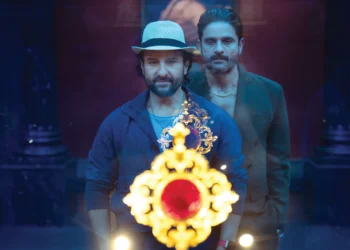



The Sabarmati Report, released this past Friday, has already sparked significant attention and intense discussions. Starring Vikrant Massey, known for his powerful performances in 12th Fail and Mirzapur, the film revisits the harrowing events surrounding the 2002 train burning near Godhra station in Gujarat. This tragic incident, in which 59 passengers—predominantly Hindu pilgrims returning from Ayodhya—lost their lives in a fire later determined to be an act of arson, served as the catalyst for some of the most tumultuous and violent riots in India’s recent history. These riots claimed over 1,000 lives and left a deep scar on the collective national conscience.

Prime Minister Narendra Modi, who was serving as Gujarat’s Chief Minister at the time, recently reacted to the release of the film and the renewed discourse it has ignited. Responding to a post on X (formerly Twitter) that described The Sabarmati Report as a “must-watch,” Modi remarked, “Well said. It is good that this truth is coming out, and that too in a way common people can see it. A fake narrative can persist only for a limited period of time. Eventually, the facts will always come out!”
Revisiting the Fateful Day: The Sabarmati Express Incident
On February 27, 2002, the Sabarmati Express was making its way back to Gujarat from Ayodhya, carrying many kar sevaks who had attended a religious event. As the train approached Godhra station, a violent and unexpected confrontation led to one of the coaches being engulfed in flames. The fire claimed the lives of 59 individuals, including women and children. The incident was initially shrouded in confusion, with multiple theories circulating regarding the cause of the fire.
Subsequent investigations, including those conducted by the Special Investigation Team (SIT) and various commissions, concluded that the fire was the result of deliberate arson. This finding fueled anger and unrest, setting off a chain of events that culminated in widespread communal violence.
The Aftermath: Communal Violence and Its Impact
What followed the train burning was a period of violent unrest that rocked Gujarat to its core. The state was engulfed in widespread rioting, which saw clashes between communities, resulting in extensive loss of life and property. Official estimates indicate that over 1,000 people were killed, though some independent organizations suggest the numbers could be higher. The majority of those who perished were from the Muslim community, sparking national and international condemnation.
Human rights groups and media outlets chronicled harrowing stories of those who suffered during the riots. Families were torn apart, homes were destroyed, and entire neighborhoods were reduced to ashes. Reports highlighted brutal incidents, including targeted killings and assaults. For years, survivors have recounted their tales of horror, trying to piece their lives back together amid the shadows of trauma and loss.
The Role of Leadership During Crisis
At the time of these tragic events, Narendra Modi was the Chief Minister of Gujarat. His government faced severe criticism for its handling of the riots, with allegations that it had not done enough to curb the violence or protect vulnerable communities. The state administration’s response came under intense scrutiny, with some accusing it of turning a blind eye to the escalation of violence.
However, Modi and his supporters have consistently refuted these claims, maintaining that the state machinery did everything it could under the circumstances. Several investigations and judicial proceedings have taken place over the years, with the Supreme Court of India eventually clearing Modi of any wrongdoing in relation to the riots.
“There has been no Chief Minister who has had to face the amount of scrutiny that Modi has,” said one senior political analyst. “Yet, despite numerous inquiries and court judgments, the narrative around the riots has persisted in multiple forms, both nationally and internationally.”
The Sabarmati Report: A Movie That Dares to Address Controversy
With the release of The Sabarmati Report, director Rajesh Desai has ventured into complex and politically sensitive territory. The movie attempts to narrate the sequence of events that led to the Godhra train burning and the ensuing riots, presenting perspectives that have often been lost or overshadowed by louder narratives. Massey’s portrayal of a journalist who unearths crucial evidence adds to the film’s gravity, creating a compelling and thought-provoking experience for viewers.
“The aim was not to sensationalize but to humanize,” Desai said in an interview. “This story needs to be seen and understood from multiple angles so that the truth, however uncomfortable, can come out.”
The movie has garnered praise for its nuanced storytelling and raw portrayal of the communal tensions that erupted post-Godhra. It underscores the lasting impact on victims and highlights the deep-rooted fractures that took years to heal.
Modi’s Response: ‘The Facts Will Always Come Out’
Prime Minister Modi’s reaction to the movie’s release and the discussions it has sparked has further fueled public discourse. His post on X has been interpreted by many as a reaffirmation of his long-held belief that efforts to malign him or propagate false narratives would ultimately fail in the face of truth.
“A fake narrative can persist only for a limited period of time,” Modi wrote. “Eventually, the facts will always come out!” This statement resonates with Modi’s earlier assertions about the challenges he faced during and after the riots, particularly in the context of widespread criticism and political ramifications.
The Broader Picture: Lessons Learned and Ongoing Challenges
While The Sabarmati Report has reignited discussions about the Godhra incident and its aftermath, it also brings to the forefront broader questions about communal harmony, the role of media, and the responsibility of leadership during crises. The 2002 riots continue to serve as a stark reminder of the dangers posed by communal divisions and the ease with which misinformation can spread.
“The lesson here is not just about accountability,” said a social researcher focusing on post-riot rehabilitation. “It’s about learning how to prevent such tragedies in the future and ensuring that justice is not only served but seen to be served.”
In the years following the riots, Gujarat witnessed extensive rebuilding efforts. Numerous initiatives were launched to promote reconciliation, though critics argue that more could have been done to bridge divides. Human rights organizations have continued to advocate for the needs of survivors, many of whom still bear physical and psychological scars.
The Enduring Debate: Whose Truth Prevails?
Despite multiple investigations, including by the SIT and the Nanavati Commission, the debate over what truly happened in Godhra and the subsequent riots remains a topic of contention. The Supreme Court’s clean chit to Modi was seen by his supporters as vindication, while skeptics argue that questions remain unanswered.
The release of The Sabarmati Report adds a new layer to the ongoing debate, presenting an opportunity for reflection and renewed dialogue. As Modi himself indicated, “the facts will always come out,” but the challenge lies in recognizing and reconciling differing versions of those facts.
Moving Forward
As India continues to grapple with the complexities of its communal history, films like The Sabarmati Report play a vital role in keeping the conversation alive. They remind us of the importance of facing difficult truths and the necessity of fostering unity in diversity.
Prime Minister Modi’s statement encapsulates the essence of this endeavor: while narratives can be shaped and distorted, the essence of truth persists, waiting to be discovered and acknowledged. In a country as diverse as India, where stories of heroism, tragedy, and resilience intermingle, it is vital to keep the pursuit of truth at the forefront.