

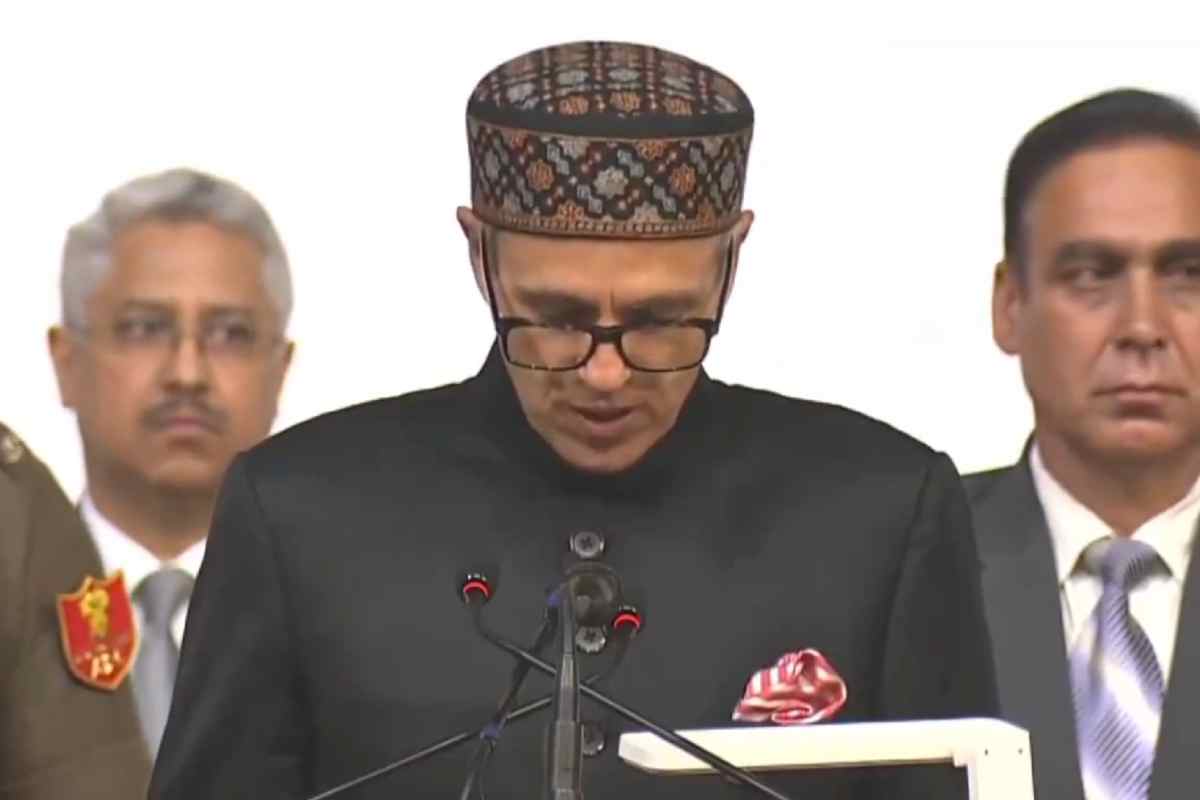
Omar Abdullah’s return to power as the Chief Minister of Jammu & Kashmir (J&K) holds significant political importance, especially given the context of J&K’s political climate over the past several years. His leadership, backed by the coalition with Congress, comes after a lengthy period of central rule, with the region having been a Union Territory since the abrogation of Article 370 in August 2019. This return to a democratically elected government signifies a step toward reinstating a semblance of normalcy and local governance, though it also poses many challenges for Abdullah and his coalition.

Key Elements of the Coalition
While Omar Abdullah’s National Conference (NC) emerged as the single largest party with 42 seats, Congress, though a junior partner with only six seats, plays a crucial role in ensuring the majority needed for governance. Notably, Congress has opted to support the government from the outside, choosing not to claim a cabinet berth despite an offer of one. This decision is likely influenced by the party’s broader political strategy of maintaining influence without direct involvement in governance, which may align with its performance in other states where it has taken on the role of a supporter rather than a direct ruling partner.
Apart from Congress, other smaller but pivotal players like the CPI(M) and AAP have also extended their support to the NC. The independents who have pledged support add further stability to the coalition. Given this wide-ranging support base, Omar Abdullah’s second term is expected to reflect a balance of various political interests that cut across party lines and ideologies.
Challenges Facing the New Government
The return of an elected government, however, comes with its share of hurdles. Omar Abdullah and his government face the daunting task of addressing various pressing concerns in J&K, which include not only political issues but also economic, security, and governance matters.
Restoration of Statehood
One of the central issues in J&K’s political discourse has been the demand for restoring statehood, which was stripped away when Article 370 was revoked, downgrading J&K from a state to a Union Territory. Both the National Conference and Congress have voiced their desire to see statehood restored, making it a key issue the new government will likely raise with the central government. However, this remains a contentious topic, and while the central government has expressed openness to discussing the restoration of statehood, it has not provided any concrete timeline.
No products found.
Security Concerns
Security remains one of the most pressing challenges in J&K. The region has experienced heightened tensions and militancy over the past several years. The central government has maintained a robust military presence in the region to counter insurgencies, and this is unlikely to change under the new government. Omar Abdullah will need to walk a fine line between advocating for local governance and ensuring that security measures remain effective to prevent further unrest.
Additionally, Omar Abdullah has always advocated for dialogue as a means of addressing the concerns of various stakeholders in J&K, including those in the restive Kashmir Valley. His previous term saw attempts to initiate peace talks, and a similar approach might be expected in this new term. However, given the changing political landscape and increased polarization, achieving a peaceful resolution to the ongoing tensions remains a complex task. National Herald.
Economic Revival and Development
Another major concern for the new government will be the economic revival of J&K, which has faced severe challenges, particularly in sectors like tourism and agriculture. The region’s economy has struggled due to multiple factors, including the security situation, disruptions following the abrogation of Article 370, and more recently, the impact of the COVID-19 pandemic.
Tourism, which has traditionally been a vital sector for J&K, has seen a downturn. The new government will need to focus on reviving this sector by promoting the region as a safe and attractive destination for tourists. Infrastructure development and improving local industry opportunities will also be crucial in ensuring economic stability.
Congress’ Role as an Outside Supporter
The Congress party’s decision to offer support from outside the government, rather than taking an active role, is also notable. It reflects the party’s strategy to remain relevant without being seen as directly responsible for governance, especially in a politically sensitive region like J&K. Congress has struggled with its electoral presence in many states across India, and this external support strategy might be seen as a way to rebuild its image by lending support to a stable and functioning government, rather than risking the pitfalls of direct involvement in governance.
The Road Ahead
The new coalition government will need to navigate both the political complexities within the region and the broader geopolitical considerations that influence J&K’s future. Omar Abdullah’s leadership, backed by a coalition of diverse political entities, represents a return to local governance, but it also brings with it significant challenges. With the support of Congress and other allies, Abdullah has an opportunity to steer J&K through this critical period, but the success of his government will depend on how effectively it can address the region’s multifaceted issues, including security, economic recovery, and the restoration of statehood.
As J&K moves forward with a new government, the expectations from the people will be high, particularly regarding the restoration of normalcy, peace, and development in the region. It remains to be seen how the new leadership will balance these competing demands while maintaining stability and fostering progress.