

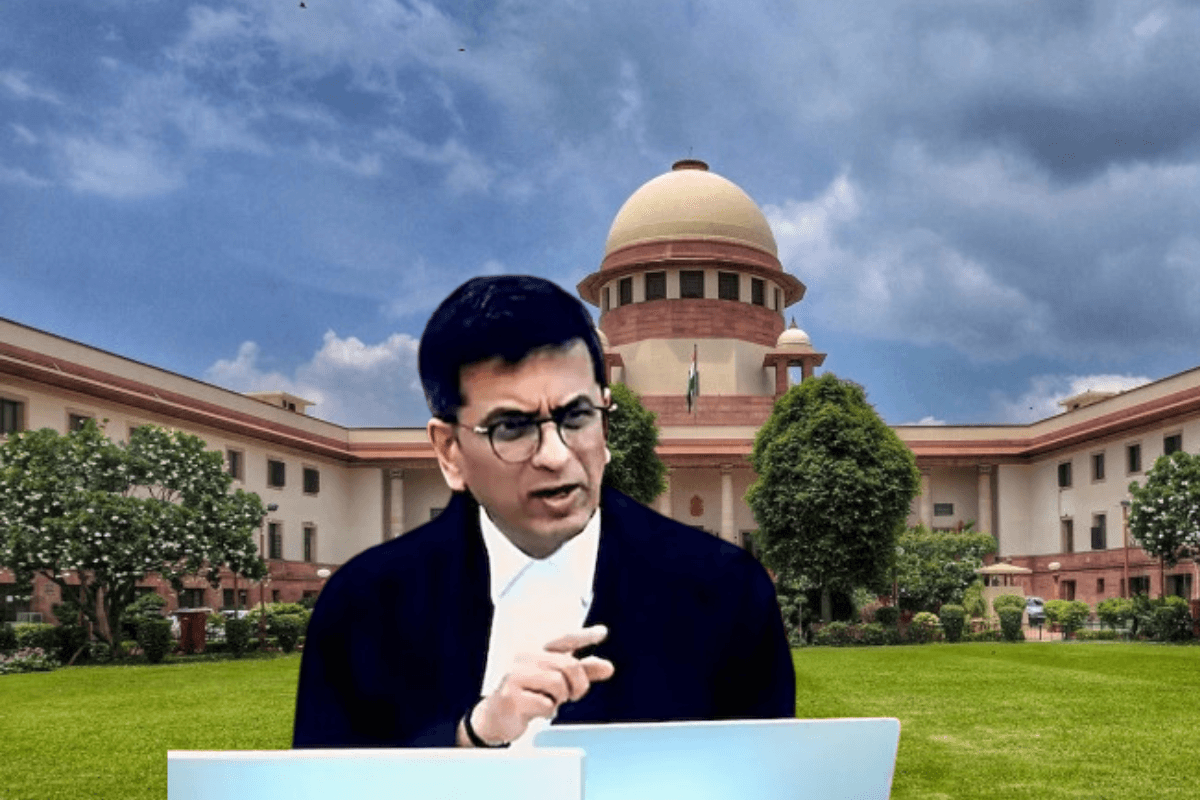
During a recent Supreme Court hearing, Chief Justice of India (CJI) DY Chandrachud offered a candid piece of advice to a woman seeking a divorce. The woman, who holds both an MTech and a PhD, was caught in a contentious legal battle with her spouse. The CJI emphasized the importance of reaching an amicable settlement, stating that prolonged litigation would only benefit the lawyers, not the individuals involved. “You can spend ten years fighting, and lawyers will make merry,” he remarked, urging the couple to consider a mutual consent divorce instead of dragging the case forward.

The CJI’s words were reflective of the broader challenges faced in the Indian judicial system, particularly in divorce cases. Litigation can often be a lengthy and emotionally taxing process, consuming the lives of those involved. He warned that the continuation of such cases could lead to criminal complaints and other complications. Stressing the importance of practicality, CJI Chandrachud highlighted that since both parties were educated, with the woman having significant qualifications, finding employment and moving forward in life was a viable option.
In India, divorce cases can sometimes take years to resolve, especially when contested. The Supreme Court has repeatedly encouraged parties to seek mediation or mutual settlements to avoid unnecessary legal battles. In this instance, the CJI underscored the emotional and financial toll of a prolonged legal process, noting that the couple could end their dispute faster through mutual consent rather than through protracted litigation.
This case highlights the complexities of divorce in India, where personal, societal, and legal pressures often converge. The Chief Justice’s comments reflect the growing sentiment within the judiciary that settlements are preferable to drawn-out courtroom battles. For many, his advice was a reminder that, while the law is there to protect rights, it is also essential to consider practical resolutions that allow both parties to rebuild their lives more swiftly.