

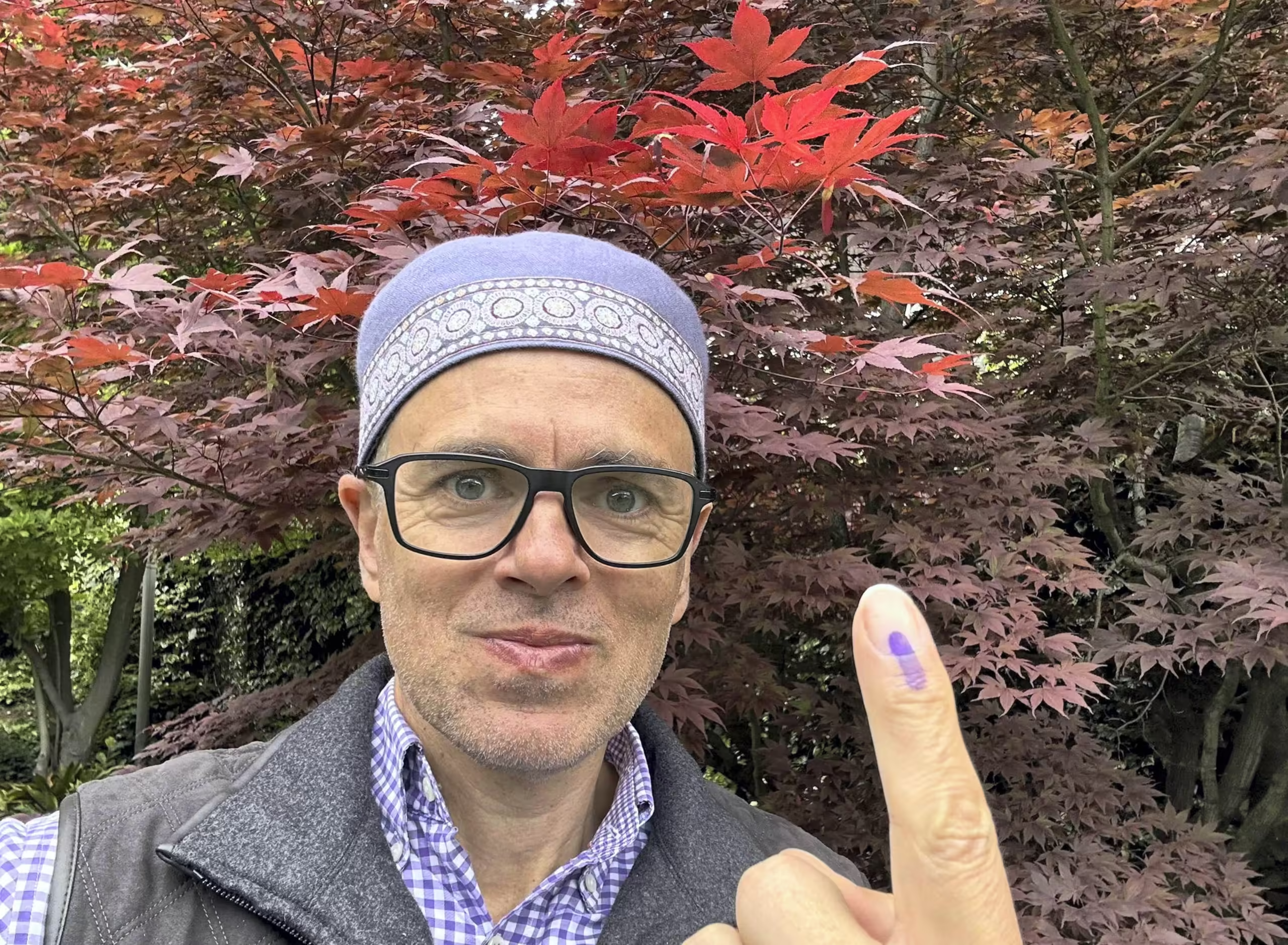
The second phase of Jammu and Kashmir’s Assembly elections is underway today, with voters from 26 constituencies across six districts casting their ballots. This marks a significant moment as these are the first assembly elections since the abrogation of Article 370 in 2019, and the first in the region after over a decade.

Former Chief Minister Omar Abdullah, one of the most prominent figures in the race, is contesting from two seats: Ganderbal and Budgam. Abdullah, the National Conference vice-president, is competing in a high-stakes environment, as 239 other candidates are vying for positions across the 26 seats. Other key candidates include BJP’s Jammu and Kashmir unit chief Ravinder Raina (Nowshera seat) and Congress state president Tariq Hamid Karra (Central Shalteng seat).
Polling stations have been set up with a strong security presence to ensure peaceful elections. As many as 3,502 polling stations have been established, and 25.78 lakh voters are eligible to vote in this phase, including over 15,500 displaced Kashmiri Pandit voters who have been provided with special polling stations in Jammu, Udhampur, and Delhi.
This second phase follows the first round of voting, which took place on September 18, seeing a high turnout of over 60%. Security remains tight, particularly in districts like Rajouri and Poonch, which have witnessed recent terrorist attacks. The election process is also being closely monitored by diplomats from countries including the U.S., Russia, and the European Union, indicating international interest in the democratic process.
As Prime Minister Narendra Modi and Union Home Minister Amit Shah have urged citizens to vote in large numbers, the focus remains on forming a stable government free from terrorism and corruption, according to Shah’s remarks. The results of this election will have far-reaching implications for the region’s future, given the long gap between elections and the significant changes Jammu and Kashmir have undergone since becoming a Union Territory.
The third and final phase of polling is scheduled for October 1, with vote counting set for October 8. This three-phase election is expected to set the stage for a multi-cornered contest, with the National Conference, Congress, BJP, and other parties like the Apni Party vying for control(mint)