

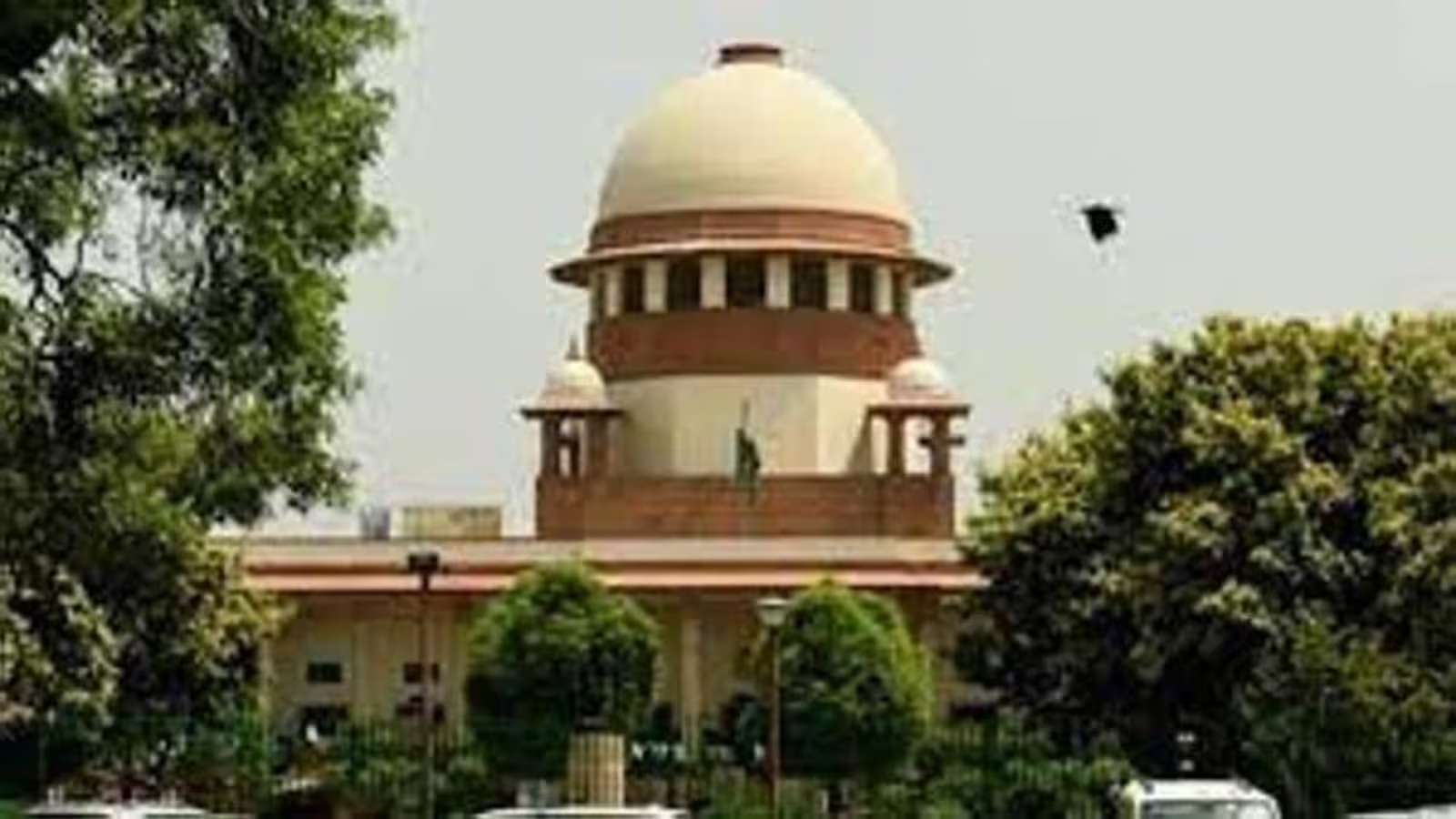
The Supreme Court of India recently criticized the National Commission for Protection of Child Rights (NCPCR) for seeking judicial intervention in its plea regarding alleged child trafficking and irregularities at shelter homes in Jharkhand. A bench comprising Justices B.V. Nagarathna and N.K. Singh sternly cautioned the NCPCR, stating, “Don’t drag the Supreme Court into your agenda,” in response to the child rights body’s request for a Special Investigation Team (SIT) to investigate the matter. The court emphasized that the NCPCR had sufficient authority under the law to investigate and take necessary actions on its own, without involving the judiciary unnecessarily.

This matter revolves around allegations made by the NCPCR, where it claimed that children at some of the shelter homes in Jharkhand, including those run by the Missionaries of Charity (founded by Mother Teresa), were being sold. The NCPCR had been seeking a court-monitored, time-bound probe into the situation. However, the Supreme Court found the petition lacking in clarity and precision, describing the relief sought by the NCPCR as vague and unsuitable for judicial intervention.
The apex court highlighted that it was not convinced by the arguments made by the NCPCR’s counsel, asserting that it could not pass directions based on the nature of the relief requested. Justice Nagarathna, who spoke firmly on the matter, pointed out that the child rights body had mechanisms in place under the Commission for Protection of Child Rights (CPCR) Act, 2005, which it could use to address any violations independently. She further reminded the NCPCR that it was responsible for enforcing child rights protections and handling cases of human trafficking as per its mandate.
The NCPCR’s plea was rooted in allegations stemming from its 2020 inquiry into discrepancies found in shelter homes across various states. While the body pressed for immediate and court-supervised investigations, the Supreme Court’s response indicates that such cases fall under the remit of the executive and the NCPCR itself, rather than being issues for judicial interference. The bench, therefore, denied the plea, making it clear that the NCPCR should handle these issues administratively.
This case sheds light on the balance of responsibilities between executive bodies like the NCPCR and the judiciary. It reinforces the notion that while courts play an essential role in safeguarding fundamental rights, certain investigative tasks are better suited for specialized bodies that possess the statutory authority to act. The Supreme Court’s decision suggests that the NCPCR must first exhaust its own legal powers before seeking judicial involvement in such matters.
Additionally, the Supreme Court issued a separate directive on school safety guidelines during this session. The bench instructed all states to notify the 2021 guidelines on school safety and security, which were issued by the Ministry of Education. This directive came after the non-governmental organization (NGO) Bachpan Bachao Andolan pointed out the lack of compliance by most states, emphasizing the importance of child protection from exploitation and abuse within educational institutions.
This session of the Supreme Court underscores the judiciary’s efforts to ensure that specialized bodies and the executive take responsibility for addressing issues within their purview, while also reinforcing essential guidelines for child safety across India(Hindustan Times)