


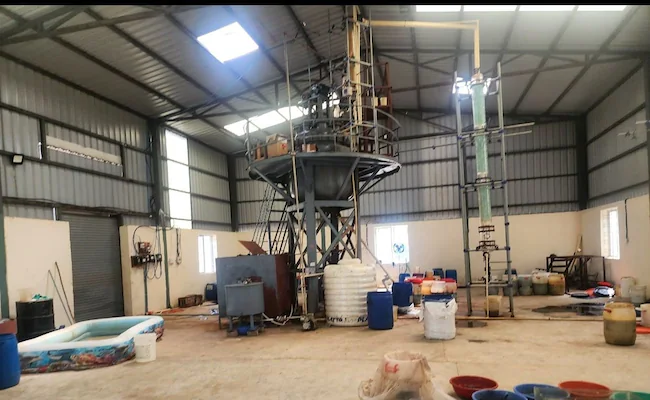
In a significant victory against drug trafficking in India, authorities recently busted a large-scale narcotics operation in Bhopal, Madhya Pradesh. A joint team from the Gujarat Anti-Terrorist Squad (ATS) and the Narcotics Control Bureau (NCB), Delhi, raided a factory and seized drugs and raw materials worth a staggering ₹1,814 crore. The operation, which took months of planning and intelligence work, highlights the growing menace of synthetic drugs in the country and the steps law enforcement agencies are taking to curb their spread.

How It Happened: A Detailed Breakdown of the Raid
The raid took place in a factory on the outskirts of Bhopal, which was identified as a major hub for producing MD (Mephedrone), a synthetic stimulant known for its euphoric effects. This drug, often referred to as “MD” in illicit circles, is widely abused at parties and in recreational settings. Authorities had been monitoring the activities of the factory for some time, using intelligence inputs to track the flow of raw materials and the distribution network that extended across multiple states.
When the time came, the ATS and NCB executed a coordinated raid, catching those inside the factory by surprise. The amount of drugs and raw materials seized was enormous—over ₹1,800 crore worth—making it one of the biggest busts in recent history. Two individuals were arrested during the operation, and they are believed to be key players in a broader drug trafficking syndicate operating across India(Telegraph India).
What is MD (Mephedrone)?
MD, or Mephedrone, is a synthetic drug that has gained popularity over the years, particularly in urban areas. It is part of a family of chemicals known as synthetic cathinones, and it shares similarities with both amphetamines and ecstasy (MDMA) in the effects it produces. When consumed, MD induces feelings of euphoria, alertness, and energy, making it particularly appealing to younger people seeking a “high” at parties.
However, MD is not without its dangers. Long-term abuse can lead to severe physical and psychological health issues, including addiction, heart problems, and mental health disorders. In India, it is classified as a controlled substance under the Narcotic Drugs and Psychotropic Substances (NDPS) Act, making its production, sale, or possession illegal.
Impact of the Seizure
This drug bust is not just significant because of the sheer value of the drugs seized, but also because of what it represents in the larger fight against drug trafficking. Synthetic drugs like MD are becoming increasingly common in India, and they pose a serious threat to public health, particularly among the youth. By shutting down this factory, law enforcement agencies have potentially saved thousands of people from being exposed to this dangerous substance.
Moreover, this operation highlights the growing trend of synthetic drug production within India itself, rather than relying on imports. This shift means that drug traffickers are establishing manufacturing hubs in more remote or less-policed areas, as seen in this case with the factory near Bhopal.
Government Response
Following the raid, Gujarat’s Minister of State for Home, Harsh Sanghavi, took to social media to congratulate the ATS and NCB for their efforts. He emphasized that this bust was not just about seizing drugs but also about sending a message that law enforcement agencies will continue to be vigilant in their fight against narcotics. Sanghavi’s remarks underscore the importance the Indian government places on curbing the rise of synthetic drugs and ensuring that traffickers face severe consequences(Tribune India).
What Happens Next?
The two individuals arrested during the raid are currently in custody, and authorities are conducting further investigations to determine the full extent of the drug trafficking network. This could potentially lead to more arrests in the coming weeks as law enforcement tries to dismantle the entire syndicate responsible for the manufacture and distribution of MD. The ongoing investigation may also reveal more about the raw materials used in MD production and how they were sourced.
Additionally, the operation has shone a light on how drugs are being manufactured in hidden facilities within the country, which raises questions about the need for increased surveillance and stronger controls on industrial spaces that could be exploited for illegal activities.
The Bigger Picture: The Fight Against Drugs in India
India is facing a growing problem with narcotics, especially synthetic drugs like MD. Major urban centers, in particular, have seen a rise in drug use among the younger population. The availability of synthetic drugs like MD, which are relatively easy to produce and distribute, has contributed to this increase.
Law enforcement agencies have been stepping up their efforts to combat drug trafficking, but the problem is vast and complex. Busts like this one in Bhopal represent a crucial step forward, but authorities acknowledge that more needs to be done. This includes increasing public awareness about the dangers of synthetic drugs, improving rehabilitation programs for those struggling with addiction, and ramping up surveillance and intelligence-sharing between states.
At the same time, international cooperation is becoming increasingly important, as drug cartels often operate across borders. India has been working with global organizations and neighboring countries to tackle drug trafficking at its roots, particularly when it comes to stopping the flow of raw materials used in synthetic drug production.
Conclusion
The seizure of over ₹1,800 crore worth of MD drugs near Bhopal is a major win in the ongoing battle against drug trafficking in India. It not only removes a huge quantity of dangerous narcotics from circulation but also serves as a stark reminder of the growing threat posed by synthetic drugs. As the investigation continues, it is likely that more details will emerge about the network behind this operation and how law enforcement can better tackle such threats in the future.
This case serves as both a success story for law enforcement and a cautionary tale for the general public about the ongoing fight against drugs. With more young people at risk of falling into the trap of addiction, the work of agencies like the ATS and NCB is more important than ever before.

















Comments 1