


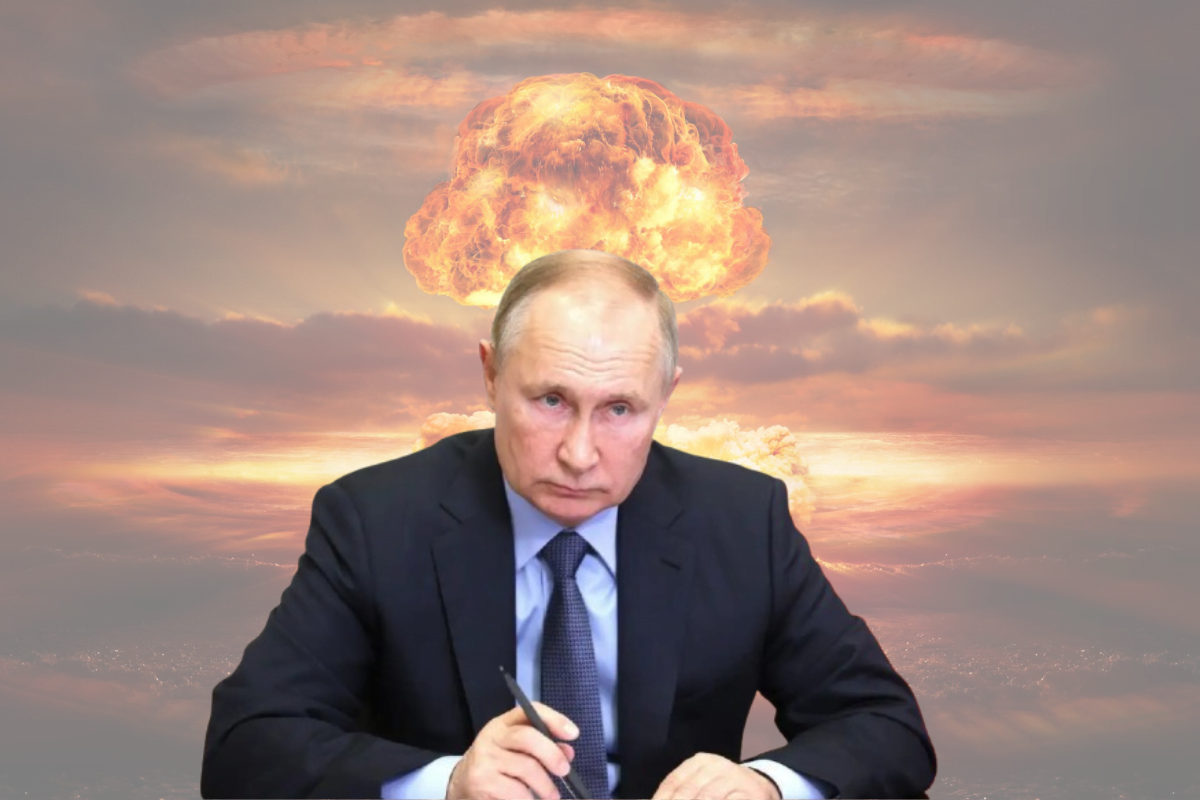
Russian President Vladimir Putin issued a stark nuclear warning to the West on September 25, 2024, in response to what he referred to as a potential “massive” air attack on Russia. His statement highlighted escalating tensions surrounding the ongoing Ukraine war, particularly after the UK’s decision to provide Ukraine with long-range “Storm Shadow” cruise missiles. Putin made it clear that if Western powers, such as the US and UK, permit Ukraine to launch missile strikes on Russian soil, Moscow would consider this a direct involvement of these nations in the conflict.

Putin’s comments followed an emergency meeting with Russia’s Security Council, during which the nation’s nuclear deterrence policies were reviewed. This move underscores Moscow’s unease about the Western support provided to Ukraine, which has increasingly included advanced weaponry capable of targeting deep within Russian territory. Putin emphasized that if any attack, especially one backed by a nuclear power, were to occur, Russia would take “appropriate decisions,” referring to the possibility of resorting to nuclear force.
The warning coincides with rising concerns that Western powers are pushing the boundaries of military support for Ukraine, particularly as reports suggest Kyiv could target Russian infrastructure with Western-supplied cruise missiles. The delivery of these weapons has been a topic of intense international debate, with fears that Russia could interpret such actions as an existential threat, prompting a nuclear response.
Russia’s nuclear doctrine, revised several years ago, allows the use of nuclear weapons not only in the event of a nuclear strike but also in the case of a conventional attack that threatens the existence of the state. This doctrine, which has been a cornerstone of Moscow’s defense policy, was reaffirmed by Putin as tensions with NATO and its allies reached new heights.
Putin’s statement highlights the fragile nature of Russia’s ties with the West, particularly the strained relations with the United States and the United Kingdom. Diplomatic channels remain open, but the Kremlin has indicated that any discussions about nuclear treaties or arms control would need to account for the arsenals of other European powers, including Britain and France. This implies that future negotiations, particularly concerning the New START treaty, will need to address broader European nuclear capabilities.
In the larger geopolitical context, Putin’s warning reflects a growing divide between Russia and the West, with Moscow perceiving increasing threats from NATO-backed Ukraine. While the West continues to support Ukraine’s defense efforts, Putin’s latest remarks serve as a stark reminder of the severe consequences that could unfold if the conflict further escalates.
The world is now watching closely, with concerns over the potential for the war to spiral into a nuclear crisis. The situation remains fluid, and diplomatic efforts will be crucial in de-escalating the tensions sparked by the delivery of advanced military hardware to Ukraine. However, Putin’s nuclear warning indicates that Russia is prepared to defend its territory by any means necessary, marking a new phase in the already volatile conflict.
In the weeks ahead, both military analysts and global leaders will likely focus on how this escalation could impact the broader security architecture, as fears of a direct confrontation between nuclear-armed states loom larger than ever.













Comments 2