


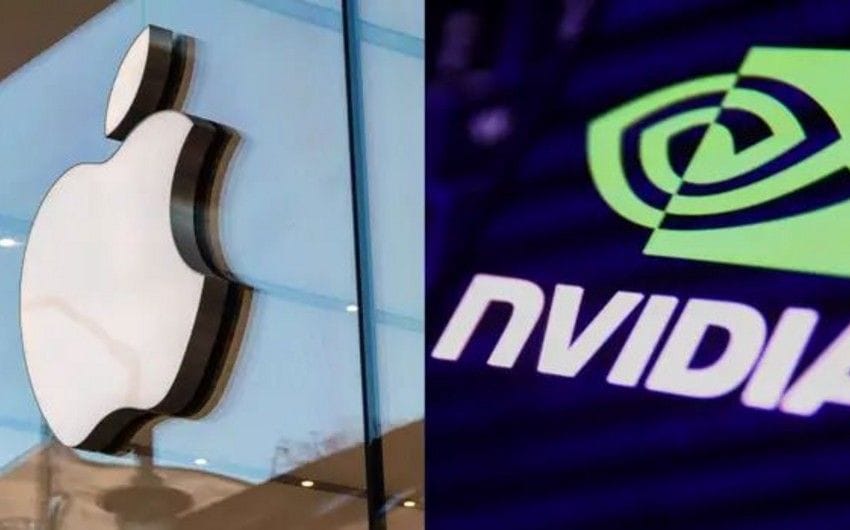
Nvidia’s recent ascent to become the world’s most valuable company, surpassing Apple with a staggering market capitalization of $3.53 trillion, showcases the company’s unique standing within the booming field of artificial intelligence (AI). This landmark achievement, fueled by surging demand for Nvidia’s advanced AI supercomputing chips, positions the company at the center of a technology revolution. With its focus on high-performance GPUs (Graphics Processing Units) critical to AI and machine learning, Nvidia’s rapid growth reflects the increasing reliance on AI across sectors from finance to healthcare, and gaming to automotive technology.

Nvidia’s Market Value and Stock Rally
In October 2024, Nvidia’s stock skyrocketed by 18%, lifting the company’s valuation to a historic $3.53 trillion. This surge was triggered in part by a $6.6 billion funding round announced by OpenAI, a major Nvidia client and the creator of ChatGPT, which further emphasized the critical role Nvidia’s technology plays in training large AI models like GPT-4.
Apple, which briefly slipped to second place, recorded a market cap of $3.52 trillion, while Microsoft trailed slightly behind at $3.20 trillion. These three tech giants have been vying for the top valuation spot for several months, with shifts reflecting the high stakes and volatile nature of the AI and tech industries.
The Driving Force: AI and Supercomputing Chips
The unprecedented growth of Nvidia’s stock and valuation is largely driven by its specialization in GPU technology, which is essential for running intensive AI algorithms and processing vast datasets. Nvidia’s GPUs, particularly its newer lines like the A100 and H100 models, are highly sought after in the industry. These chips enable the processing power required by companies such as OpenAI, Microsoft, and Google to develop and refine their AI models. By cornering the AI hardware market, Nvidia has secured a leading position, supplying an estimated 88% of the AI chip market and addressing the surge in demand as more companies look to leverage AI.
Dominance in the AI Market
Nvidia’s domination extends beyond AI; it holds a significant share in other high-demand computing areas as well. With sectors ranging from autonomous driving to advanced graphics for gaming, Nvidia’s GPUs remain a cornerstone of modern computing. The company’s ability to consistently improve and innovate in GPU performance has made it an essential partner for cloud service providers, supercomputing applications, and consumer tech giants alike. This vast reach has shielded Nvidia from some of the market fluctuations faced by other tech giants, allowing it to maintain a steady upward trajectory even amid economic shifts and market uncertainties.
Competition Among Tech Giants: Apple and Microsoft
Apple and Microsoft remain close competitors in terms of market capitalization and technological prowess. Apple, with its highly successful ecosystem of consumer devices, has consistently been a dominant force, especially with iPhone, iPad, and Mac product lines. However, its core business differs from Nvidia’s, focusing more on consumer electronics than enterprise computing or AI infrastructure. Microsoft, on the other hand, has rapidly expanded its AI capabilities through partnerships with OpenAI and massive investments in its Azure cloud platform. This places Microsoft in direct competition with Nvidia for market leadership in the AI and enterprise technology sectors.
A History of Stock Gains
Nvidia’s stock has been on an upward trend since early 2024, largely due to its strategic focus on AI. The company’s shares have gained roughly 200% over the past year, a growth rate unmatched by any other major tech company during this period. This remarkable rally can be attributed to Nvidia’s alignment with the explosive growth of generative AI, a field that includes applications like image generation, language processing, and real-time translation. Nvidia has capitalized on this growth by delivering hardware solutions that meet the increasing demand for performance and scalability in AI applications. This includes securing long-term contracts with tech firms that rely on Nvidia’s chips for AI research and development.
Demand for GPUs: The Backbone of AI and Supercomputing
As the field of AI progresses, the demand for GPUs, especially those used for training foundation models, continues to grow. Nvidia’s GPU models, especially the A100 and H100, are foundational to the development of state-of-the-art AI technologies. These GPUs are optimized for processing enormous datasets at high speeds, a capability crucial for training AI models like OpenAI’s GPT-4. The funding round by OpenAI and continuous investments from other tech giants underscore the high demand and long-term value Nvidia’s chips bring to the AI sector. This competitive advantage has helped Nvidia not only dominate the AI chip market but also create a sustained demand for its latest technologies.
Expansion into New Markets and Industries
Nvidia’s influence stretches into multiple industries beyond traditional computing. The automotive industry, for example, is increasingly relying on Nvidia’s AI-enabled GPUs for autonomous driving technology. In addition, Nvidia’s chips are integral to the development of real-time data analysis tools, predictive maintenance systems, and smart city infrastructure. This multifaceted expansion reflects Nvidia’s versatility and ability to adapt its technology to meet the needs of emerging industries. Its role in supercomputing, gaming, and cloud computing further reinforces Nvidia’s position as a cornerstone of the AI-driven future.
The AI Boom: A New Frontier for Valuation Growth
Nvidia’s market dominance reflects broader trends within AI and machine learning. In recent years, AI technologies like ChatGPT, Midjourney, and other generative AI models have reshaped industries, from content creation to customer service. Nvidia’s GPUs enable these applications by providing the computing power required to process complex algorithms and manage large-scale data processing tasks. This foundational role makes Nvidia a crucial player in advancing AI and securing its position as a leading tech giant in a rapidly evolving landscape.
The Road Ahead: Sustaining Market Leadership
While Nvidia’s current market leadership is unprecedented, maintaining this position will require sustained innovation and strategic investment. The rapid advancements in AI and the emergence of competitors mean Nvidia will need to continue to evolve its product line and optimize its technology to meet new demands. As AI becomes more integrated across industries, Nvidia may explore further diversification into AI software solutions or partnerships with leading AI developers to maintain its edge. The company’s dedication to research and development, particularly in optimizing GPU performance, will likely play a significant role in its future trajectory .GreekReporter.com.
Conclusion
Nvidia’s rise to the top of the market capitalization charts highlights the company’s unparalleled role in driving the AI revolution. From powering foundational models like GPT-4 to enabling autonomous vehicles, Nvidia’s influence spans nearly every aspect of modern technology. This achievement reflects the monumental shift toward AI and the central role Nvidia plays in this transformation. While Apple, Microsoft, and other tech giants remain competitive, Nvidia’s core position in AI-driven computing makes it uniquely suited to lead in a world increasingly reliant on artificial intelligence. With its ongoing investment in AI chip technology, Nvidia appears poised to maintain its leadership position as it continues to shape the future of tech.