


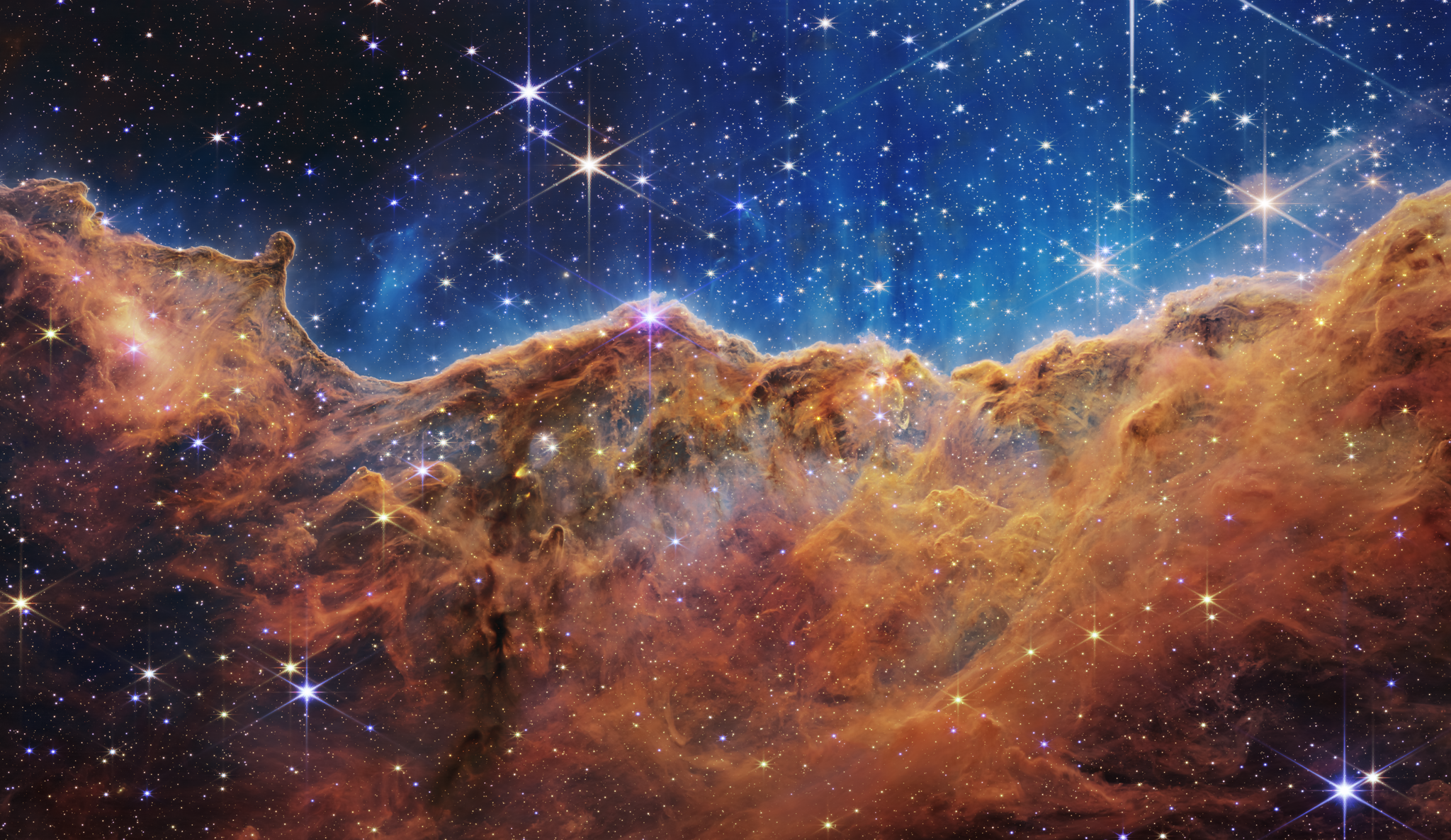
NASA is gearing up for an exciting new mission that promises to revolutionize our understanding of the cosmos. The space agency is set to launch a groundbreaking new telescope with a view 100 times larger than the iconic Hubble Space Telescope, aiming to unlock the mysteries of the dark universe. This cutting-edge mission will explore dark matter, dark energy, and other elusive cosmic phenomena, providing unprecedented insights into the vast and mysterious expanse of space.

A Giant Leap Beyond Hubble
The new telescope, named the Nancy Grace Roman Space Telescope (Roman Telescope), is slated for launch in the mid-2020s. Named after NASA’s first chief of astronomy, Nancy Grace Roman, who was instrumental in the development of the Hubble Telescope, this new project represents a significant leap forward in space exploration.
While Hubble has provided awe-inspiring images and invaluable data since its launch in 1990, the Roman Telescope’s capabilities will far exceed its predecessor. The telescope will have a field of view that is 100 times greater than Hubble’s, enabling scientists to observe larger portions of the sky with much greater efficiency. This will allow for the study of phenomena that were previously difficult to observe, particularly those related to the dark universe.
Exploring the Dark Universe
One of the primary goals of the Roman Telescope is to shed light on two of the universe’s greatest enigmas: dark matter and dark energy. Together, these mysterious forces make up around 95% of the universe, yet they remain largely unknown to scientists.
- Dark Matter: Though invisible, dark matter is believed to hold galaxies together through its gravitational pull. Its presence can be inferred from its gravitational effects on visible matter, but its true nature remains a mystery. The Roman Telescope aims to map dark matter more extensively, allowing astronomers to study its distribution across the universe.
- Dark Energy: Even more mysterious than dark matter is dark energy, a force believed to be responsible for the accelerating expansion of the universe. Understanding dark energy could completely reshape our understanding of cosmic evolution and the ultimate fate of the universe.
The Roman Telescope will use its wide field of view to conduct large-scale surveys of the sky, providing scientists with unprecedented data on these elusive phenomena. By studying the way light bends as it passes through dark matter, the telescope will help map its distribution, while its observations of distant supernovae and galaxy clusters will provide clues to the nature of dark energy.
Technological Marvels of the Roman Telescope
The Roman Telescope is equipped with state-of-the-art technology that will enable it to conduct these ambitious surveys. Among its key features are:
- Wide Field Instrument (WFI): The WFI will capture vast regions of the sky in a single shot, allowing for the observation of millions of galaxies and cosmic events in great detail.
- Coronagraph Instrument: This instrument is designed to directly image exoplanets and study their atmospheres. It will block the light from stars, enabling the telescope to capture faint exoplanets orbiting them, thus contributing to the search for habitable worlds beyond our solar system.
The telescope’s ability to see larger swathes of the sky will allow scientists to track cosmic events and celestial objects with a level of precision and speed that was previously unimaginable. It will also help astronomers answer questions about the formation of galaxies, the behavior of black holes, and the nature of the universe’s expansion.
A New Era of Space Exploration
The Roman Telescope marks the dawn of a new era in space exploration. While it will build upon the legacy of Hubble, it will focus on answering some of the most profound questions about the universe’s structure and fate. With its powerful capabilities, the telescope will collect vast amounts of data that scientists hope will provide breakthroughs in understanding dark matter, dark energy, and the evolution of the cosmos.
The mission is also expected to complement future space observatories like the James Webb Space Telescope (JWST), which is scheduled to launch soon. Together, these telescopes will provide humanity with a more comprehensive understanding of the universe, from the earliest galaxies to the formation of planetary systems.
What’s Next?
As NASA prepares for the launch of the Roman Telescope, the scientific community is eagerly awaiting the discoveries it will bring. The telescope’s advanced technology and vast field of view will allow it to explore the universe in ways never before possible, potentially leading to groundbreaking revelations about the fundamental forces that shape our cosmos.
Scheduled for launch in the mid-2020s, the Roman Telescope will embark on a mission that could forever change our understanding of the dark universe, unraveling mysteries that have puzzled scientists for decades. Also Read














Comments 2