



Tensions between Israel and Hezbollah have intensified in recent days, as Israel launched airstrikes on Hezbollah targets in southern Lebanon following a series of Hezbollah rocket attacks. The conflict, which is escalating by the hour, was further ignited by a sophisticated series of explosions involving Hezbollah’s communication devices, reportedly planted by Israel’s Mossad

The conflict took a deadly turn earlier this week when hundreds of Hezbollah’s pagers and walkie-talkies exploded across Lebanon. These devices were used by the group for internal communications, and the sudden explosions resulted in the deaths of at least 12 people, with 3,000 more injured
The attacks are being seen as a serious security breach for Hezbollah, with intelligence sources pointing to a coordinated operation aimed at undermining the group’s operational capabilities(
Reports indicate that Israel’s Mossad had planted explosive materials in the pagers during their manufacturing or transit, and these devices were detonated remotely
In retaliation, Hezbollah fired between 140 and 150 rockets into northern Israel. The Israeli military responded with a series of airstrikes targeting rocket launchers and Hezbollah military infrastructure
This exchange of fire has caused significant damage on both sides, and Lebanese officials are warning that the situation is spiraling out of control(The Independent).
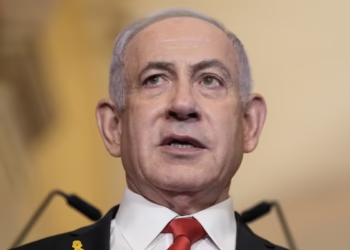
As the violence escalates, the potential for a wider conflict looms large. Hezbollah leader Hassan Nasrallah has declared that the explosions in their communication devices “crossed all red lines” and has vowed retaliation. Meanwhile, Israeli Prime Minister Benjamin Netanyahu reiterated that while Israel does not want war, it will take all necessary actions to ensure its security
The international community is closely monitoring the situation, with the Lebanese government accusing Israel of a “deliberate escalation.” Lebanon is preparing to submit a formal complaint to the United Nations Security Council
Given the high stakes and the scale of the attacks, fears are growing that the current hostilities could evolve into a broader regional conflict, potentially drawing in more players from the Middle East
Both sides remain entrenched in their positions, and with more attacks likely in the coming days, the situation remains highly volatile. Analysts suggest that this could mark a significant shift in the ongoing Israel-Hezbollah conflict, with long-term ramifications for the broader stability of the region.
















Comments 7