


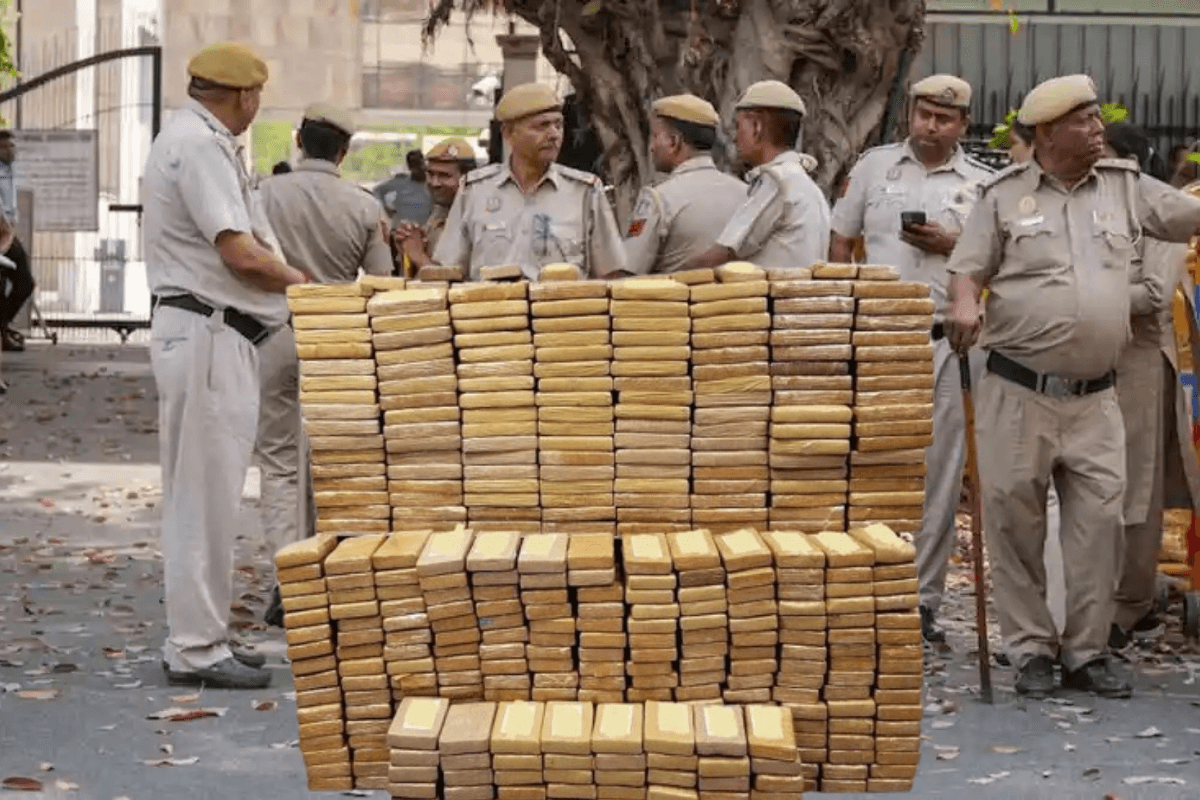
In a significant victory for law enforcement, Delhi Police conducted one of the largest drug busts in India’s history on October 2, 2024. More than 500 kilograms of cocaine, valued at approximately ₹2,000 crore (around $240 million), were seized in South Delhi. This operation marks a crucial step in dismantling a vast international drug trafficking syndicate that has been under surveillance for months.

The massive drug haul is the result of an intensive investigation by Delhi Police’s Special Cell, which had been tracking the activities of this syndicate. The cocaine shipment, smuggled into India via maritime routes, was believed to be destined for distribution across major cities. Four individuals were apprehended during the raid, and authorities suspect that the drug cartel operates with connections to South American countries known for large-scale narcotics production.
Unfolding of the Operation
The breakthrough came after months of intelligence gathering, during which the police traced suspicious activities and communications linked to an international network. The operation was conducted in collaboration with other law enforcement agencies, including customs and intelligence units. The cocaine was hidden in cargo containers, and it took meticulous planning to intercept the shipment before it could be dispersed across India.
Police officials have described this operation as one of their most successful in recent times, not only in terms of the volume of drugs seized but also the strategic blow dealt to the trafficking network. This bust is likely to create a significant disruption in the supply of narcotics within India, where demand has been increasing over the years, particularly in metropolitan cities like Delhi, Mumbai, and Bengaluru.
International Implications
This seizure is part of a broader, global fight against the illegal narcotics trade. India has increasingly become a transit point for drugs coming from Latin American countries such as Colombia, Peru, and Mexico, routed through African and Middle Eastern nations. This route enables smugglers to access lucrative markets in Europe and Asia. Experts warn that the cocaine trade, in particular, is becoming more sophisticated, with traffickers using advanced technology and legal loopholes to evade detection.
The involvement of international criminal organizations complicates efforts to control drug trafficking, making it essential for countries to cooperate on intelligence and law enforcement efforts. India’s seizure of this large cocaine shipment highlights its growing role in combating global drug trade networks.
Impact on India
Drug seizures like this have significant social and economic implications for India. Cocaine, though less commonly used compared to heroin and cannabis in the country, has been gaining traction in affluent sections of society. The increasing availability of such narcotics raises concerns about public health and safety.
Indian authorities have been working hard to curb the rising menace of drug addiction, especially among the youth. This bust is expected to slow the influx of cocaine and weaken the cartel’s financial operations. According to police sources, the individuals arrested are likely to face charges under the Narcotic Drugs and Psychotropic Substances (NDPS) Act, which could lead to life imprisonment.
Conclusion and Future Actions
The October 2nd bust is a significant milestone in India’s fight against the drug trade. The seizure of 500 kg of cocaine and the arrest of four suspects underline the importance of sustained intelligence efforts, coordination between agencies, and international cooperation. With the police continuing to probe the broader network, further arrests and seizures are expected, sending a strong message to drug traffickers operating within and outside India.
The war on drugs is far from over, but this victory offers a crucial morale boost for law enforcement as they continue to protect the country from the destructive forces of narcotics.

















Comments 5