

Israel Demands Hamas Release Three Living Captives by Saturday: A Tense Standoff in the Middle East

In a dramatic escalation of tensions in the Middle East, Israel has issued a stern ultimatum to Hamas, demanding the release of three living captives by Saturday. The demand comes amid a backdrop of heightened violence, political maneuvering, and international concern over the fate of the hostages and the potential for further conflict in the region. This development underscores the fragile state of Israeli-Palestinian relations and the complex dynamics at play in one of the world’s most volatile regions.
The Context of the Crisis
The current crisis began when Hamas, the Palestinian militant group that controls the Gaza Strip, allegedly abducted three individuals during a recent flare-up of violence along the Israel-Gaza border. While details about the captives’ identities and the circumstances of their capture remain murky, Israeli officials have confirmed that they are civilians, including at least one woman. The Israeli government has accused Hamas of using the hostages as bargaining chips in its ongoing struggle against Israel.
Hamas, for its part, has neither confirmed nor denied holding the captives. The group has a history of abducting Israeli soldiers and civilians to use as leverage in negotiations for the release of Palestinian prisoners held in Israeli jails. This tactic has been a recurring feature of the Israeli-Palestinian conflict, with past hostage situations often leading to protracted and tense negotiations.
Israel’s Ultimatum
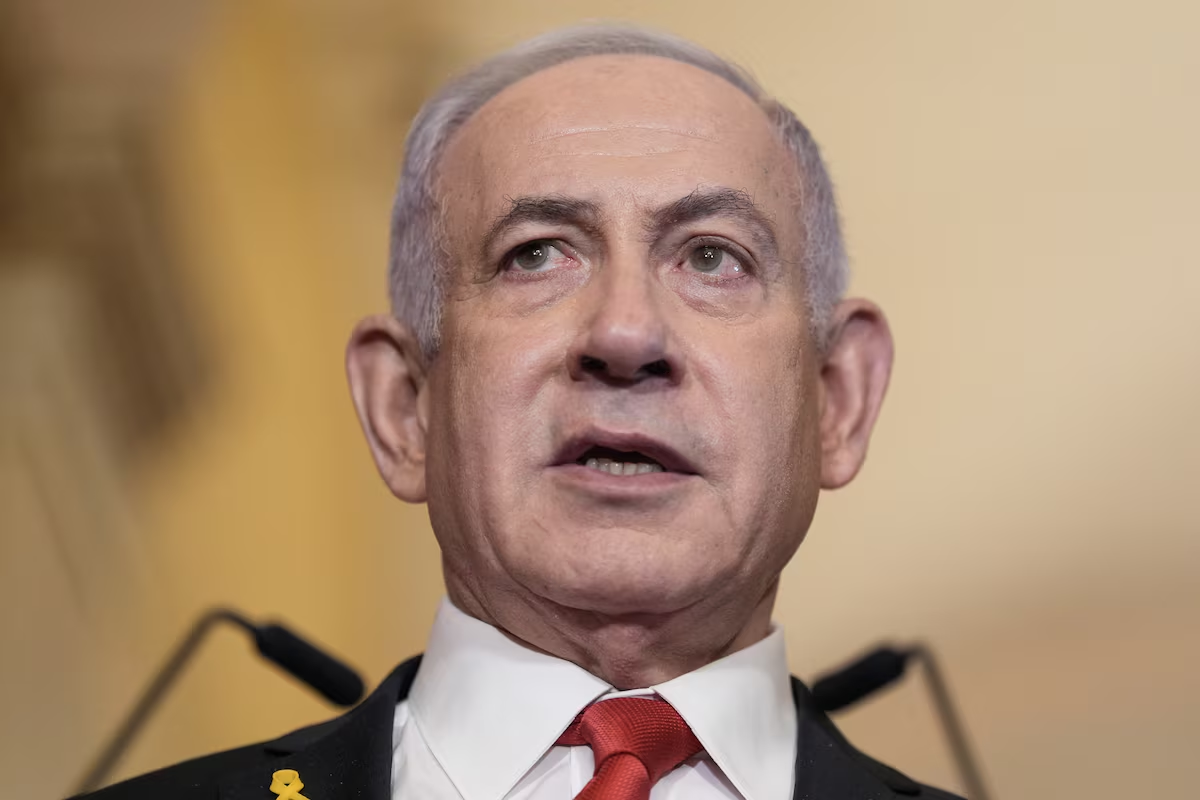
In a statement released on Thursday, Israeli Prime Minister Benjamin Netanyahu declared that Hamas must release the three captives by Saturday or face severe consequences. “We will not tolerate the abduction of our citizens,” Netanyahu said. “Hamas has until Saturday to return them safely. If they fail to do so, Israel will take all necessary measures to secure their release and protect our people.”
The ultimatum has raised fears of a potential military escalation. Israel has already mobilized troops along the Gaza border, and there are reports of increased aerial surveillance and drone activity in the area. The Israeli Defense Forces (IDF) have also conducted several targeted strikes on Hamas positions in recent days, in what officials describe as a “measured response” to the group’s provocations.
International Reactions
The international community has reacted with alarm to the escalating situation. The United Nations has called for an immediate de-escalation and urged both sides to exercise restraint. UN Secretary-General António Guterres emphasized the need for dialogue and warned that further violence could have devastating consequences for civilians on both sides.
The United States, a key ally of Israel, has also weighed in. Secretary of State Antony Blinken spoke with Netanyahu and Palestinian Authority President Mahmoud Abbas in an effort to mediate the crisis. “The United States is deeply concerned about the situation and is working tirelessly to prevent further escalation,” Blinken said in a press briefing. He added that the U.S. supports Israel’s right to defend itself but also stressed the importance of avoiding actions that could lead to a broader conflict.
European leaders have echoed these sentiments, with the European Union calling for the immediate and unconditional release of the captives. The EU’s foreign policy chief, Josep Borrell, described the situation as “deeply troubling” and urged all parties to prioritize the safety and well-being of civilians.
The Human Cost
At the heart of this crisis are the three individuals whose lives hang in the balance. While their identities have not been officially disclosed, reports suggest that they include a 28-year-old woman and two men in their early 30s. Their families have made emotional appeals for their safe return, pleading with both Israeli and Hamas leaders to resolve the situation peacefully.
“We just want our loved ones back,” said one family member in a tearful interview with Israeli media. “They are innocent civilians who have nothing to do with this conflict. We beg Hamas to show mercy and let them go.”
The psychological toll on the families and communities affected by such abductions is immense. Past hostage situations have left lasting scars, with families often enduring years of uncertainty and trauma. The current crisis has reignited painful memories for many Israelis, particularly those who have lost loved ones to violence or who have experienced the anguish of waiting for a captive’s return.
Hamas’s Calculated Strategy
For Hamas, the abduction of Israeli civilians is a strategic move designed to exert pressure on Israel and gain leverage in negotiations. The group has long used such tactics to secure the release of Palestinian prisoners, many of whom are held in Israeli jails for security-related offenses. In 2011, Hamas secured the release of over 1,000 Palestinian prisoners in exchange for Israeli soldier Gilad Shalit, who had been held captive for five years.
However, this strategy is not without risks. Hamas’s actions often provoke a strong Israeli response, leading to military confrontations that result in significant casualties and destruction in Gaza. The group’s leadership must carefully weigh the potential benefits of holding captives against the likelihood of a devastating Israeli retaliation.
The Broader Implications
The current standoff has broader implications for the Israeli-Palestinian conflict and the region as a whole. It comes at a time of heightened tensions, with recent clashes in Jerusalem, the West Bank, and Gaza exacerbating an already volatile situation. The Israeli government, led by Netanyahu, is under pressure from hardline factions to take a tough stance against Hamas, while also facing criticism from more moderate voices who advocate for a diplomatic solution.
For Hamas, the crisis is an opportunity to rally support among Palestinians and demonstrate its resistance to Israeli occupation. However, the group’s actions also risk alienating international allies and further isolating Gaza, which is already grappling with severe economic hardship and a humanitarian crisis.
The Path Forward
As the Saturday deadline looms, the question on everyone’s mind is whether Hamas will comply with Israel’s demand or if the situation will spiral into a full-blown conflict. Diplomatic efforts are underway to broker a deal, with Egypt and Qatar reportedly playing key roles as intermediaries. Both countries have historically been involved in mediating between Israel and Hamas, and their involvement could be crucial in defusing the crisis.
In the meantime, the international community is holding its breath, hoping for a peaceful resolution but bracing for the possibility of further violence. The stakes are high, not only for the captives and their families but also for the broader prospects of peace and stability in the region.
Conclusion
The demand by Israel for Hamas to release three living captives by Saturday has set the stage for a tense and potentially explosive confrontation. As the deadline approaches, the world watches anxiously, hoping for a resolution that spares lives and prevents further escalation. The crisis is a stark reminder of the fragility of the Israeli-Palestinian conflict and the urgent need for a lasting solution that addresses the root causes of the violence and ensures the safety and dignity of all people in the region.
For now, the fate of the captives and the future of the region hang in the balance, with the actions of a few holding the potential to shape the course of history for many.