

Putin’s Nuclear Warning and Zelensky’s 2025 Prediction: Defining the Future of the Russia-Ukraine War
The ongoing Russia-Ukraine war continues to dominate global discourse, with recent developments from both Moscow and Kyiv offering starkly contrasting narratives. On one side, Russian President Vladimir Putin has revised the country’s nuclear doctrine, enabling the use of nuclear weapons against non-nuclear nations that align with nuclear-armed states. On the other, Ukrainian President Volodymyr Zelensky has set 2025 as the year by which the world will recognize the war’s victor, symbolizing Kyiv’s resilience and determination.

Putin’s Decree: Escalation or Strategy?
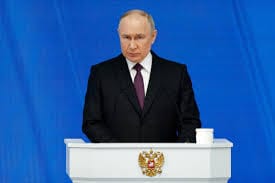
On Tuesday, Putin signed a decree marking a significant shift in Russia’s nuclear policy. The decree permits the use of nuclear arms against nations that lack nuclear weapons if they are allied with nuclear-armed states providing substantial military or logistical support. Analysts view this as a direct message to NATO and Western nations aiding Ukraine, particularly the United States and European allies.
This policy shift arrives as Russia grapples with sustained military and economic pressure. Its initial objective of quickly subduing Ukraine has faltered, with Ukrainian forces mounting counteroffensives in key regions. By adopting a more aggressive nuclear stance, Russia aims to dissuade further Western support for Ukraine. However, the international community, including the United Nations, has raised concerns about escalating nuclear risks and breaching global treaties.
Critics argue that this decree could set a dangerous precedent, normalizing the use of nuclear threats as a tool for geopolitical leverage. Others suggest that it reflects a calculated move by Moscow to reaffirm its superpower status amidst growing isolation.
Zelensky’s 2025 Vision: A Rallying Cry
In sharp contrast to Putin’s aggressive posturing, Ukrainian President Zelensky struck an optimistic tone during his recent diplomatic visits to European capitals. Speaking in Berlin, he declared that the war’s resolution would become evident by 2025. “Ukraine more than anyone else in the world wants a fair and speedy end to this war,” he asserted.
Zelensky’s statement came amid his efforts to secure continued military and financial aid from allies. With fears of donor fatigue looming and the potential shift in U.S. foreign policy under a new administration, Ukraine’s leadership remains focused on sustaining international support. Zelensky’s plan includes hosting a global peace conference that invites even Russia, albeit under terms aligned with international law.
Germany, Ukraine’s second-largest military backer after the U.S., has pledged additional aid worth €4 billion in 2025. However, concerns over escalating tensions with nuclear-armed Russia have prevented Berlin from sending long-range missile systems.
A War with Global Stakes
The opposing stances of Putin and Zelensky underscore the war’s dual dimensions—military and diplomatic. While Moscow’s nuclear saber-rattling raises alarm bells globally, Ukraine’s resolve highlights the human and strategic toll of the conflict. Over three years into the war, its repercussions extend far beyond the battlefield.
- Impact on Global Alliances: Russia’s decree challenges NATO’s unity, pressuring member states to recalibrate their strategies. The U.S. and its allies must balance providing support to Ukraine while avoiding actions that could provoke a nuclear escalation.
- Humanitarian Consequences: The war has led to a humanitarian crisis, with millions of displaced Ukrainians and widespread destruction of infrastructure. Zelensky’s vision for 2025 includes rebuilding efforts, contingent on a decisive end to hostilities.
- Economic Ripple Effects: Sanctions against Russia have disrupted global supply chains, especially in energy and food sectors. These economic consequences have spurred debates about the long-term viability of sanctions and their effectiveness in pressuring Moscow.
Can 2025 Be a Turning Point?
The year 2025 looms large as a potential watershed moment. For Ukraine, it represents a goalpost for ending the war and initiating reconstruction. For Russia, it could signify either a consolidation of territorial gains or further isolation, depending on how the international community reacts to its policies.
However, the path to peace remains fraught with challenges. Zelensky’s optimism hinges on unwavering Western support, which may waver under domestic political pressures in donor countries. On the other hand, Putin’s nuclear posturing risks alienating even traditional allies, further isolating Russia on the global stage.
The World Watches and Waits
The Russia-Ukraine war, with its profound military, geopolitical, and humanitarian dimensions, remains a defining global conflict. Putin’s decree and Zelensky’s 2025 declaration encapsulate the high stakes involved, offering a glimpse into two vastly different futures. Will nuclear threats succeed in deterring Western alliances, or will Ukraine’s vision of resilience and unity prevail?
As the world navigates this precarious moment, one thing is clear: the decisions made in the coming months will resonate far beyond 2025, shaping the future of international security and diplomacy.
This comprehensive analysis underscores the urgent need for global leaders to address the war’s implications, not just for the immediate region but for the international community at large.