

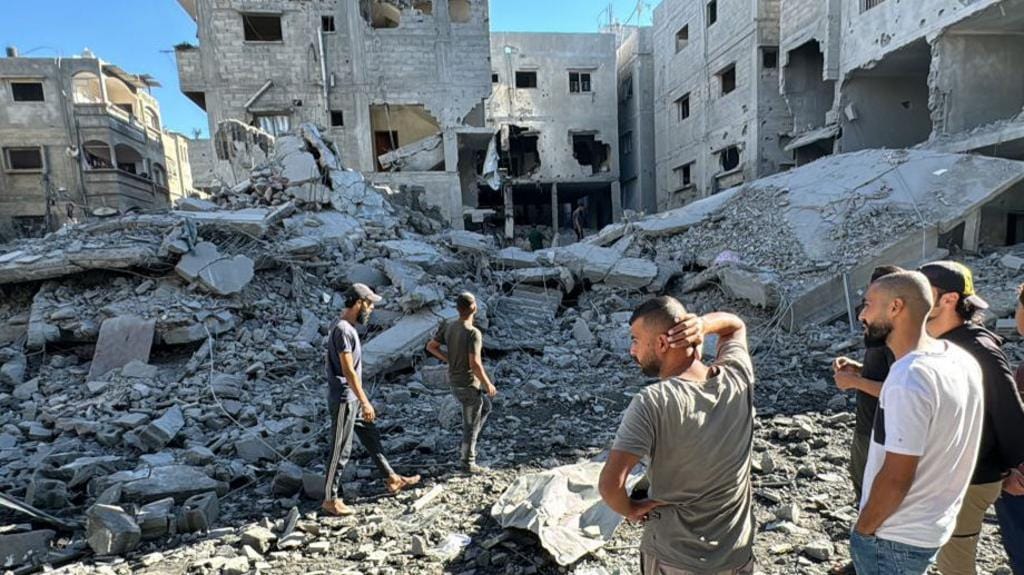
On October 29, 2024, an Israeli airstrike on a residential building in Gaza resulted in the deaths of at least 55 people, with many others reportedly trapped beneath the rubble. This incident, one among numerous recent strikes, adds to the heavy civilian toll in the ongoing conflict between Israel and Hamas, sparking significant global outcry and concern over the rising number of non-combatant casualties.

Humanitarian Crisis in Gaza
The situation in Gaza, already grim before the current hostilities, has sharply deteriorated. Israeli airstrikes and ground operations have targeted buildings Israel claims are being used by Hamas for military operations, but these actions have often hit densely populated areas, leading to tragic losses among civilians, including children, women, and the elderly. Hospitals, schools, and shelters have also been impacted, intensifying the strain on Gaza’s healthcare system, which is already struggling to cope with the casualties due to limited supplies and equipment amid a severe blockade.
Human rights organizations and United Nations representatives have condemned the strikes, highlighting that many of these attacks on civilian infrastructure and residential areas are in violation of international law. The blockade on Gaza has left residents with little access to medical aid, clean water, and essential supplies, worsening the humanitarian crisis. As civilian fatalities mount, there have been increasing calls for international intervention to establish humanitarian corridors and to protect non-combatants from the violence.
Reasons Behind Israel’s Aggression
Israel’s stated goal in the ongoing military campaign is to dismantle Hamas’s operational capabilities in Gaza. According to Israeli authorities, Hamas has embedded its infrastructure—command centers, weapon storage, and operation rooms—within civilian areas, effectively using the population as shields. Israel claims that Hamas’s strategy is to provoke a response that could be used for propaganda by making civilian areas a target, which complicates Israel’s military response.
Hamas’s tactics have placed Israel in a difficult position from a military and ethical perspective, but critics argue that Israel’s response has been disproportionate. United Nations reports have called attention to the frequency and scale of these airstrikes in densely populated zones, questioning the distinction Israel claims to make between civilian and military targets. Some officials have accused Israel of potentially committing war crimes, citing the high number of civilian deaths and the ongoing blockade as violations of international humanitarian standards.
Global Response and Calls for Ceasefire
International reactions to the crisis have been swift, with countries worldwide urging a ceasefire to protect civilians. Organizations like the Red Cross, Amnesty International, and UNICEF have highlighted the urgent need for humanitarian pauses to allow for the delivery of medical supplies and to evacuate the wounded. However, despite the appeals, both Israel and Hamas have continued their hostilities, each claiming that a pause would undermine their objectives.
Many nations, including members of the United Nations Security Council, have expressed concerns over the escalating conflict and the impact on regional stability. The conflict has led to widespread protests in various countries, with demonstrators calling for an end to the violence and more substantial action from international bodies. There has been pressure on Israel to consider proportionality in its response, while Hamas faces condemnation for putting Gaza’s civilians in harm’s way by operating in residential areas.
The Question of Innocents in Conflict
A central debate in this conflict revolves around the ethics of military operations in civilian-populated areas. Israel maintains that Hamas bears responsibility for the civilian casualties due to its strategic use of densely populated areas to shield its operations. However, international law experts argue that Israel’s responsibility includes taking all feasible precautions to avoid or at least minimize civilian casualties, regardless of Hamas’s actions. These experts state that collective punishment of a civilian population, even under claims of targeting a terrorist group, is prohibited.
The devastation of civilian infrastructure in Gaza has led to questions about the proportionality of Israel’s response and the measures taken to avoid collateral damage. UN inquiries and independent investigations have reported deliberate targeting of hospitals and schools, which some officials suggest could constitute crimes against humanity. A growing chorus of voices is urging both sides to seek non-violent resolutions, as the impact of this conflict stretches beyond Gaza, affecting regional stability and stirring tensions worldwide.
Potential Pathways to Peace
The conflict between Israel and Hamas is long-standing, with numerous attempts at ceasefires and peace talks over the years failing to produce a lasting solution. Many experts assert that a peaceful resolution would require addressing the root causes of the conflict, including issues related to territorial disputes, political recognition, and the rights of Palestinians.
A diplomatic intervention could offer a path to de-escalation, but the deeply entrenched political positions on both sides make such negotiations challenging. Some countries and organizations have suggested that the international community plays a more active role in mediating discussions between Israel and Hamas. These efforts would need to be accompanied by assurances from both parties to respect international laws protecting civilians, with a commitment from Israel to reconsider its blockade and Hamas to cease operations from within civilian areas.
Conclusion
The recent airstrike that led to the deaths of at least 55 civilians in Gaza highlights the urgent need for a reevaluation of military strategies in conflict zones. The heavy toll on civilians, coupled with the destruction of infrastructure essential for survival, has put Gaza in a state of humanitarian crisis that requires immediate attention.
The international community continues to grapple with finding a balanced approach that addresses security concerns while upholding human rights and the laws of war. For now, the people of Gaza bear the brunt of this unresolved conflict, facing loss, displacement, and hardship daily. As long as this cycle of violence persists without significant intervention and commitment to peaceful solutions, the plight of civilians on both sides will remain a tragic reminder of the consequences of conflict.