

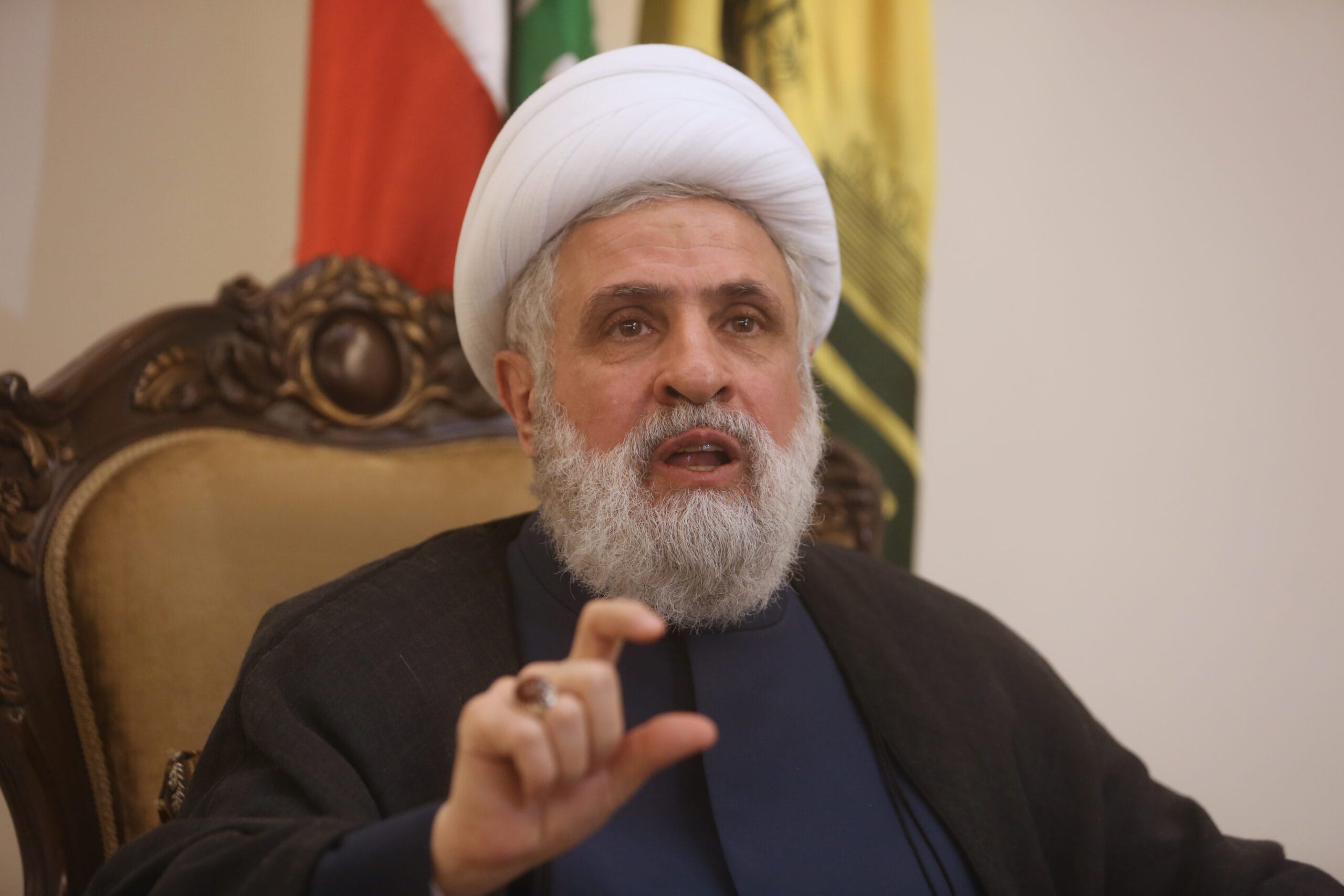
Hezbollah’s deputy chief Naim Qassem warns Israel that only a ceasefire can end the conflict, vowing that the resistance will persist if Israel refuses peace.
Hezbollah’s deputy chief, Naim Qassem, issued a stark warning to Israel amid escalating tensions, calling for an immediate ceasefire as the only viable solution to the current conflict. In his statement, Qassem emphasized that Hezbollah would not be defeated, framing the group’s resistance as a fight for its own land. He underscored that the ongoing war could only be resolved if Israel agreed to a ceasefire, allowing northern Israeli residents to return home.

Qassem’s comments come as tensions between Israel and Hezbollah have escalated significantly following the death of Hassan Nasrallah, the former Hezbollah leader, in an Israeli strike. This has sparked concerns over a broader conflict between the two, with Hezbollah warning that it has the right to target any region in Israel as a defensive measure. Qassem noted that while they are not pushing for an all-out war, Hezbollah is prepared to continue the fight if Israel rejects the ceasefire.
Hezbollah’s aggressive rhetoric is framed by the context of mounting regional instability. Qassem made it clear that in the absence of peace, his group has the capability and intent to strike at Israel, regardless of the region. These comments align with earlier threats made by Hezbollah, which has warned that a full-scale war could end Israel’s presence in northern territories. Israeli military strategists are reportedly concerned that Hezbollah’s increasing involvement may lead to an escalation in hostilities, especially given the group’s substantial arsenal and experience.
The call for a ceasefire has broader implications for regional security. Both Israel and Hezbollah have long been engaged in proxy conflicts, with Hezbollah receiving backing from Iran, a key regional player with its own geopolitical interests in Lebanon and Israel. Hezbollah’s rhetoric suggests that any ceasefire would likely come through indirect negotiations, as direct diplomacy remains highly unlikely in the current climate.
The war has also created significant challenges for civilians on both sides. Northern Israel has seen a surge in evacuations as Hezbollah’s rocket strikes have increased in frequency, while Lebanese civilians face the threat of Israeli retaliatory strikes. As the conflict drags on, humanitarian concerns are growing, with international bodies urging for de-escalation and an immediate ceasefire to prevent further civilian casualties
In addition to the military aspect, Hezbollah’s involvement in the broader Israeli-Palestinian conflict complicates any potential diplomatic resolutions. The group’s leadership has long aligned itself with Palestinian militant factions, often taking a hardline stance against Israel. This makes the current conflict part of a larger, ongoing struggle in the Middle East, where ceasefires are often fragile and temporary.
No products found.
Qassem’s recent statements echo previous sentiments that the conflict is not just a military struggle but also a defense of Hezbollah’s ideological and territorial claims. For Israel, this raises questions about the sustainability of its military strategy in Lebanon and the potential consequences of a prolonged conflict with Hezbollah, especially as other regional actors may be drawn into the fray.
In conclusion, while Hezbollah has signaled a willingness to stop fighting if a ceasefire is achieved, the path to peace remains uncertain. Both sides are entrenched in their positions, and without external pressure or diplomatic intervention, the situation could escalate further. Given Hezbollah’s rhetoric and its military capabilities, the possibility of a protracted and more destructive conflict looms large, putting both Israeli and Lebanese civilians at heightened risk.
No products found.